










































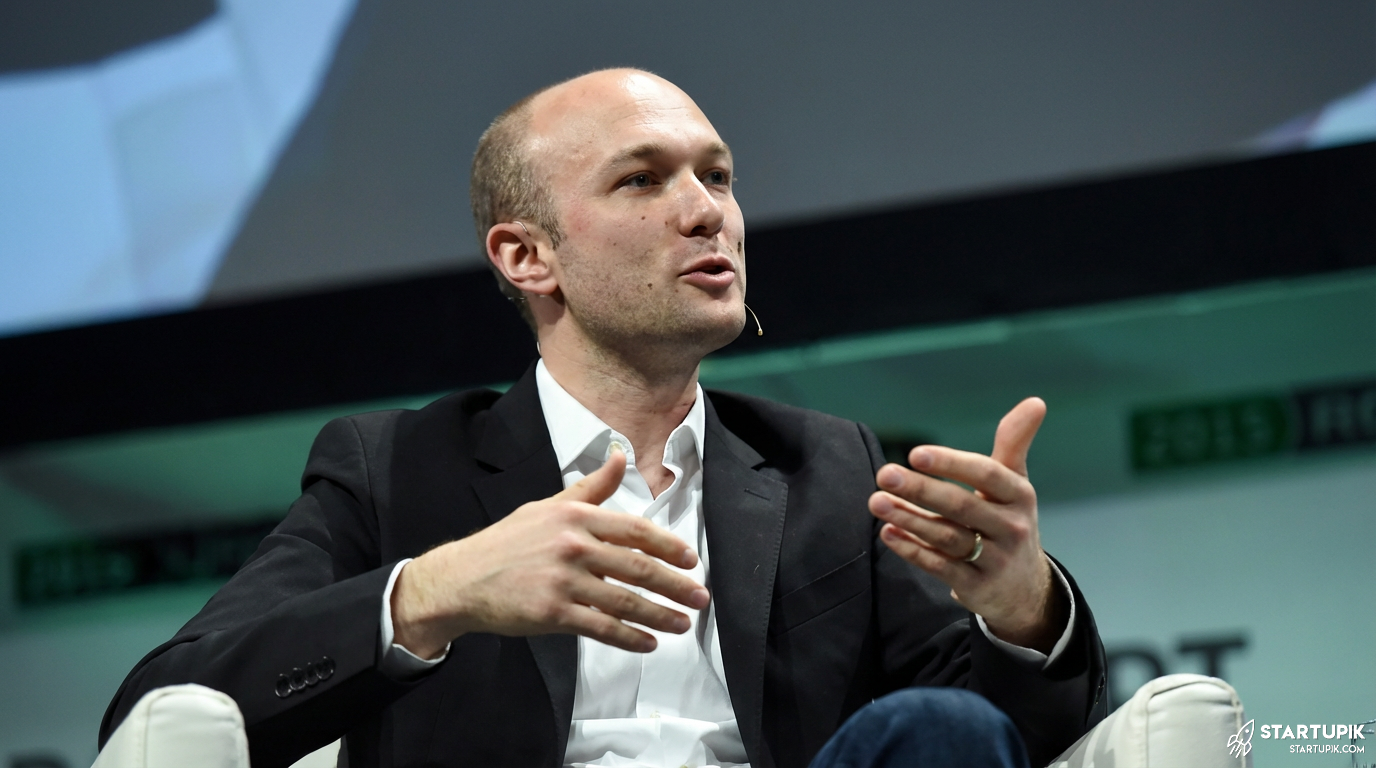
In the fast-paced, often ruthless ecosystem of Silicon Valley, where founders are frequently celebrated for their aggression and ego, Logan Green stands as a fascinating counter-narrative. He is not a brash disruptor seeking fame; he is a thoughtful urban planner seeking efficiency. Yet, despite his understated demeanor, Logan Green is the architect behind one of the most significant cultural shifts of the 21st century. As the co-founder and long-time CEO of Lyft, he did not merely build a technology company; he fundamentally altered the way human beings move through cities, interact with strangers, and view the concept of ownership.
For years, the symbol of his revolution was not a sleek logo or a minimalist app icon, but a giant, fuzzy pink mustache strapped to the grill of a car. It was ridiculous, it was loud, and it was brilliant. It signaled that Logan Green was building something different a community-driven alternative to the cold, transactional nature of traditional transportation. This article provides an exhaustive look into the life, philosophy, and enduring legacy of Logan Green, tracing his journey from a student frustrated by traffic to the leader of a multi-billion-dollar public enterprise.
The Origins of an Obsession: Traffic as the Enemy
To truly understand Logan Green, one must understand the environment that forged his worldview. Born in 1984 and raised in Los Angeles, California, he spent his formative years trapped in the backseat of cars, stuck in the legendary gridlock of the 405 and 101 freeways. For the average Angeleno, traffic is a mundane annoyance, a tax on time paid for living in a sprawling metropolis. For Logan Green, however, it was a systemic failure of imagination and engineering.
He would look out the window at the sea of metal and glass, observing a painful inefficiency: thousands of cars, each occupying roughly 150 square feet of public space, yet the vast majority carried only a single occupant. The driver. This deeper realization that we were choking our cities and poisoning our air simply because we refused to share space became the driving force of his life.
This obsession followed him to the University of California, Santa Barbara (UCSB), where he studied Business Economics. While his peers were eyeing lucrative careers in finance or consulting, Logan Green was drawn to the unglamorous world of municipal transit. He ran for a seat on the board of the Santa Barbara Metropolitan Transit District and won, becoming the youngest member in the organization’s history.
During his tenure, Logan Green learned the hard realities of public transportation. He saw that while buses and trains were efficient at moving large groups, they lacked the flexibility to solve the “last mile” problem. They were rigid, expensive to expand, and often inconvenient for the rider. He knew there had to be a middle ground between the inefficiency of the private car and the rigidity of the bus.
The Zimbabwean Epiphany: The Kombi Connection
The spark that would eventually ignite the rideshare revolution did not strike in a boardroom in Palo Alto, but on a dusty roadside in Zimbabwe. During a college trip to Africa, Logan Green witnessed a transportation network that defied Western logic but worked seamlessly in practice.
Zimbabwe’s official public transit infrastructure had largely collapsed due to economic instability. In the vacuum, a spontaneous, crowdsourced network of privately owned minivans, known as “kombis,” had emerged. Logan Green watched in fascination as these vehicles operated. They were not scheduled; they went where the demand was. Drivers filled every seat, passengers shared the cost, and the network adapted in real-time to the needs of the population.
It was a lightbulb moment. Logan Green realized that the infrastructure to solve America’s traffic problem already existed. We didn’t need to build more trains or widen more highways. The infrastructure was the millions of empty seats in cars already on the road. The problem wasn’t a lack of capacity; it was a lack of connectivity. He returned to the United States determined to build a digital version of the Zimbabwean kombi.
The First Attempt: The Rise and Limits of Zimride
In 2007, fresh with inspiration, Logan Green launched Zimride (named in honor of Zimbabwe). The platform was designed to coordinate carpools for long-distance trips, specifically targeting university campuses. The logic was sound: college students had limited budgets, high social connectivity, and a frequent need to travel home for holidays.
It was during the early days of Zimride that Logan Green met his professional soulmate, John Zimmer. Zimmer was working as an analyst at Lehman Brothers in New York but spent his spare time sketching out ideas for a carpooling network. A mutual friend introduced them via Facebook. Logan Green flew to New York, and over a series of intense conversations at a diner, they realized their visions were perfectly aligned. Zimmer quit his job, moved to Silicon Valley, and the duo began the hard work of building a company.
Zimride was a moderate success. It became the largest rideshare program in the United States, servicing hundreds of universities and corporate campuses. It was profitable and growing. However, Logan Green was not satisfied. Zimride was solving a specific problem occasional long-distance travel—but it wasn’t making a dent in the daily urban congestion that he hated so much. People were still driving alone to work every day. To change the world, they needed to capture the daily commute.
The Pivot: Betting the Farm on Lyft
The game-changer was the proliferation of the smartphone. By 2012, GPS-enabled devices were in millions of pockets, removing the friction of coordination that had plagued earlier carpooling attempts. Logan Green and Zimmer sensed an opportunity to disrupt their own business model.
They organized an internal hackathon with a simple prompt: What could we build if we assumed everyone had a smartphone? The result was a concept for an on-demand ride service within the city. You tap a button, a car arrives, and you get a ride. They called it Lyft.
This moment required immense courage from Logan Green. Zimride was a safe, revenue-generating business. Lyft was a wild experiment operating in a legal gray area that put them in direct conflict with taxi commissions and regulators. In a classic “burn the boats” maneuver, Logan Green decided to sell the Zimride assets to Enterprise Rent-A-Car. He bet the entire future of the company on Lyft.
The Pink Mustache: A Masterclass in Branding
As Lyft prepared to launch, they faced a formidable incumbent: Uber. Uber had launched a few years prior in San Francisco as a “black car” service. Their branding was sleek, exclusive, and luxurious. Their slogan was “Everyone’s Private Driver.”
Logan Green knew that trying to out-luxury Uber was a losing strategy. Instead, he chose to out-humanize them. He wanted Lyft to feel like a community, not a service. He wanted passengers to sit in the front seat, fist-bump the driver, and have a conversation. To signal this radical shift in culture, they needed a symbol that was impossible to ignore.
Enter the “Carstache.”
Ethan Eyler, a local entrepreneur, had been selling giant, fuzzy pink mustaches as novelty car accessories. Logan Green and Zimmer saw one and immediately recognized its potential. It was disarming. It was fun. It was the antithesis of the stuffy black town car.
They bought them in bulk and attached them to the grills of the first Lyft vehicles. This was a brilliant stroke of guerrilla marketing. The mustache served multiple purposes:
- Visibility: It turned every Lyft car into a moving billboard.
- differentiation: It visually separated Lyft from Uber and taxis instantly.
- Ice-Breaker: It was absurd, which forced people to smile and lower their social defenses. It made the idea of getting into a stranger’s car which was culturally taboo at the time—feel safe and whimsical.
Under the guidance of Logan Green, the pink mustache became one of the most recognized brand assets in the world. It defined the company’s spirit and attracted a different kind of driver and passenger: those who valued connection over status.
The David vs. Goliath Battle: Lyft against Uber
The rivalry that ensued between Lyft and Uber is now the stuff of business legend. It was a clash of cultures as much as a clash of apps. Uber, led by Travis Kalanick, was aggressive, expanding with a “wartime” mentality that often involved skirting regulations and attacking critics. Logan Green represented the “peacetime” general focused on values, sustainability, and treating people well.
This period tested Logan Green like never before. Uber raised significantly more capital and used it to subsidize rides, aggressively cutting prices to bleed Lyft out. There were reports of Uber employees booking and canceling Lyft rides to clog the network, and recruiters actively poaching Lyft drivers.
Through it all, Logan Green maintained a stoic, disciplined leadership style. He refused to engage in the mudslinging. Instead, he doubled down on product innovation and driver welfare. Lyft was the first to introduce tipping in the app, a feature drivers loved and Uber resisted for years. They introduced “Lyft Line” (now Lyft Shared), which finally realized the original vision of the Zimbabwean kombi by allowing strangers to share a ride and split the cost.
Logan Green argued that the market was not a zero-sum game between Lyft and Uber. The real competition, he insisted, was individual car ownership. He believed the market was large enough for two players, provided they offered distinct value propositions. His persistence paid off. Lyft survived the onslaught, gained significant market share, and established itself as the “ethical” alternative in the eyes of many consumers.
The Evolution of the Brand: Maturing for the Market
As Lyft transitioned from a scrappy startup to a logistics giant, Logan Green recognized that the brand needed to evolve. The fuzzy pink mustache had done its job, but it had limitations. It got dirty in the rain, it wasn’t aerodynamic, and it was perhaps too silly for business professionals heading to serious meetings.
In 2015, Logan Green oversaw the retirement of the Carstache. It was replaced first by the “Glowstache”—a plastic dashboard light—and later by the “Amp,” a sophisticated LED device that helped passengers identify their specific car in a crowd.
This visual evolution mirrored the maturation of Logan Green as a CEO. He was no longer just running a fun experiment; he was managing a complex organization with thousands of employees and millions of contractors. He had to balance the whimsical roots of the company with the operational rigor demanded by Wall Street investors.
The IPO and the Public Market Reality
In March 2019, Logan Green stood on a podium in Times Square and rang the opening bell for the NASDAQ. Lyft had beaten Uber to the Initial Public Offering (IPO), a symbolic victory that validated over a decade of hard work. The company raised billions of dollars, valuing the enterprise at over $24 billion.
However, the celebration was short-lived. The public markets are unforgiving, and investors immediately began to scrutinize Lyft’s path to profitability. For years, rideshare companies had burned cash to fuel growth. Now, Logan Green was under immense pressure to tighten the belt.
He navigated this transition with characteristic focus. He diversified the business, acquiring the largest bikeshare operator in North America (Motivate), thereby adding Citi Bike in New York and Divvy in Chicago to the Lyft network. This moved the company closer to his ultimate vision: a “Subscription for Transportation” where users could access cars, bikes, scooters, and transit through a single app.
The Ultimate Test: COVID-19
No challenge in the company’s history compared to the onset of the COVID-19 pandemic in early 2020. Almost overnight, the world stopped moving. Fear of infection made shared spaces terrifying. Lyft’s ride volume plummeted by nearly 75%. The company’s stock price collapsed.
Logan Green was forced to make the hardest decisions of his career. To save the company, he had to authorize significant layoffs and restructure the organization. It was a painful period, but his decisive action preserved the company’s cash reserves.
During the crisis, Logan Green also pivoted the company’s resources to help. Lyft launched initiatives to provide free rides for essential workers and partnered with local governments to deliver food and medical supplies. Even in survival mode, he tried to ensure the company remained a force for good. As the world slowly reopened, Lyft emerged leaner, more efficient, and more focused on its core economics than ever before.
Stepping Down and the Future
In March 2023, after nearly 16 years at the helm (including the Zimride years), Logan Green announced he would step down as CEO and transition to the role of non-executive Chairman of the Board. He handed the reins to David Risher, a veteran tech executive.
The announcement marked the end of an era. Logan Green had taken an idea scribbled on a napkin and turned it into a verb used by millions. His departure was not a resignation in defeat, but a strategic handoff. He recognized that for Lyft to thrive in its next phase which required ruthless operational optimization it needed a different kind of leader.
However, his influence remains woven into the DNA of the company. Logan Green remains the visionary guardian of the mission. He continues to advocate for autonomous vehicles, believing that self-driving cars will eventually lower the cost of ridesharing to below the cost of car ownership, finally ending the dominance of the private automobile.
The Enduring Legacy of Logan Green
When history looks back on the transportation revolution of the early 21st century, Logan Green will occupy a unique space. He proved that technology could be used to build social trust, not just erode it. He demonstrated that a company could survive and thrive without sacrificing its humanity.
His legacy is visible in the physical transformation of our cities. Because of the industry he helped birth, parking lots are being redeveloped into housing and parks. Curb space is being reallocated for pick-ups and drop-offs. Fewer teenagers are rushing to get their driver’s licenses, preferring the freedom of access over the burden of ownership.
Logan Green was the man who looked at a traffic jam and saw a community waiting to happen. He was the quiet introvert who forced millions of introverts to talk to each other in the back of a sedan. And while the giant pink mustaches may be gone, gathering dust in museums or garages, the spirit they represented that the journey is better when we share it—is more alive than ever.
In the end, Logan Green taught us that the road ahead doesn’t have to be lonely. He reshaped the global landscape not with concrete and steel, but with algorithms and empathy. He showed us that if you want to change the world, sometimes you just need a good idea, a little bit of courage, and a very fuzzy pink mustache.