





















Introduction
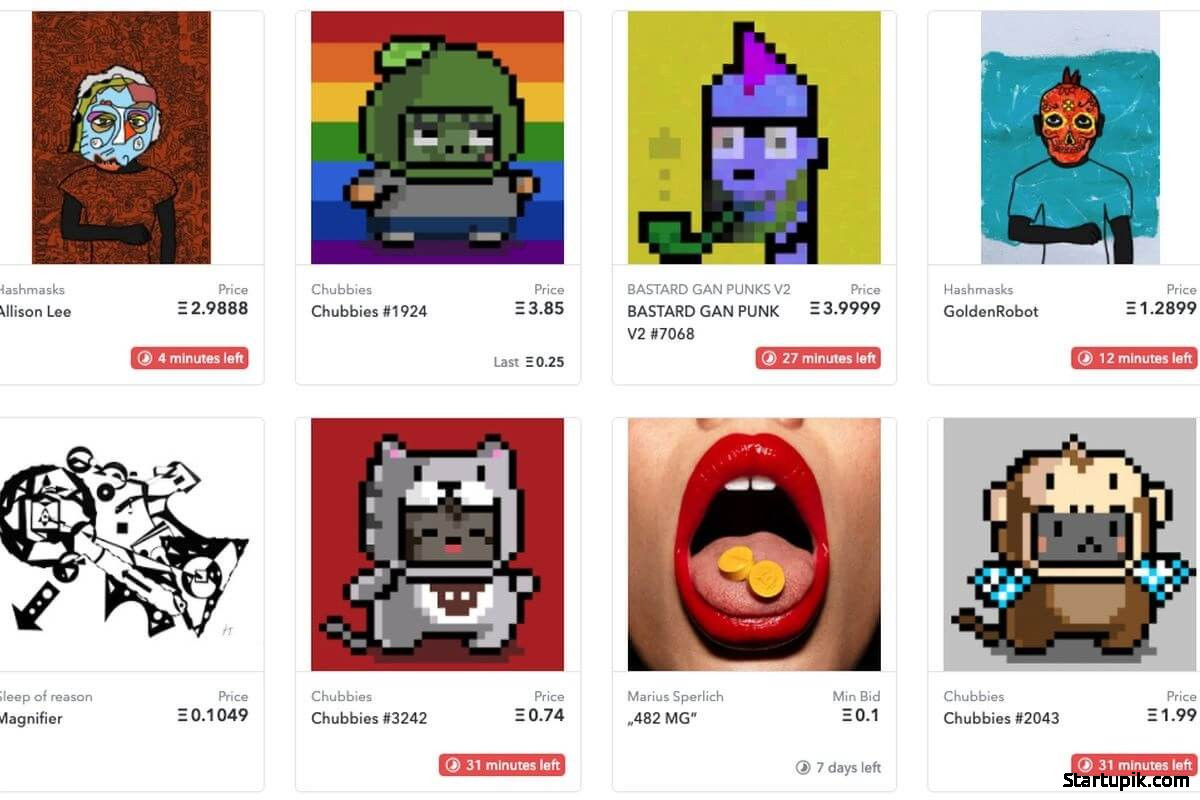
An NFT marketplace is a platform where users can mint, list, discover, buy, sell, and sometimes trade non-fungible tokens across one or more blockchains. Although the term became mainstream during the NFT boom, the underlying model is more important than the hype cycle: NFT marketplaces are a core part of how digital ownership is issued, priced, transferred, and monetized in Web3.
People search for this topic for different reasons. Founders want to understand whether launching a marketplace is a viable startup model. Developers want to know how royalties, metadata, wallets, and smart contracts actually work. Investors want to assess whether a marketplace has defensible economics or if it is simply another thin-fee aggregator in a crowded category. Creators and brands want to know whether they need a third-party platform or should build a direct-to-community commerce layer.
In practice, NFT marketplaces sit at the intersection of consumer apps, token infrastructure, on-chain identity, creator monetization, and blockchain developer tooling. Understanding how they work is useful not just for digital art, but for gaming assets, memberships, domain names, tokenized IP, real-world asset representations, and emerging on-chain commerce models.
Background
NFTs are blockchain-based tokens that represent unique assets. Unlike fungible tokens such as ETH or USDC, each NFT has distinct metadata, ownership history, and market value. Most NFTs are implemented through token standards such as ERC-721 or ERC-1155 on Ethereum-compatible chains, with parallel standards existing on Solana, Bitcoin-adjacent ecosystems, and other networks.
An NFT marketplace emerged as the commercial layer around these tokens. At a minimum, it provides:
- Wallet connectivity for identity and transaction signing
- Token indexing to display collections, ownership, price, and activity
- Smart contract interactions for listing, bidding, minting, and settlement
- Search and discovery to help users navigate fragmented asset inventories
- Compliance and trust controls such as content moderation, collection verification, and anti-fraud measures
Historically, NFT marketplaces started as relatively simple storefronts for collectibles and digital art. Over time, they evolved into more complex infrastructure businesses with aggregation, analytics, launchpad services, royalty tools, APIs, fiat on-ramps, and white-label solutions.
This evolution matters because a modern marketplace is not just a website for JPEGs. It can function as a liquidity hub, creator economy backend, on-chain commerce gateway, and distribution channel for Web3 products.
How It Works
Core Marketplace Flow
In a typical NFT marketplace, the flow works like this:
- A creator or project mints an NFT by deploying or interacting with a token contract.
- The NFT metadata is stored on-chain, off-chain, or through decentralized storage networks such as IPFS or Arweave.
- The owner connects a wallet and lists the NFT for sale, often by signing a message or approving a marketplace contract.
- A buyer discovers the asset, reviews price and provenance, and executes a purchase through a wallet transaction.
- The marketplace contract settles payment and transfers ownership, while fees are routed to the platform and, where applicable, creators.
Key Technical Components
A serious NFT marketplace relies on more than smart contracts alone. The core stack usually includes:
- Smart contracts: Handle token standards, listing logic, auctions, fee routing, and settlement.
- Indexers: Read blockchain data and convert raw events into searchable marketplace data.
- Metadata services: Resolve images, traits, file storage references, and collection-level properties.
- Wallet infrastructure: Supports MetaMask, WalletConnect, Coinbase Wallet, Phantom, and chain-specific options.
- Backend and APIs: Power notifications, analytics, rankings, search, and anti-abuse controls.
Custodial vs Non-Custodial Models
Most NFT marketplaces are non-custodial, meaning users keep assets in their own wallets until a smart contract executes a transaction. This model aligns with Web3 principles and reduces direct custody risk. However, some platforms introduce custodial layers for fiat payments, gaming UX, or compliance-heavy use cases.
For founders, this distinction is critical. Non-custodial architecture can reduce regulatory and operational burden, but it also shifts complexity to wallet UX, transaction failures, and user education.
Primary Revenue Models
NFT marketplaces typically generate revenue through:
- Transaction fees on primary or secondary sales
- Launchpad or minting services for projects
- Aggregation spreads or premium tooling
- API access for developers and enterprise clients
- Advertising, featured placements, or data products in some ecosystems
In competitive markets, fee compression is common. That means long-term defensibility often comes from ecosystem control, user distribution, data infrastructure, or vertical specialization rather than basic listing functionality.
Real-World Use Cases
NFT marketplaces are most useful when they solve a specific liquidity, distribution, or ownership problem. In real-world startup and crypto settings, common use cases include:
Gaming and In-Game Asset Economies
Web3 games use NFT marketplaces to support ownership and trading of skins, weapons, land, avatars, and in-game utility items. A marketplace becomes part of the game economy, not just a resale venue. The key design challenge is balancing speculation with gameplay utility.
Creator Commerce and Digital Membership
Creators, brands, and communities use NFTs for gated access, collectible drops, event passes, and digital memberships. In this model, the marketplace acts as a distribution and secondary-liquidity layer for community assets.
DeFi-Adjacent NFT Finance
Some DeFi platforms integrate NFTs as collateral, identity credentials, or yield-bearing wrappers. Marketplaces then become important for price discovery and liquidation pathways. This is especially relevant in collections with consistent demand and transparent floor pricing.
Domain Names and On-Chain Identity
Blockchain naming systems and identity-linked assets often trade through NFT marketplaces. This extends the concept of NFTs beyond art into digital infrastructure, where ownership has utility across wallets, apps, and social layers.
Tokenized Intellectual Property and Licensing
Early-stage experiments are using NFT marketplaces for music rights, digital licensing, and programmable content access. While this remains operationally complex, it shows how NFT infrastructure can support more sophisticated rights management models.
Market Context
NFT marketplaces are one category within a broader crypto stack. Their role becomes clearer when viewed alongside adjacent infrastructure:
- DeFi: Provides liquidity primitives, lending, collateralization, and market-making models that can intersect with NFT assets.
- Web3 infrastructure: Includes storage, indexing, wallets, node providers, data availability, and identity systems that marketplaces depend on.
- Blockchain developer tools: APIs, SDKs, analytics pipelines, contract tooling, and test environments help founders ship marketplace features faster.
- Crypto analytics: Pricing, wash trading detection, collection health, and user behavior intelligence are essential for trust and operations.
- Token infrastructure: Fungible tokens, reward systems, loyalty mechanics, and governance layers can strengthen marketplace economics.
From a business-model perspective, NFT marketplaces sit in a difficult but important position. They often face low switching costs, strong competition, and pressure from aggregators. At the same time, they can become strategic if they own a valuable niche: gaming assets, creator communities, enterprise tokenization workflows, or chain-specific liquidity.
Practical Implementation or Strategy
For founders and builders, the key question is not “Should we build an NFT marketplace?” but rather “What market inefficiency are we solving through NFT-enabled exchange?” That framing leads to more durable products.
When Building a Marketplace Makes Sense
- You already control a supply source, such as a game, creator network, or tokenized asset pipeline.
- You can target a vertical where generic marketplaces perform poorly.
- You have a strong community or distribution channel that reduces customer acquisition cost.
- You can bundle marketplace functions with infrastructure, analytics, or creator tools.
Practical Build Strategy
- Start with aggregation or niche curation: Before building full liquidity from scratch, aggregate inventory and focus on superior UX or vertical-specific features.
- Use established standards: Avoid unnecessary custom contract logic unless the use case truly requires it.
- Invest in trust systems: Verification, anti-scam detection, metadata reliability, and transparent fee structures are not optional.
- Design for mobile and mainstream UX: Wallet friction remains a major conversion bottleneck.
- Measure real liquidity: Volume alone is misleading; track repeat buyers, unique wallets, spread quality, time-to-sale, and retention.
Go-to-Market Considerations
Many startup teams underestimate how hard it is to bootstrap both sides of a marketplace. In crypto, this is even harder because users can multi-home across platforms instantly. The most effective go-to-market strategy is usually one of the following:
- Own a creator or community niche
- Embed the marketplace inside another product, such as a game or social app
- Offer infrastructure-first APIs, then layer a marketplace UI on top
- Specialize in a chain, asset class, or workflow with poor incumbent support
Advantages and Limitations
Advantages
- Programmable ownership: Assets can carry utility, access rights, and composability across applications.
- Open market access: Global participation is possible with fewer platform gatekeepers.
- Secondary market liquidity: Users and creators can benefit from post-mint trading activity.
- Transparent provenance: Blockchain history improves verification and auditability.
- New monetization models: Marketplaces can support drops, memberships, digital goods, and tokenized experiences.
Limitations
- Liquidity fragmentation: Assets are often spread across chains, platforms, and aggregators.
- Fee compression: Basic marketplace economics are increasingly commoditized.
- Regulatory uncertainty: Especially where tokenized rights, royalties, and financialized NFTs are involved.
- User experience friction: Wallets, gas fees, failed transactions, and security risks still block mainstream adoption.
- Speculative distortion: Short-term hype can obscure actual product-market fit.
The biggest mistake founders make is treating NFTs as a category rather than a mechanism. The marketplace only has value if the underlying asset, utility, and user behavior justify ongoing exchange.
Expert Insight from Ali Hajimohamadi
From a startup strategy perspective, NFT marketplaces make sense when digital ownership is central to the product experience rather than added as a marketing layer. Early-stage startups should adopt this model when they have a clear reason for users to hold, trade, or use unique digital assets over time. That is common in gaming, digital membership systems, on-chain identity, and certain creator ecosystems. It is much less compelling when the only thesis is speculative resale.
Founders should avoid building a marketplace if they do not control demand, supply, or a meaningful user workflow. A general-purpose NFT marketplace is now a difficult business unless the team has exceptional liquidity access, chain-level partnerships, or a strong ecosystem wedge. For most startups, a narrower approach is strategically stronger: vertical marketplaces, embedded trading layers, or infrastructure products serving NFT commerce behind the scenes.
The strategic advantage for early-stage teams is that NFT infrastructure can compress several business functions into one system: ownership, monetization, distribution, and community coordination. If used correctly, it can create stronger user alignment than traditional web platforms. But that advantage disappears when teams over-financialize the product too early or rely on token incentives before proving utility.
A major misconception in the crypto ecosystem is that on-chain assets automatically create defensibility. In reality, defensibility comes from product integration, community trust, workflow depth, and data advantages. The chain is the settlement layer; the startup still needs a compelling reason to exist above it.
Long term, NFT marketplaces will likely become less visible as standalone destinations and more embedded inside broader Web3 infrastructure. They will function as modular exchange layers for games, creator tools, social platforms, identity systems, and tokenized asset networks. The winning companies may not look like classic marketplaces at all; they may look like infrastructure businesses with marketplace economics built in.
Key Takeaways
- NFT marketplaces are platforms for minting, listing, discovering, and trading unique blockchain-based assets.
- They rely on a mix of smart contracts, indexing infrastructure, metadata services, and wallet connectivity.
- The strongest use cases go beyond collectibles into gaming, memberships, identity, creator commerce, and tokenized digital rights.
- Marketplace businesses are hard to defend without a niche, embedded distribution, or strong ecosystem control.
- For startups, the best strategy is often vertical specialization or infrastructure-led market entry rather than building a generic marketplace.
- NFTs are most valuable when they support real ownership, access, or interoperability, not just speculative trading.
Concept Overview Table
| Category | Primary Use Case | Typical Users | Business Model | Role in the Crypto Ecosystem |
|---|---|---|---|---|
| NFT Marketplace | Minting, listing, buying, selling, and discovering unique digital assets | Creators, collectors, traders, gamers, founders, developers, brands | Transaction fees, launchpad services, API products, premium tooling, ecosystem partnerships | Acts as a liquidity and distribution layer for digital ownership across Web3 applications |
Useful Links
- OpenSea Official Website
- OpenSea Developer Documentation
- Blur Official Website
- Reservoir Developer Documentation
- Reservoir GitHub
- ERC-721 Standard
- ERC-1155 Standard
- IPFS Documentation
- Alchemy Developer Documentation
- WalletConnect Documentation




