Introduction
Layer 2 blockchains matter because the biggest smart contract networks, especially Ethereum, have proven that demand for blockspace can outgrow the base layer’s capacity. When that happens, users face higher transaction fees, slower confirmations during congestion, and weaker product experiences. For startup founders and builders, this is not just a technical issue. It directly affects customer acquisition, retention, unit economics, and product design.
People search for “what is a Layer 2 blockchain” because they want to understand a practical question: how can crypto applications scale without giving up the security and network effects of a major Layer 1? That question is especially relevant for DeFi products, consumer crypto apps, gaming, payment systems, NFT infrastructure, and onchain business models that need lower costs and faster execution.
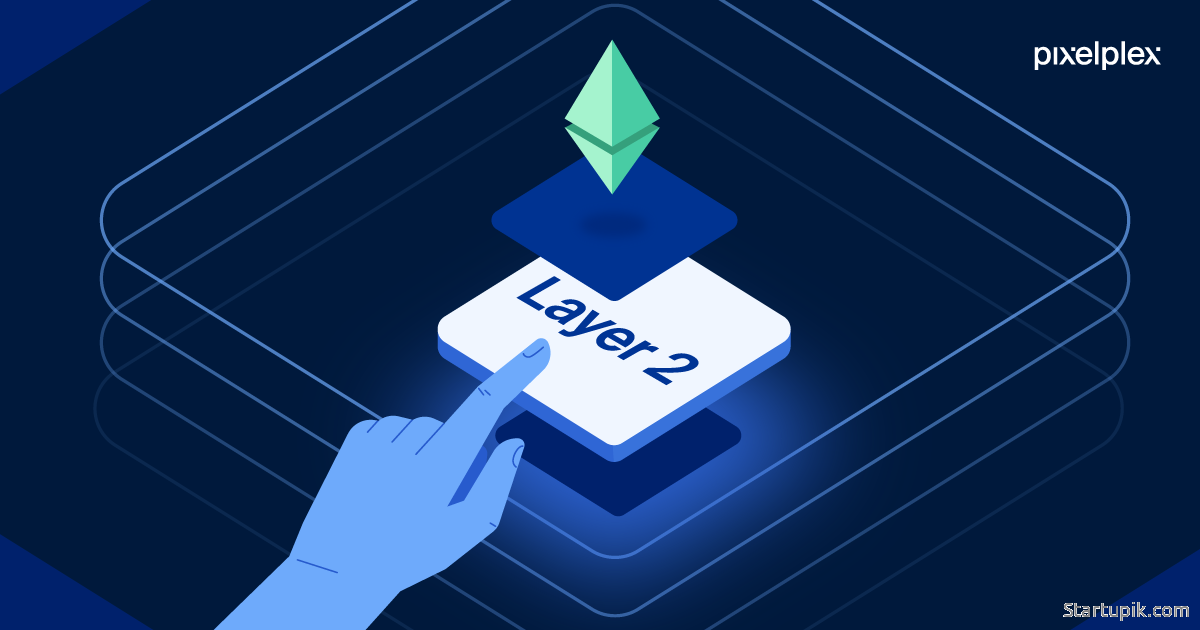
In simple terms, a Layer 2 is a network or protocol built on top of a base blockchain, usually a Layer 1 such as Ethereum, that processes transactions more efficiently while still relying on the underlying chain for security, settlement, or dispute resolution. In practice, Layer 2 is one of the most important parts of modern Web3 infrastructure because it allows startups to build products that are economically viable for real users.
Background
To understand Layer 2, it helps to start with the scaling problem in blockchain systems. A base blockchain like Ethereum is designed to be decentralized and secure, but those properties come with throughput constraints. Every node in the network must verify and reproduce state changes. That design improves trust minimization, but it also limits transaction capacity.
As decentralized finance, NFT trading, onchain gaming, and stablecoin transfers grew, demand for Ethereum blockspace increased sharply. During periods of heavy activity, transaction fees became too expensive for many mainstream use cases. A swap, token bridge, or contract interaction could cost more than the value of the action for smaller users.
This gap created the need for scaling approaches. Some projects launched alternative Layer 1 blockchains. Others focused on Layer 2 scaling, where transaction execution is moved off the main chain while final settlement or security remains tied to it. The Ethereum ecosystem in particular has leaned heavily into this model, with categories such as optimistic rollups, zk-rollups, and app-specific scaling networks becoming central to the roadmap.
Today, when people refer to Layer 2 in practice, they usually mean rollup-based systems such as Arbitrum, Optimism, Base, zkSync, Starknet, and similar scaling environments. These networks reduce cost per transaction and increase throughput while preserving access to Ethereum’s liquidity, tooling, and developer ecosystem.
How It Works
A Layer 2 network handles transactions away from the main blockchain, then posts compressed transaction data, proofs, or state updates back to the Layer 1. This design reduces the amount of work the base chain must perform for each individual transaction.
Core operating model
- Users submit transactions to the Layer 2 instead of directly to Ethereum mainnet.
- The Layer 2 executes those transactions in its own environment, often with lower fees and faster confirmation times.
- Transaction data is bundled and periodically posted to Ethereum.
- Ethereum acts as the settlement and security layer, depending on the exact Layer 2 design.
Main Layer 2 architectures
Optimistic rollups assume transactions are valid by default and allow a challenge period during which fraudulent state transitions can be disputed. This model is used by networks such as Arbitrum and Optimism.
ZK-rollups use cryptographic validity proofs to show that offchain computation is correct before finalizing it on the base chain. This can provide faster finality and stronger mathematical verification, though implementation complexity is often higher.
Why this design matters
The practical value is straightforward: instead of forcing every transaction to compete for expensive Layer 1 blockspace, the system batches activity and amortizes cost across many users. This improves application economics. A DeFi platform can support smaller trades. A Web3 social product can handle frequent user actions. A gaming app can avoid making every in-game event prohibitively expensive.
That said, not all Layer 2s are equal. Founders should evaluate:
- Security assumptions
- Sequencer decentralization
- Withdrawal speed
- Bridge design
- EVM compatibility
- Liquidity depth
- Developer tooling maturity
Real-World Use Cases
Layer 2 adoption is strongest where cost sensitivity and transaction frequency matter most.
DeFi platforms
Decentralized exchanges, lending protocols, derivatives platforms, and yield products use Layer 2 to reduce trading friction. For example, lower gas costs make smaller swaps economically viable and improve user retention. This is critical for consumer-facing DeFi products where high mainnet fees can kill activity.
Crypto exchanges and payments
Centralized exchanges increasingly support Layer 2 deposits and withdrawals to lower operational costs and improve transfer speed for users. Stablecoin-based payment products also benefit because transaction fees can remain low enough for practical transfers, payroll, remittances, and merchant settlement.
Web3 applications
Social apps, NFT platforms, loyalty systems, and consumer wallets often choose Layer 2 to avoid exposing users to mainnet-level costs. In these products, the blockchain should support the experience, not dominate it. A poor fee experience is one of the fastest ways to lose non-technical users.
Blockchain infrastructure
Wallet providers, RPC platforms, analytics tools, indexing services, and smart contract infrastructure companies build around Layer 2 ecosystems because user activity increasingly migrates there. For infrastructure startups, supporting major Layer 2s is no longer optional if the goal is to serve modern Ethereum-native applications.
Token economies
Projects launching tokens for governance, utility, incentives, or community participation often use Layer 2 to reduce distribution and interaction costs. This matters for staking, reward claims, governance voting, and micro-incentive systems where repeated user actions must remain cheap.
Market Context
Layer 2 is not an isolated niche. It sits at the center of the broader crypto stack and influences multiple categories.
- DeFi: More efficient trading, lending, derivatives, and stablecoin movement.
- Web3 infrastructure: Wallets, bridges, RPCs, explorers, and developer frameworks increasingly optimize for L2 activity.
- Blockchain developer tools: SDKs, indexing systems, account abstraction frameworks, and cross-chain tooling are increasingly L2-aware.
- Crypto analytics: Teams now track L2-specific metrics such as sequencer revenue, bridge inflows, active addresses, TVL, and app-level retention.
- Token infrastructure: Token launches, incentive programs, governance participation, and payment rails are increasingly designed around low-cost scaling environments.
From a market perspective, Layer 2 has become the execution environment for many Ethereum-based businesses. The strategic shift is important: instead of asking whether Ethereum can scale on its own, founders now ask which combination of Ethereum plus Layer 2 best fits their product model.
Practical Implementation or Strategy
For startup founders and builders, the key question is not whether Layer 2 is interesting. It is whether it improves product viability.
When building a product on Layer 2 makes sense
- You expect high transaction frequency per user.
- You need lower fees to support mainstream onboarding.
- You want access to Ethereum liquidity and tooling.
- You are building in DeFi, payments, gaming, or consumer crypto.
- Your token mechanics involve frequent claims, transfers, or interactions.
Practical implementation steps
- Choose the right L2 based on distribution, not only technology. Liquidity, wallet support, exchange support, and ecosystem grants often matter more than theoretical throughput.
- Design onboarding around bridge friction. If users must bridge funds manually before using your app, conversion may suffer. Consider fiat onramps, exchange integrations, or gas abstraction.
- Use account abstraction where appropriate. Sponsored transactions, smart wallets, and simplified sign-in can dramatically improve user experience.
- Plan multi-chain operations carefully. If your users or liquidity are split across networks, create a clear treasury, incentive, and support model.
- Monitor infrastructure dependencies. Sequencers, RPC providers, bridge providers, and indexers are critical operational dependencies.
Builder strategy
For early-stage teams, the best strategy is often to launch where user acquisition is easiest and infrastructure is mature, then expand selectively. Many founders make the mistake of over-optimizing for chain architecture before validating demand. The chain should serve distribution and retention, not replace them.
Advantages and Limitations
Advantages
- Lower fees: Enables use cases that are not viable on congested Layer 1 environments.
- Higher throughput: Supports more user activity and richer product design.
- Access to Ethereum ecosystem: Security alignment, liquidity access, developer tooling, and established standards.
- Better user experience: Faster confirmations and lower transaction cost improve product usability.
- Scalable token design: Makes reward systems, governance interactions, and microtransactions more practical.
Limitations
- Fragmented liquidity: Assets and users can become split across multiple Layer 2 environments.
- Bridge risk: Bridges remain one of the most sensitive points in the crypto stack.
- Operational complexity: Infrastructure, support, treasury management, and analytics become harder in multi-chain environments.
- Centralization concerns: Some Layer 2s still depend on centralized sequencers or governance structures.
- User confusion: Network switching, bridging, and asset representations can create onboarding friction.
The balanced view is this: Layer 2 solves major scaling and cost problems, but it does not remove execution risk. It changes the risk profile from “expensive and congested” to “more scalable but more operationally complex.”
Expert Insight from Ali Hajimohamadi
From a startup strategy perspective, Layer 2 should be adopted when it directly improves the economics of the product. If a crypto startup relies on frequent user actions, lower-value transactions, or growth loops that would be too expensive on mainnet, Layer 2 is often the right infrastructure choice. This is particularly true for DeFi products targeting active traders, consumer wallets, payment systems, and Web3 applications that need repeated interactions rather than occasional high-value settlement.
Founders should avoid adopting Layer 2 simply because it is popular in the market narrative. If the startup has not validated demand, has no clear onchain behavior model, or depends heavily on liquidity that only exists on a different network, choosing an L2 too early can create unnecessary complexity. In early-stage products, distribution and clarity of use case matter more than attaching to a trending chain ecosystem.
The strategic advantage for startups is that Layer 2 can compress costs at a critical stage of growth. It enables product experiments that would otherwise be economically impossible. Teams can test token incentives, social mechanics, micro-payments, or onchain workflows without forcing users to pay mainnet-level fees. That creates room for faster iteration and better onboarding.
The biggest misconception in the crypto ecosystem is that all Layer 2s are interchangeable. They are not. Differences in bridge design, ecosystem incentives, wallet support, developer tooling, and application liquidity can materially affect startup outcomes. Another misconception is that lower fees automatically lead to adoption. They do not. A poor product on a cheap network is still a poor product.
In the long-term evolution of Web3 infrastructure, Layer 2 is likely to become the default execution layer for many applications, while Layer 1 functions more as a security and settlement foundation. That architectural shift matters for founders because it changes where value is created. In many cases, the winning opportunity is not building a new chain, but building better products, tooling, and user experiences on top of scalable infrastructure that already has market trust.
Key Takeaways
- Layer 2 blockchains scale major base chains by processing activity more efficiently and settling back to the underlying network.
- They matter because high Layer 1 fees can destroy product usability and startup economics.
- Rollups, especially optimistic and zero-knowledge rollups, are the dominant L2 model in the Ethereum ecosystem.
- DeFi, payments, Web3 consumer apps, token economies, and infrastructure startups are major beneficiaries of Layer 2 adoption.
- Choosing an L2 is a business decision as much as a technical one; liquidity, tooling, exchange support, and onboarding matter.
- Layer 2 offers lower fees and higher throughput, but introduces bridge risk, liquidity fragmentation, and operational complexity.
- For founders, the best use of Layer 2 is to improve distribution, user experience, and economic viability, not to follow hype.
Concept Overview Table
| Category | Primary Use Case | Typical Users | Business Model | Role in the Crypto Ecosystem |
|---|---|---|---|---|
| Layer 2 Blockchain | Scaling transactions while preserving connection to a base Layer 1 | DeFi users, developers, startups, wallets, exchanges, investors | Sequencer fees, ecosystem incentives, infrastructure services, app revenue | Execution layer for scalable Web3 applications and lower-cost onchain activity |
Useful Links
- Ethereum Layer 2 Overview
- Arbitrum Documentation
- Optimism Documentation
- Base Developer Docs
- zkSync Documentation
- Starknet Documentation
- Arbitrum GitHub
- Optimism GitHub