





















Introduction
The NFT marketplace business model matters because marketplaces became the commercial layer that turned non-fungible tokens from a technical standard into an accessible internet product. When founders, developers, and investors search for this topic, they are usually trying to answer practical questions: where does revenue come from, what makes one marketplace defensible, how should fees be structured, and whether NFT marketplaces still represent a viable Web3 business after the speculative cycle cooled.
That is the right framing. The real value of an NFT marketplace is not simply “buying and selling JPEGs.” In practice, marketplaces sit at the intersection of token infrastructure, creator monetization, on-chain identity, gaming economies, digital collectibles, and blockchain-based ownership systems. For startups, the business model is attractive because it can combine transaction fees, liquidity aggregation, developer tooling, and ecosystem incentives into a scalable platform. But it is also difficult because liquidity is fragmented, user acquisition is expensive, regulatory questions remain open, and many early NFT platforms depended too heavily on speculation rather than durable utility.
Understanding the NFT marketplace business model today requires looking beyond hype and into the operational mechanics: how listings are created, how royalties are enforced or bypassed, how custody works, how marketplace contracts settle trades, and how startup teams build trust in an environment where smart contract risk and wash trading are real concerns.
Background
An NFT marketplace is a platform that enables users to mint, list, discover, buy, sell, and sometimes lend or fractionalize non-fungible tokens. NFTs are unique blockchain-based assets usually implemented through token standards such as ERC-721 and ERC-1155 on Ethereum and equivalent standards on chains like Solana, Polygon, BNB Chain, and others.
The first wave of NFT marketplaces focused on collectibles and art. Over time, the category expanded into:
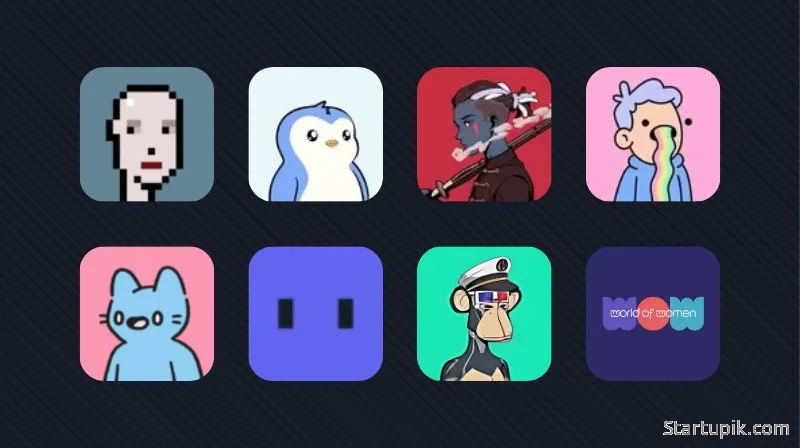
- Profile picture collections and digital collectibles
- Gaming assets such as skins, weapons, land, and avatars
- Music and media rights
- Membership and access tokens
- Domain names and identity assets
- Real-world asset representations in experimental formats
From a startup perspective, NFT marketplaces are closer to multi-sided platforms than simple e-commerce sites. They must attract both supply and demand: creators or collections on one side, collectors and traders on the other. This creates the classic marketplace challenge of solving liquidity and network effects simultaneously.
Historically, leading NFT marketplaces generated rapid growth during bull markets, but the sector also exposed structural weaknesses. Fee compression, creator royalty disputes, mercenary liquidity, bot-driven activity, and chain fragmentation all forced a shift from general-purpose marketplaces toward more specialized models.
How It Works
At a functional level, an NFT marketplace combines smart contracts, wallet connectivity, metadata indexing, search and discovery systems, and payment settlement infrastructure.
Core operating flow
- Minting: A creator or project deploys NFTs through a smart contract or uses a launchpad flow provided by the marketplace.
- Listing: The owner signs a listing order or transfers the NFT into a marketplace-enabled contract, depending on the architecture.
- Discovery: Buyers browse indexed collections, rarity traits, price history, and wallet activity.
- Execution: A buyer submits a purchase transaction; smart contracts settle the transfer of the NFT and payment token.
- Fees and royalties: The platform deducts marketplace fees; creator royalties may be paid automatically if the standard and marketplace design support them.
Where the money comes from
The most common NFT marketplace revenue streams include:
- Transaction fees: A percentage of each sale, often 0.5% to 5% depending on market position and category.
- Minting and launch fees: Charges for collection deployment, primary drops, or launchpad services.
- Premium placement: Featured collections, discovery boosts, or sponsored visibility.
- API and developer services: Data access, indexing, trading APIs, and infrastructure services for other apps.
- Treasury and token mechanisms: In some models, a native token captures part of ecosystem value, although this introduces token design and regulatory complexity.
- Ancillary financial services: NFT lending, collateralization, portfolio analytics, and tokenized access layers.
Operational components founders should understand
In practice, the marketplace business model depends on technical and economic choices:
- Custodial vs non-custodial architecture
- On-chain order book vs off-chain signed orders
- Single-chain vs multichain support
- Royalty enforcement mechanisms
- Aggregator model vs native liquidity model
- Consumer marketplace vs vertical niche marketplace
These decisions directly affect cost, compliance exposure, UX friction, and margin structure.
Real-World Use Cases
The NFT marketplace model is most useful when tied to a specific on-chain economy rather than treated as a standalone speculation platform.
Gaming and metaverse assets
Web3 game studios use NFT marketplaces to create secondary markets for in-game items. This gives players real ownership and can extend engagement beyond the game client. For startup teams, the marketplace can become a monetization layer through secondary sale fees, but only if the game economy remains balanced and asset inflation is controlled.
Creator and media ecosystems
Music platforms, creator communities, and membership-based Web3 applications can use NFT marketplaces to manage access tokens, limited releases, or collectible media. In this model, the marketplace is less about high-frequency trading and more about distribution, identity, and community monetization.
DeFi-adjacent NFT finance
In DeFi, NFTs can serve as collateral, receipts, position wrappers, or tokenized claims. Specialized marketplaces support price discovery and liquidation infrastructure for such assets. This is very different from art NFTs; here, marketplace quality depends on valuation data, liquidation logic, and integration with lending protocols.
Domain names and digital identity
NFT marketplaces are used for blockchain domain trading and wallet-linked identity assets. This use case tends to have more persistent utility because domains are infrastructure-like assets rather than pure collectibles.
Launchpads for collections and tokenized brands
Some startups build marketplaces tightly integrated with primary issuance. They earn from launch services, mint tooling, analytics, and secondary trading. This approach can work well for niche categories such as sports collectibles, fashion, event access, or region-specific creator ecosystems.
Market Context
The NFT marketplace business model does not exist in isolation. It is part of a broader crypto stack that includes:
- DeFi: NFT-backed lending, liquidity routing, and tokenized collateral systems
- Web3 infrastructure: wallets, RPC providers, indexers, storage systems, and identity tools
- Blockchain developer tools: SDKs, contract deployment platforms, APIs, and analytics dashboards
- Crypto analytics: on-chain data, wash-trade detection, wallet intelligence, and pricing engines
- Token infrastructure: minting standards, royalty frameworks, access control, and cross-chain messaging
One of the biggest shifts in the market has been the move from general NFT marketplaces toward specialized or infrastructure-driven models. Broad horizontal marketplaces face heavy competition, thin differentiation, and fee pressure. By contrast, vertical marketplaces focused on gaming, music, identity, or tokenized utility can build stronger retention and more defensible data advantages.
Another important market trend is aggregation. Users increasingly expect the best price and deepest liquidity regardless of where the listing originated. That makes it harder for pure marketplaces to maintain take rates unless they own a niche community, proprietary inventory, or workflow-level advantage.
Practical Implementation or Strategy
For startup founders and crypto builders, the best question is not “Should we launch an NFT marketplace?” but “What transaction layer are we enabling, for whom, and why will liquidity stay?”
When building a marketplace makes sense
- You control or strongly influence the asset supply, such as a game studio, launch platform, or creator network.
- You serve a niche with unique metadata, valuation logic, or compliance requirements.
- You can bundle the marketplace with infrastructure, such as wallets, analytics, minting tools, or community access systems.
- You have an existing audience or ecosystem where NFT transactions are a natural extension of user behavior.
Recommended go-to-market strategy
- Start vertical: Build for one category with clear buyer behavior rather than launching a generic NFT exchange.
- Own primary issuance: Secondary liquidity is easier to bootstrap if you control launches, creator onboarding, or ecosystem access.
- Reduce trust friction: Audit contracts, publish clear fee structures, show wallet-level data, and provide transparent metadata policies.
- Design for liquidity, not page views: Collection depth, bid activity, spread, and conversion matter more than vanity traffic.
- Integrate analytics early: Wash trading, fake volume, and manipulative listing behavior can destroy marketplace credibility.
- Plan for multichain only if justified: Cross-chain support adds complexity. Do it when your users actually span ecosystems.
Business model design choices
Founders should usually combine several monetization layers rather than rely only on trading fees:
- Low or competitive transaction fee to attract activity
- Higher-margin launchpad or creator tooling services
- B2B API products for wallets, games, or analytics platforms
- Premium membership or pro trader features
- Data products for pricing, rarity, or collection intelligence
This diversified model is more resilient in bear markets when trading volumes decline.
Advantages and Limitations
Advantages
- Scalable fee-based monetization: Marketplaces can grow with network effects if liquidity compounds.
- Programmable ownership: Assets can carry utility, access rights, or composability across applications.
- Global user base: Crypto-native platforms can reach users without traditional geographic constraints.
- Strong data layer: On-chain transactions create transparent market data that can power analytics and downstream products.
- Ecosystem expansion: Marketplaces can evolve into launchpads, finance layers, or infrastructure providers.
Limitations and risks
- Liquidity fragmentation: Volume spreads across chains, aggregators, and competing venues.
- Fee compression: Competing on trading fees alone is rarely durable.
- Regulatory uncertainty: Some NFT categories may raise securities, consumer protection, or IP-related concerns.
- Royalties are not guaranteed: Creator royalty models remain technically and economically contested.
- Security exposure: Smart contract bugs, phishing, fake collections, and metadata manipulation are ongoing threats.
- Cyclicality: NFT demand is highly sensitive to broader crypto market sentiment.
Expert Insight from Ali Hajimohamadi
From a startup strategy perspective, NFT marketplaces are worth adopting when the marketplace is a distribution and liquidity layer for a broader product ecosystem, not when it is the product by itself. Early-stage startups should consider this model if they already have controlled asset issuance, a strong niche community, or a workflow where tokenized ownership solves a real coordination problem. Good examples include Web3 gaming economies, identity-linked assets, creator memberships, or tokenized access systems.
Founders should avoid building an NFT marketplace when their only thesis is that trading volume will appear because the NFT sector exists. In practice, generalized marketplaces are expensive to grow, difficult to differentiate, and often vulnerable to aggregators that capture demand without owning supply. If a startup does not control asset quality, distribution, or unique transaction context, it is likely competing on UX and fees alone, which is not a strong long-term position.
For early-stage startups, the strategic advantage lies in vertical integration. A team that combines minting, community onboarding, wallet UX, analytics, and secondary trading can create a tighter product loop than a standalone marketplace. That integrated approach also improves retention because users return for utility, not just speculation.
One major misconception in the crypto ecosystem is that NFTs are a category rather than a format. The better view is that NFTs are infrastructure for unique digital ownership. The business opportunity is not “build an NFT company,” but “build a company where unique on-chain assets improve access, economics, interoperability, or user incentives.”
Long term, NFT marketplaces will likely become less visible as standalone destinations and more embedded into broader Web3 infrastructure. They will function inside games, creator platforms, wallets, DeFi systems, and identity products. The winners will not necessarily be the marketplaces with the most collections, but the platforms with the best contextual liquidity, trust infrastructure, and application-specific utility.
Key Takeaways
- NFT marketplaces are multi-sided platforms that depend on both asset supply and buyer liquidity.
- Transaction fees alone are not enough; resilient businesses add launch tools, analytics, APIs, and ecosystem services.
- Vertical specialization is usually stronger than a general marketplace strategy, especially in gaming, creator economies, and identity-based assets.
- Marketplaces work best when embedded into a broader product ecosystem, not treated as isolated trading venues.
- Liquidity, trust, and data quality matter more than hype, especially in post-speculative NFT markets.
- Security, compliance, and royalty design remain major operational and strategic challenges.
- The long-term role of NFT marketplaces is likely to be infrastructure-level, integrated into Web3 applications and token economies.
Concept Overview Table
| Category | Primary Use Case | Typical Users | Business Model | Role in the Crypto Ecosystem |
|---|---|---|---|---|
| NFT Marketplace | Minting, listing, discovery, and trading of unique on-chain assets | Creators, collectors, traders, game studios, Web3 builders, investors | Transaction fees, launchpad fees, API access, premium placement, analytics, ancillary financial services | Commercial and liquidity layer for digital ownership, creator economies, gaming assets, and tokenized access systems |
Useful Links
- ERC-721 Standard Documentation
- ERC-1155 Standard Documentation
- OpenSea Developer Documentation
- Reservoir Developer Docs
- Alchemy NFT API Documentation
- Moralis NFT API Documentation
- Seaport GitHub Repository




