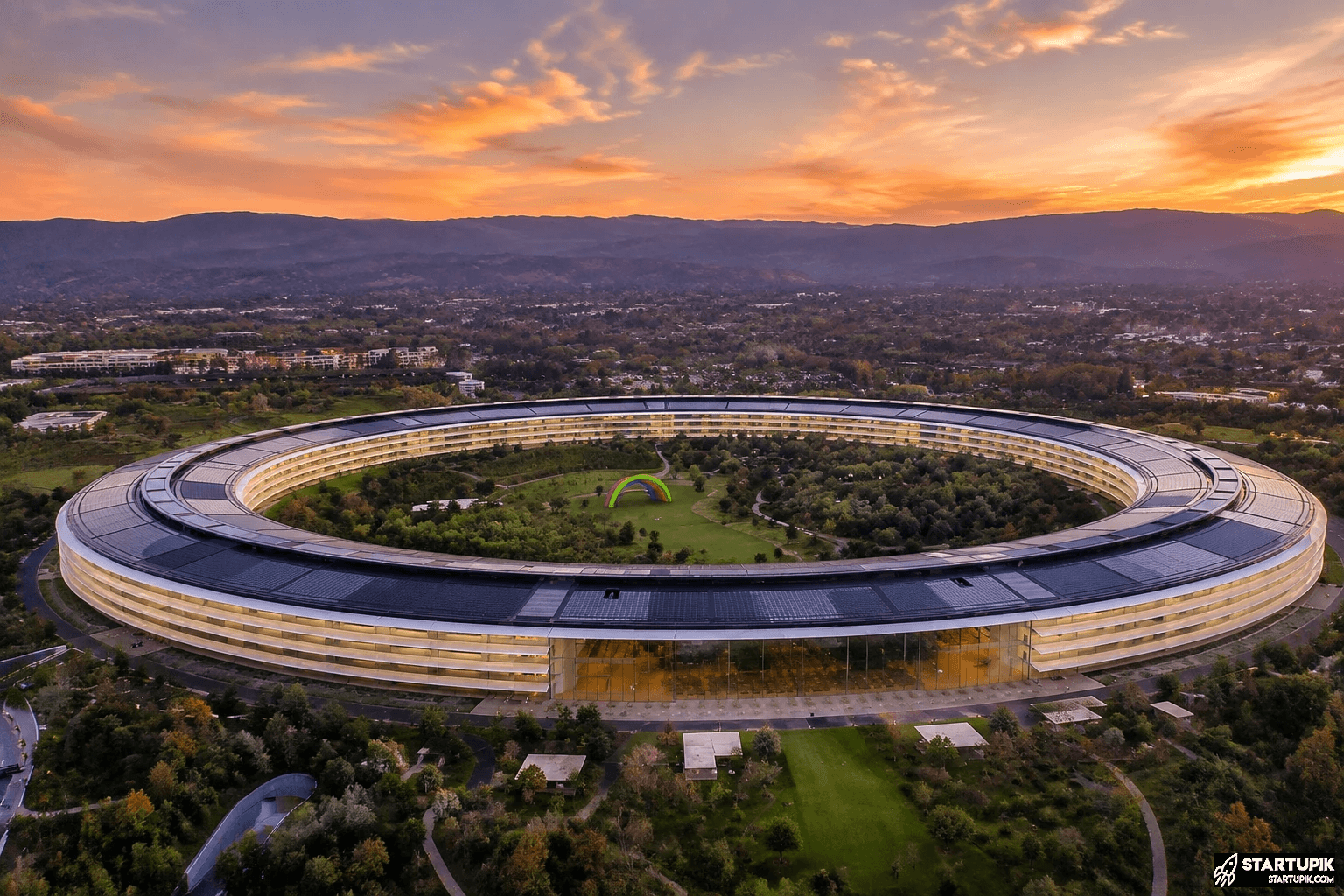
The Hidden Drivers Behind Silicon Valley
Silicon Valley is not driven by talent and venture capital alone. Its real edge comes from a tight system: fast capital formation, dense founder networks, technical talent loops, university research, risk-tolerant culture, and infrastructure that helps startups scale quickly.
In 2026, this matters even more because AI, defense tech, fintech, and developer infrastructure are concentrating power around ecosystems that can turn research into companies faster than other regions.
Quick Answer
- Silicon Valley runs on network density, where founders, engineers, investors, recruiters, and early customers interact repeatedly.
- Venture capital is only one layer; the stronger driver is how fast money, talent, and distribution connect around a promising startup.
- Stanford, Berkeley, and nearby research labs keep feeding technical breakthroughs into new companies.
- The Valley rewards speed and second chances, which makes high-risk startup formation more common than in many other regions.
- Large tech platforms like Google, Meta, Apple, Nvidia, and Salesforce act as training grounds for future founders and operators.
- The ecosystem works best for venture-scale businesses, but often fails founders building slower, capital-efficient, or non-network-driven companies.
Why Silicon Valley Still Matters Right Now
Many people claim Silicon Valley is losing relevance because remote work, global hiring, and distributed startup teams are now normal. That is partly true. But it misses what still makes the region unusually powerful.
The Valley is not just a place. It is a high-speed decision environment. A founder can meet an angel investor, hire an ex-Stripe engineer, get design feedback from a former Airbnb operator, and land a pilot with a Fortune 500 innovation team within weeks.
That compression of time is the real advantage.
The Core Hidden Drivers
1. Network Density, Not Just Networking
Most outsiders think the Valley wins because people “know each other.” That is too shallow. What matters is network density: the number of high-value interactions per week between people who can actually change a startup’s trajectory.
In Silicon Valley, one introduction can unlock:
- pre-seed capital
- first engineering hires
- product feedback from experienced operators
- early enterprise pilots
- press and platform visibility
When this works: founder-led B2B SaaS, AI infrastructure, developer tools, fintech APIs, and deep tech startups that need trust and fast iteration.
When it fails: businesses that do not benefit from elite networks, such as hyperlocal services, niche lifestyle products, or companies where execution matters more than introductions.
2. Venture Capital as a Speed Engine
VC is often described as the main driver. In reality, capital is powerful because of how quickly it moves inside the Valley ecosystem.
Funds like Sequoia, Andreessen Horowitz, Accel, Founders Fund, Greylock, and Benchmark do more than write checks. They create signaling effects. A respected lead investor can make recruiting, partnerships, follow-on rounds, and media coverage easier.
This matters especially in AI and infrastructure markets, where speed can decide category leadership.
Trade-off: this system rewards companies that can tell a large market story. It can overfund hype cycles and underfund durable but less glamorous businesses.
3. Talent Recycling from Big Tech
Silicon Valley benefits from a constant talent recycling loop. Engineers, product managers, growth leaders, and infrastructure specialists leave companies like Google, Apple, Nvidia, OpenAI, Meta, Salesforce, Stripe, and Palantir to join or start startups.
That creates three advantages:
- experienced operators join early-stage companies faster
- best practices spread quickly across the ecosystem
- founders build with people who have seen scale before
A startup building AI observability or cloud security in San Francisco is not hiring generic software talent. It is often hiring people who worked on real distributed systems, ad platforms, GPU infrastructure, or enterprise go-to-market motions.
When this works: technically hard products with complex scaling needs.
When it fails: early teams can become too expensive, too process-heavy, or too reliant on “big company thinking.”
4. Research Commercialization
Stanford, UC Berkeley, and nearby labs remain major engines of startup creation. The hidden driver is not academic prestige by itself. It is the conversion of research into venture-backable products.
This is especially visible in:
- foundation models and applied AI
- robotics
- semiconductors
- bioengineering
- cybersecurity
- climate tech
In 2026, as AI model layers commoditize, more value is shifting toward applied systems, inference optimization, agents, robotics, and vertical software built on research-heavy foundations. Silicon Valley is still one of the best places to commercialize that quickly.
5. Risk Tolerance and Failure Normalization
One hidden driver is cultural: failure is treated as data. A founder with a failed startup is often still fundable if they can explain what they learned and why the next market is better.
That changes behavior. People take bigger swings. Employees leave stable jobs sooner. Angels invest earlier. Founders attempt markets that look irrational from the outside.
Why it works: innovation often requires trying ideas that look wrong before they look obvious.
Trade-off: this culture can also create inflated narratives, shallow conviction, and copycat startup waves.
6. Immediate Access to Design Partners and Early Customers
Many of the Valley’s hidden drivers are commercial, not technical. The region has a dense base of startups, enterprises, developer communities, and innovation teams willing to test new tools.
If you are building:
- an AI coding assistant
- a fintech orchestration API
- a data observability platform
- a Web3 developer tool
- a GTM workflow product
you can often find early users who understand unfinished products and are willing to co-develop with you.
That is a major advantage over regions where buyers expect fully mature solutions before engaging.
How the System Actually Works
Silicon Valley operates like a compounding machine. Each layer reinforces the others.
| Driver | What It Does | Why It Matters |
|---|---|---|
| Elite universities | Produce research and technical talent | Feeds new startup ideas and founding teams |
| Big tech companies | Train operators at scale | Creates experienced startup talent |
| VC firms and angels | Provide fast capital and signaling | Speeds hiring and market entry |
| Founder networks | Share intros, advice, and talent | Reduces friction at every stage |
| Service ecosystem | Law firms, recruiters, PR, cloud credits | Makes startup formation easier |
| Early adopters | Test new products quickly | Improves iteration speed |
The key insight: none of these drivers dominates alone. The Valley wins because the layers are interconnected.
What Founders Usually Get Wrong
They Overestimate Money and Underestimate Proximity
Many founders think moving to Silicon Valley is mainly about fundraising. That is incomplete. The deeper value is proximity to fast feedback loops.
A founder raising in New York, London, Dubai, or Singapore can still access capital. What is harder to replicate is spontaneous access to high-context advice from people who have built similar companies before.
They Confuse Prestige with Fit
Not every startup should be in Silicon Valley. If your business needs regulatory depth, manufacturing access, or local market distribution, another ecosystem may be better.
Examples:
- Fintech compliance-heavy products may benefit from New York, London, or Singapore.
- Industrial and supply-chain startups may do better near manufacturing hubs.
- Crypto-native protocol teams may operate globally with hubs in Dubai, Singapore, Lisbon, or Zug.
The Valley is strongest when speed, talent concentration, and venture dynamics are your bottlenecks.
Why Silicon Valley Works Better for Some Startups Than Others
Best fit
- AI infrastructure startups
- developer tools
- B2B SaaS with venture-scale upside
- deep tech spinouts
- enterprise software needing top-tier talent
- category-creation startups
Weaker fit
- small profitable SaaS businesses
- bootstrapped agencies
- local marketplace models
- businesses with low need for network effects
- founders optimizing for ownership over speed
Trade-off: Silicon Valley can accelerate growth, but it often increases burn rate, hiring costs, and pressure to pursue a bigger narrative than the business may support.
Recent Shifts Changing the Valley in 2026
AI Has Increased Centralization Again
For a few years, people believed startup ecosystems would become fully distributed. AI changed that. Access to model talent, GPU infrastructure, applied researchers, and frontier startup capital has pulled attention back toward the Bay Area.
Companies building around Nvidia stacks, OpenAI ecosystems, Anthropic integrations, vector databases, agent orchestration, and inference tooling often still find the Bay Area unusually efficient.
Defense and Hard Tech Are More Accepted
There has been a noticeable increase in support for defense tech, industrial software, climate infrastructure, and robotics. The Valley is broader than the old consumer-social stereotype.
This shift matters because serious technical founders now have more legitimate paths to build venture-scale businesses outside pure software.
Remote Work Reduced Geography, But Not Power Networks
You do not need to live full-time in Palo Alto or San Francisco to build a strong company. But the most powerful parts of the ecosystem still depend on recurring in-person trust formation.
That means founders can be distributed, but relationship-building is still concentrated.
Expert Insight: Ali Hajimohamadi
Most founders think Silicon Valley gives them capital. The real advantage is that it shortens the time between “interesting idea” and “market truth.”
The mistake is moving there too early for status. If you have no sharp thesis, no credible prototype, and no clear market wedge, the Valley amplifies your weaknesses as fast as your strengths.
My rule: go when speed is your bottleneck, not when confidence is your bottleneck. If the next right decision depends on better feedback, hires, and distribution access, Silicon Valley can be a force multiplier. If you are still searching for basic clarity, it can become an expensive distraction.
The Real Economic Engine Behind the Narrative
Silicon Valley’s mythology often focuses on genius founders. The more practical explanation is infrastructure around company creation.
That includes:
- specialized startup law firms
- recruiters for early technical hires
- angel syndicates
- operator communities
- accelerators like Y Combinator
- cloud and AI startup programs from AWS, Google Cloud, Microsoft Azure, and Nvidia
These services lower startup friction. They do not guarantee success, but they reduce the cost of getting to the next milestone.
When Silicon Valley Stops Being an Advantage
The same drivers that create speed can create distortion.
- Too much capital can hide weak unit economics.
- Too much founder advice can create strategy noise.
- Too much hype can push startups into crowded markets.
- Too much talent density can inflate salaries and churn.
A founder building a vertical SaaS product with strong retention and slow sales cycles may get less value from the Valley than from staying close to customers in a specific industry.
In other words, ecosystem strength does not replace business-model fit.
Practical Takeaways for Founders
- Use Silicon Valley for acceleration, not identity.
- Go there if you need fast capital, elite talent, or category-shaping networks.
- Avoid it if your company wins through patience, capital efficiency, or geographic specialization.
- Prioritize repeated exposure over one-time visits. Dense ecosystems reward consistency.
- Do not confuse visibility with traction. Many startups become well-known before becoming durable.
FAQ
What is the biggest hidden driver behind Silicon Valley?
Network density is the biggest hidden driver. It compresses fundraising, hiring, customer discovery, and learning into much shorter cycles.
Is venture capital the main reason Silicon Valley dominates?
No. Venture capital matters, but it is more accurate to say the Valley dominates because capital, talent, and distribution are tightly connected.
Can startups outside Silicon Valley still win in 2026?
Yes. Many can. Remote teams, cloud infrastructure, and global hiring make startup creation more distributed. But Silicon Valley still offers an edge for venture-scale, high-speed, technical startups.
Who should consider building in Silicon Valley?
Founders in AI, developer tools, enterprise SaaS, deep tech, and infrastructure often benefit most. These categories gain the most from concentrated talent and investor networks.
Who should avoid Silicon Valley?
Bootstrappers, local businesses, low-margin operators, and founders who do not need elite network access may be better off elsewhere. The cost and pressure can outweigh the benefits.
Has remote work weakened Silicon Valley?
It has weakened geography as a hard requirement, but not as a trust network. Important relationships are still formed faster through repeated in-person interaction.
Why does Silicon Valley matter more again now?
AI, robotics, defense tech, and infrastructure startups are pulling capital and talent back into concentrated ecosystems. The Bay Area remains one of the fastest places to turn technical breakthroughs into venture-backed companies.
Final Summary
The hidden drivers behind Silicon Valley are not just money, talent, or reputation in isolation. They are the feedback loops between capital, talent, research, customers, and trust.
That system works best for startups that need speed, signaling, and specialized operators. It works poorly for founders who need patience, cost control, or local market depth. In 2026, Silicon Valley still matters because it remains one of the few places where ambitious ideas can move from concept to company at extreme speed.