




























Decentralized finance promised open markets without gatekeepers, but for many users the reality still feels messy: too many wallets, too many token pairs, too much jargon, and too much room for expensive mistakes. That gap between DeFi’s promise and its day-to-day usability is exactly why PancakeSwap matters. It takes a complex set of on-chain activities—swapping tokens, providing liquidity, earning yield, participating in ecosystem launches—and wraps them into a workflow that is accessible enough for first-time users while still powerful enough for serious crypto builders.
If you are a founder, developer, or active crypto user, understanding PancakeSwap is not just about learning one exchange. It is about understanding how modern DeFi products create liquidity, bootstrap communities, and turn idle capital into network participation. PancakeSwap sits at the center of that model, especially for users operating on BNB Chain and other supported networks.
This article breaks down the full PancakeSwap workflow: how trading works, where yield comes from, how liquidity is structured, and when the platform is useful versus when it introduces unnecessary risk.
Why PancakeSwap Became a Core DeFi Gateway
PancakeSwap is a decentralized exchange, or DEX, originally known for its strong position on BNB Chain. Instead of relying on a centralized order book like a traditional exchange, it uses automated market makers (AMMs), where liquidity pools make token swaps possible.
In practical terms, this means users can connect a wallet, choose a token pair, and trade directly on-chain. There is no account creation in the conventional sense, no centralized custodian holding assets, and no intermediary deciding which users can participate. That model has made PancakeSwap especially attractive in markets where users want fast access to tokens, low fees compared to Ethereum mainnet, and more direct control over assets.
But PancakeSwap is more than a place to swap tokens. It has evolved into a broader DeFi workflow engine with products for:
- Token swaps
- Liquidity provision
- Yield farming
- Staking
- Perpetuals and advanced trading tools in some ecosystem contexts
- Token launches and community participation
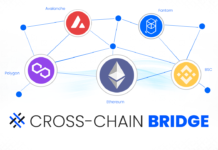
- Cross-chain access across supported networks
For startups and crypto-native teams, that combination matters. Liquidity is not just a market mechanic; it is part of growth, distribution, token economics, and community trust.
From Wallet Connection to First Swap: The Real User Journey
The simplest way to understand PancakeSwap is to walk through the core user path. Most people begin with a wallet such as MetaMask, Trust Wallet, or another Web3 wallet that supports the relevant network. After connecting the wallet, the workflow becomes fairly direct.
Step 1: Fund the wallet with network-native gas
Before anything else, users need the native token for transaction fees. On BNB Chain, that usually means BNB. This is the first place beginners often get stuck: they may hold tokens but not enough gas to approve or execute transactions.
Step 2: Choose the token pair
Inside PancakeSwap, users select the asset they want to trade from and the asset they want to trade into. The interface shows pricing, route estimates, price impact, and slippage settings.
This sounds simple, but it is where token verification becomes critical. In DeFi, fake tokens and copycat contracts are a real risk. Users should confirm contract addresses from official project sources, not just rely on token names or logos shown in an interface.
Step 3: Approve the token
If a token is being used for the first time, the wallet will ask the user to approve the smart contract interaction. This allows PancakeSwap to access that token for the intended action. Approval transactions cost gas and should be reviewed carefully.
Step 4: Execute the swap
Once approved, the user confirms the swap. The smart contract routes the transaction through the relevant liquidity pool or trading path. After confirmation on-chain, the new token balance appears in the wallet.
Step 5: Review price impact and slippage
The most important lesson for new traders is that the quoted price is not always the final execution result. Large trades in shallow pools can move the market significantly. PancakeSwap offers slippage controls, but setting them too high can expose users to poor execution or sandwich attacks in volatile conditions.
At a workflow level, PancakeSwap’s swap experience is strong because it reduces friction. But users still need to think like operators, not just click like consumers.
Where the Yield Comes From When You “Earn” on PancakeSwap
The phrase “earn in DeFi” often gets thrown around casually, as if yield appears from nowhere. In reality, every reward stream on PancakeSwap has a source, a cost, and a trade-off.
Liquidity provider fees
When users add token pairs to liquidity pools, they become liquidity providers. Traders pay fees when swapping through those pools, and a portion of those fees goes back to liquidity providers. This is one of the most fundamental yield mechanisms in decentralized exchanges.
Farming incentives
PancakeSwap has long offered additional token rewards to users who stake liquidity provider tokens in farms. This boosts returns beyond trading fees, but it also introduces emissions risk. High APYs often look attractive because they are subsidized by token incentives, not because the underlying market is naturally productive.
Single-asset staking
Some users prefer staking a single token rather than pairing assets in a liquidity pool. This reduces complexity, but returns may depend heavily on platform incentives and token economics.
The key idea is simple: yield is never free. If you are earning more, you are usually taking on more exposure—whether to smart contract risk, token inflation, impermanent loss, or governance uncertainty.
How Liquidity Provision Actually Works Behind the Scenes
Providing liquidity is where PancakeSwap becomes especially interesting for builders and token teams. Rather than simply trading, you are helping create the market itself.
To provide liquidity, a user deposits two assets into a pool, usually in equal value terms. For example, if a pool is BNB/CAKE, the user adds both BNB and CAKE at the current market ratio. In return, the protocol issues liquidity provider tokens representing the user’s share of the pool.
That share entitles the user to a proportion of the trading fees generated by activity in that pool.
However, there is a major concept every founder and investor should understand: impermanent loss. If one asset in the pair moves significantly relative to the other, the value of the liquidity position may underperform simply holding the two assets outside the pool. This becomes especially painful in volatile token ecosystems.
For startup token teams, this has strategic implications. Launching a token with shallow liquidity can create a poor market experience and sharp volatility. On the other hand, over-incentivizing liquidity without real demand can create fake depth that disappears as soon as rewards decline.
A Practical PancakeSwap Workflow for Traders, Investors, and Token Teams
PancakeSwap is best understood not as one action but as a sequence of actions. Different users move through that sequence in different ways.
For active traders
- Fund wallet with gas token
- Verify token contract address
- Check liquidity depth and recent volume
- Set reasonable slippage
- Swap into target asset
- Monitor position and manage exit liquidity
For traders, PancakeSwap works best when execution matters more than custody convenience. It is especially useful for accessing long-tail assets before they appear on centralized exchanges.
For passive yield seekers
- Acquire a token pair with sustainable volume
- Add liquidity to the pool
- Stake LP tokens in a farm if rewards justify the extra risk
- Track fee generation versus impermanent loss
- Reassess once incentives decline or market volatility rises
This workflow sounds passive, but it is not truly passive. Yield positions in DeFi require monitoring. A farm that looked attractive last week may become unattractive once token emissions increase or market conditions change.
For token projects and startup teams
- Launch token with verified contract transparency
- Create initial liquidity on PancakeSwap
- Coordinate community access and trading routes
- Use liquidity incentives carefully, not as a substitute for demand
- Track liquidity concentration, whale exposure, and trading behavior
For startup teams, PancakeSwap is often part distribution layer, part market infrastructure, part community growth engine. It can help a project become tradable quickly, but it can also expose weak token design just as quickly.
Where PancakeSwap Shines—and Where It Can Go Wrong
PancakeSwap has several clear advantages. It is fast, relatively accessible, widely recognized in the BNB Chain ecosystem, and offers an intuitive path from basic swaps to more advanced DeFi participation. For many users, it is one of the first platforms that makes DeFi feel operational rather than theoretical.
Still, there are important limitations.
Smart contract risk never disappears
Even well-known DeFi protocols carry technical risk. Audits help, but they do not eliminate vulnerabilities. Users should never treat protocol reputation as a guarantee.
Low fees can encourage careless trading
One reason PancakeSwap became popular is lower transaction cost. The downside is that users can become less disciplined because experimentation feels cheap. That can lead to poor token selection, overtrading, and unnecessary exposure to scams.
Yield numbers can be misleading
Displayed APYs often reflect current conditions, not durable returns. If rewards are heavily dependent on emissions, the headline number may not reflect actual long-term value.
Liquidity quality varies dramatically
Not all pools are healthy. Some look deep enough until volatility hits. Others are dominated by a small number of wallets, making market behavior unstable.
It is not ideal for every user
If someone wants maximum simplicity, fiat on-ramp support, or customer service, a centralized exchange may be a better starting point. PancakeSwap is strongest when users are comfortable managing wallets, contract approvals, and on-chain risk.
Expert Insight from Ali Hajimohamadi
PancakeSwap is strategically useful when a startup needs immediate market access, community-led liquidity, and low-friction token distribution. For early-stage crypto products, that combination can be powerful. You can create a tradable market faster than you could through more traditional listing processes, and that speed can matter when momentum is part of the product story.
That said, founders often misunderstand what decentralized exchange liquidity actually solves. Liquidity is not product-market fit. A token can trade actively for a short period and still fail to build durable demand. PancakeSwap is a market layer, not a business model.
Founders should use PancakeSwap when they have:
- A clear token utility or governance role
- A community that already understands wallet-based participation
- A plan for sustaining liquidity after incentives normalize
- Operational discipline around treasury, market making, and contract trust
They should avoid relying on it when they are using token launches to compensate for weak fundamentals. One of the most common startup mistakes in Web3 is assuming that if a token becomes tradable, adoption will follow. Usually the opposite is true: sustainable trading follows real usage, not the other way around.
Another misconception is that high APY attracts the “right” users. It often attracts temporary capital. If your startup is trying to build a long-term ecosystem, mercenary liquidity can distort metrics, increase volatility, and create false confidence inside the team.
From a strategic standpoint, PancakeSwap is best viewed as infrastructure for distribution and participation. It works well for crypto-native products that already know why users should care. It works poorly as a shortcut for startups that have not yet earned trust, utility, or retention.
When PancakeSwap Is the Right Tool—and When It Isn’t
If you are deciding whether to use PancakeSwap, the answer depends on your objective.
It is a strong fit if you want direct on-chain access, early token discovery, liquidity participation, or a launch-friendly environment for BNB Chain-oriented assets. It is less suitable if your users need fiat simplicity, regulated custody, or a completely beginner-friendly experience with customer support.
For developers and crypto builders, PancakeSwap offers a valuable lens into how modern DeFi products bundle trading, liquidity, and incentives into one platform. Even if you never become a heavy user, studying its workflow is useful because many other DeFi systems borrow the same mechanics.
Key Takeaways
- PancakeSwap is more than a DEX; it is a full DeFi workflow platform for trading, liquidity, and yield participation.
- Swapping tokens is straightforward, but users must manage gas fees, token verification, slippage, and smart contract approvals carefully.
- Yield on PancakeSwap typically comes from trading fees, incentives, or staking rewards—not from “free money.”
- Impermanent loss is one of the biggest risks for liquidity providers and should not be ignored.
- For startup teams, PancakeSwap can accelerate token market access, but it cannot replace real demand or sound token design.
- High APYs often attract short-term capital, not loyal communities.
- PancakeSwap is best for users comfortable with self-custody and on-chain operations.
PancakeSwap at a Glance
| Category | Summary |
|---|---|
| Primary Role | Decentralized exchange and DeFi participation platform |
| Core Functions | Token swaps, liquidity provision, farming, staking, launch participation |
| Main Strength | Fast, accessible on-chain trading with broad DeFi functionality |
| Best For | Crypto-native users, traders, token teams, DeFi builders |
| Main Risks | Smart contract risk, impermanent loss, token scams, unsustainable incentives |
| User Prerequisites | Web3 wallet, gas token, basic understanding of on-chain transactions |
| When to Use It | When you want direct DeFi access, token discovery, or liquidity-based earning opportunities |
| When to Avoid It | When you need fiat simplicity, support guarantees, or low-complexity custody |
Useful Links
- PancakeSwap Official Website
- PancakeSwap Documentation
- PancakeSwap GitHub
- PancakeSwap Market Data on CoinMarketCap
- PancakeSwap Analytics on DefiLlama




