

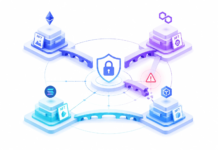






































Why MEV-Boost Matters More Than Most Validators First Assume
For many Ethereum validators, block rewards no longer come down to just priority fees and issuance. A meaningful share of validator revenue now depends on MEV—maximal extractable value—and, more specifically, on whether the validator is plugged into the modern outsourced block-building pipeline.
That pipeline is known as MEV-Boost.
If you run validators, build staking infrastructure, or operate in the broader Ethereum ecosystem, understanding MEV-Boost is no longer optional. It sits at the intersection of validator economics, block production, decentralization, and protocol trust. It also changes who actually assembles the blocks that land on Ethereum.
The core idea is simple: instead of building blocks locally, validators can outsource block construction to a competitive market of specialized builders through relays. In return, they often earn more. But that extra yield comes with architectural complexity, trust assumptions, and market concentration risks that founders and operators should take seriously.
This article breaks down how the MEV-Boost workflow actually operates, where validators capture value, and where the model starts to fray under real-world conditions.
How Ethereum Ended Up Separating Block Proposing from Block Building
Ethereum validators were originally expected to do two jobs at once: propose blocks and build them. In a simpler mempool world, that made sense. A validator gathered transactions, sorted them, inserted them into a block, and broadcast the result.
But MEV changed the economics of block construction.
Arbitrage, liquidation opportunities, sandwiching, NFT mint ordering, and cross-domain execution made transaction ordering highly valuable. Specialized searchers emerged to find profitable transaction bundles. Builders then emerged to combine those bundles and ordinary mempool transactions into the most profitable possible block.
This created an uneven playing field. A solo validator running standard client software could rarely extract as much value as specialized actors with sophisticated infrastructure, low-latency networking, and deep market integrations.
MEV-Boost, developed in the Flashbots ecosystem and later adopted broadly, became a practical implementation of proposer-builder separation before enshrined PBS existed at the protocol level. It gave validators access to externally built blocks without requiring them to become professional MEV extraction firms themselves.
The Core Workflow Behind MEV-Boost
At a high level, MEV-Boost inserts a market between the validator and the final block contents. The validator still proposes the block, but builders compete to supply the most valuable execution payload.
The actors in the pipeline
- Searchers identify profitable transaction opportunities and package them into bundles.
- Builders aggregate bundles and public mempool transactions into optimized blocks.
- Relays receive blocks from builders, validate them, and forward bids to validators.
- Validators select the highest-paying valid block and propose it on-chain.
What happens during a validator’s slot
When a validator is selected to propose a block for a specific slot, the following sequence typically occurs:
- The validator’s consensus client knows it has proposal duty for an upcoming slot.
- MEV-Boost middleware queries one or more relays for builder bids.
- Each relay returns a signed header or bid representing a block built by a builder, along with the value that will be paid to the proposer.
- The validator compares the bids and chooses the most profitable valid option.
- The validator signs the selected blinded block header.
- After the commitment is made, the relay reveals the full execution payload.
- The validator includes that payload in the block and proposes it to the network.
The key design principle here is blind bidding. The validator sees the value of the bid before seeing the full block contents. That reduces the risk of the validator stealing the builder’s MEV strategy, while still allowing competitive price discovery.
Where the Validator’s Extra Revenue Actually Comes From
It’s easy to say MEV-Boost “increases rewards,” but the more important question is: why?
The answer is specialization.
Builders are better at block construction than most validators because they can:
- Ingest bundles from many searchers at once
- Simulate transactions at scale
- Optimize ordering for maximum extractable value
- Capture both public mempool value and private order flow
- React faster to market conditions than generic validator setups
As a result, builders can often construct a block worth more than what a validator would earn by simply producing a local block from the mempool. To win the right to have their block proposed, builders bid away part of that value to the validator.
That means the validator captures MEV indirectly, not by extracting it personally, but by selling blockspace control in a competitive auction.
In practice, the validator’s reward from a MEV-Boost block may include:
- Priority fees from included transactions
- Direct builder payment encoded in the payload value
- Consensus issuance, which is separate from execution value but still part of total rewards
Inside the Relay Layer: The Most Underappreciated Part of the Stack
Relays are often described as neutral message brokers, but that framing undersells their role. In the current MEV-Boost workflow, relays are trust-bearing infrastructure.
A relay typically does several jobs at once:
- Accepts block submissions from builders
- Validates those blocks for correctness and bid integrity
- Forwards the best available bids to validators
- Reveals the full payload only after the validator signs the blinded header
This design prevents simple theft of builder strategies, but it also means validators depend on relays for liveness and honesty. If a relay withholds payloads, censors certain transactions, or suffers downtime, the validator’s block proposal opportunity is affected.
That is why sophisticated operators typically connect to multiple relays rather than relying on a single endpoint. Relay diversification doesn’t eliminate trust assumptions, but it reduces operational fragility.
A Practical MEV-Boost Workflow for Validator Operators
From an operational perspective, MEV-Boost sits alongside your validator stack rather than replacing it. Most setups include:
- A consensus client such as Lighthouse, Prysm, Teku, Nimbus, or Lodestar
- An execution client such as Geth, Nethermind, Besu, or Erigon
- A validator client
- The MEV-Boost sidecar, configured with relay endpoints
Typical operator flow
- Install and run MEV-Boost as a separate service.
- Configure your validator or beacon node to use the MEV-Boost builder API endpoint.
- Add a curated list of relays you trust operationally and economically.
- Monitor proposal outcomes, missed slots, relay responsiveness, and builder value.
- Maintain fallback behavior so local block production remains possible if external bids fail.
What good operators watch closely
In production, success is not just about enabling MEV-Boost and walking away. Operators should monitor:
- Bid frequency: Are relays consistently returning competitive bids?
- Delivery reliability: Are payloads revealed on time?
- Missed proposal rate: Is MEV-Boost introducing liveness risk?
- Relay concentration: Are most wins coming from too few sources?
- Client compatibility: Are updates across execution, consensus, and MEV-Boost components aligned?
For staking businesses, these are not merely technical metrics. They directly affect customer yield, reputation, and institutional trust.
Why Builders Win, Why Validators Accept It, and Why Ethereum Debates It
MEV-Boost works because it aligns incentives well enough to be economically compelling.
Builders win because they can monetize sophisticated order flow and block optimization strategies.
Validators win because they gain access to that market without building the infrastructure themselves.
Searchers win because they can compete for inclusion through builders rather than trying to become validators.
But Ethereum as a protocol doesn’t necessarily “win” without caveats.
The biggest concern is centralization of block construction. If a small number of builders or relays dominate the market, then block production becomes economically separated from the validator set but operationally concentrated in a narrower actor group. That raises concerns about censorship, policy pressure, and resilience.
This is one reason the ecosystem keeps discussing enshrined proposer-builder separation. MEV-Boost is a practical market solution, but it is still an off-protocol workaround with real trust edges.
Where MEV-Boost Can Break Down in Real Operations
MEV-Boost is powerful, but it is not free money in a vacuum. There are trade-offs.
Liveness risk
If relays fail to return bids or reveal payloads on time, a validator may miss a proposal or fall back to a lower-value local block. At scale, even small reliability issues can materially affect annualized returns.
Trust in relays
Relays occupy a sensitive position. They are not consensus actors, but they influence which bids reach validators and whether payloads are delivered properly. That is a meaningful trust dependency.
Censorship pressure
Some relays or builders may filter transactions based on legal, compliance, or internal policy considerations. This can create a split market where not all blocks are equally neutral.
Operational complexity
For solo stakers, MEV-Boost adds another moving part. For institutional staking providers, it adds a serious observability and risk-management layer. Either way, it increases stack complexity.
Revenue variance
MEV opportunity is not constant. Some slots produce meaningful extra value; others don’t. Builders are competing in a dynamic market, and validator-side returns can fluctuate based on network conditions.
When Running MEV-Boost Makes Sense—and When It May Not
If you are operating a serious validator setup, especially at scale, MEV-Boost is often table stakes. The foregone revenue from ignoring the builder market can be substantial over time.
That said, there are scenarios where caution is reasonable:
- If your setup is fragile and adding another dependency increases missed-slot risk
- If you lack monitoring and cannot verify relay performance
- If your organization has strict censorship-resistance or trust-minimization policies
- If you are experimenting in a non-production environment and simplicity matters more than yield optimization
In other words, MEV-Boost is economically attractive, but operational maturity matters. A poorly run MEV-Boost setup can underperform a well-run local block production strategy.
Expert Insight from Ali Hajimohamadi
For founders, MEV-Boost is a useful case study in how crypto infrastructure evolves before protocols fully absorb demand. The market needed proposer-builder separation, so the ecosystem built an off-chain coordination layer that was “good enough” to unlock revenue immediately. That’s a very startup-like pattern: solve the bottleneck now, standardize later.
Strategically, founders should care about MEV-Boost in three contexts.
- Staking businesses: If you run validator infrastructure professionally, MEV-aware block production is part of your product quality. Yield, uptime, and relay policy all become customer-facing issues.
- Crypto infrastructure startups: Relays, builder tooling, observability layers, and PBS-adjacent products remain meaningful infrastructure categories, especially where transparency and reliability are weak.
- Protocol and app teams: MEV-Boost changes assumptions about transaction inclusion and ordering. If your app depends on fair ordering, liquidation timing, or censorship resistance, you need to design with the builder market in mind.
When should founders use or avoid it? If you’re operating validators as a business, avoiding MEV-Boost usually means leaving money on the table unless you have a principled reason or a superior internal strategy. But if your organization cannot monitor relay dependencies or explain those trust assumptions to customers, adopting it blindly is a mistake.
A common misconception is that MEV-Boost “solves MEV.” It doesn’t. It simply redistributes access to MEV extraction and makes outsourced block building practical for validators. Another mistake is assuming higher rewards automatically mean a better business. In infrastructure, a fragile extra 5% can be worse than a robust baseline if it introduces reputational or operational risk.
The deeper startup lesson is this: revenue optimization layers often become critical infrastructure faster than governance and decentralization models can catch up. Founders who understand that gap can build valuable companies—but they should also be honest about the trust trade-offs they are introducing.
Key Takeaways
- MEV-Boost lets Ethereum validators outsource block building to specialized builders through relays.
- Validators capture MEV indirectly by selecting the highest-paying builder bid for their proposal slot.
- The workflow depends on four main actors: searchers, builders, relays, and validators.
- Relays are critical infrastructure and introduce trust, liveness, and censorship considerations.
- For professional staking operations, MEV-Boost is often economically compelling but operationally non-trivial.
- The biggest ecosystem concern is centralization of block building and relay influence.
- MEV-Boost is a practical market solution today, not the final architectural answer for Ethereum.
MEV-Boost at a Glance
| Category | Summary |
|---|---|
| Primary purpose | Allows validators to earn higher rewards by accepting externally built blocks |
| Main participants | Searchers, builders, relays, validators |
| How validators earn more | Builders compete and bid for the right to have their block proposed |
| Key middleware | MEV-Boost sidecar connected to validator infrastructure |
| Main advantage | Higher expected execution-layer rewards without in-house MEV optimization |
| Main risks | Relay trust, builder concentration, censorship, added operational complexity |
| Best fit | Professional validators, staking providers, infrastructure-focused operators |
| Not ideal for | Operators with fragile setups or no visibility into performance and relay behavior |
| Long-term relevance | Important until protocol-level proposer-builder separation matures |
Useful Links
- Flashbots MEV-Boost
- MEV-Boost Documentation
- MEV-Boost GitHub Repository
- Ethereum.org: MEV Overview
- Flashbots Docs
- MEV-Boost Relay GitHub




