


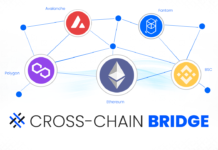
























Fintech payment systems work by moving payment instructions, identity checks, risk decisions, and settlement funds across multiple parties. In practice, a single card or bank payment usually touches a merchant, payment gateway, payment processor, acquirer, card network or bank rails, issuing bank, and often a fraud or compliance layer.
That matters more in 2026 because payment stacks are becoming more modular. Startups now mix providers like Stripe, Adyen, Checkout.com, Plaid, Marqeta, Modern Treasury, and real-time payment rails such as RTP, FedNow, SEPA Instant, and Open Banking APIs.
Quick Answer
- Payment systems route transaction data first and money second.
- Card payments usually involve authorization, capture, clearing, and settlement.
- Merchants do not receive funds instantly, even when customers see an instant confirmation.
- Risk, fraud, KYC, AML, and chargeback handling are core parts of the stack, not side features.
- Fintechs often combine multiple providers because no single platform is best for acceptance, payouts, issuing, treasury, and compliance.
- The right payment architecture depends on geography, transaction type, margins, and regulatory exposure.
What a Fintech Payment System Actually Is
A fintech payment system is the infrastructure that lets a business accept money, move money, store money logic, and reconcile money flows. It is not just a checkout page.
In a real startup stack, the payment system often includes:
- Frontend payment collection via checkout, payment links, wallets, or embedded UI
- Gateway to securely transmit payment data
- Processor to route transactions to banking or card rails
- Acquirer to sponsor merchant acceptance
- Networks or payment rails such as Visa, Mastercard, ACH, SEPA, RTP, FedNow, or UPI
- Issuer or sending bank that approves or declines the transaction
- Fraud tools such as Radar, Forter, Sardine, or Sift
- Ledger and reconciliation systems such as Modern Treasury or internal ledgers
- Compliance controls for KYC, AML, sanctions, and suspicious activity monitoring
Common mistake: founders think “payments” means payment acceptance only. In reality, the hard part often starts after the payment is authorized: settlement timing, failed payouts, refunds, reserves, disputes, and reconciliation.
How the Payment Flow Works
1. The customer initiates a payment
The customer enters card details, uses Apple Pay or Google Pay, authorizes a bank transfer, or pays from a wallet or account.
The merchant app sends that request to a gateway or PSP such as Stripe, Adyen, or Checkout.com.
2. Data is tokenized and checked
Sensitive payment data should not move through your systems in raw form. Providers tokenize card data to reduce PCI DSS scope.
At this stage, systems may also run:
- Device fingerprinting
- 3D Secure authentication
- BIN checks
- Velocity checks
- Sanctions and identity screening
3. The transaction is authorized
For card payments, the processor sends the request through the acquirer to the network, then to the issuing bank.
The issuer decides whether to approve or decline based on:
- Available balance or credit
- Card status
- Fraud signals
- Merchant category
- Authentication result
If approved, the customer sees a successful payment. But the merchant still has not received the money.
4. The payment is captured
Some merchants capture immediately. Others authorize first and capture later.
This matters for businesses like:
- Travel
- Hotels
- Marketplaces
- Pre-order commerce
- Usage-based software billing
When this works: delayed capture is useful when the final amount may change.
When it fails: if capture happens too late, the authorization can expire and the payment may fail.
5. Clearing and settlement happen later
Approved transactions are batched and submitted for clearing. Then settlement moves funds from issuer to acquirer and then to the merchant account or platform balance.
This can take:
- Same day in some local rails
- 1–3 business days for many card flows
- Longer for high-risk merchants, cross-border payments, or reserve-heavy accounts
This is why many fintech dashboards show a payment as “successful” before funds are fully available.
6. Reconciliation closes the loop
The business must match internal orders with processor records, bank statements, fees, refunds, failed settlements, and disputes.
This is where finance teams often discover the real complexity. Gross volume is easy. Net settled cash is harder.
Key Players in the Payment Stack
| Player | What they do | Examples |
|---|---|---|
| Merchant | Sells the product or service | SaaS startup, ecommerce store, marketplace |
| Gateway / PSP | Collects and routes payment data | Stripe, Adyen, Checkout.com |
| Processor | Handles payment message routing and processing | Stripe, Fiserv, Worldpay |
| Acquirer | Provides merchant acquiring access | Adyen acquiring, sponsor banks, acquiring banks |
| Card network | Operates card rails and rules | Visa, Mastercard, American Express |
| Issuer | Approves or declines the payment | Customer’s bank or card issuer |
| Bank rails | Move money account-to-account | ACH, SEPA, RTP, FedNow, SWIFT |
| Fraud / identity layer | Reduces fraud and onboarding risk | Sardine, Alloy, Persona, Socure |
| Ledger / treasury layer | Tracks balances and money movement | Modern Treasury, Treasury Prime, internal ledgers |
Card Payments vs Bank Payments
Card payments
Card payments are best when you need high conversion, recurring billing support, and global consumer acceptance.
Strengths:
- Fast checkout
- Global reach
- Strong wallet support
- Good for subscriptions and ecommerce
Weaknesses:
- Higher fees
- Chargeback risk
- More fraud pressure
- Cross-border complexity
Bank payments
Bank payments use rails like ACH, SEPA, RTP, FedNow, and Open Banking payment initiation.
Strengths:
- Lower cost in many cases
- Strong for large-ticket payments
- Useful for B2B, payroll, treasury, and payouts
Weaknesses:
- Slower user experience in some markets
- Variable bank UX
- Return and reversal risk
- More onboarding friction
Right now in 2026, more fintechs are shifting expensive payment categories away from cards when they can. That is especially true for rent, insurance, brokerage funding, contractor payouts, and B2B invoices.
Why Payment Systems Feel Simple to Users but Complex to Founders
Good fintech products hide complexity. The user taps once. The company handles everything else.
Behind that simple action, the business may need to manage:
- Multi-currency settlement
- Merchant underwriting
- Reserve requirements
- Refund timing
- Split payments for marketplaces
- NACHA or PSD2 compliance
- Chargeback representment
- Ledger accuracy
- Sponsor bank oversight
This is where many early-stage fintechs get surprised. The API demo works in a week. The operating model can take months.
Common Payment System Models in Startups
1. Merchant acceptance model
A business accepts payments for its own goods or services. This is the simplest model.
Best for: SaaS, ecommerce, digital products, subscriptions.
Main risks: failed payments, fraud, dispute ratios, tax handling.
2. Marketplace model
The platform collects payments and routes funds to sellers, creators, drivers, or vendors.
Best for: gig economy, commerce platforms, creator platforms, B2B vendor networks.
Main risks:
- KYC/KYB on sellers
- Funds segregation
- Split settlement logic
- Refund and negative balance handling
When this works: if the provider supports marketplace compliance and payout controls.
When it fails: if founders try to fake a marketplace with a standard merchant account.
3. Embedded finance model
The startup embeds accounts, cards, or money movement into another software product.
Examples:
- SaaS platform with embedded wallets
- Expense management app with issued cards
- B2B software with built-in accounts payable
Main risks: regulatory dependence on bank partners, reconciliation complexity, sponsor bank concentration risk.
Architecture: A Practical Startup View
A modern payment architecture often looks like this:
- Client layer: web app, mobile app, checkout SDK
- Payment orchestration layer: routing, retries, provider failover
- Processor / PSP: acceptance, tokenization, payment methods
- Risk layer: fraud scoring, rules engine, dispute controls
- Core ledger: balances, movements, internal accounting
- Treasury layer: bank account tracking, disbursements, cash ops
- Compliance layer: KYC, AML, sanctions, transaction monitoring
- Data layer: reconciliation, reporting, finance exports
Many teams start with one provider. As volume grows, they add:
- A second processor for redundancy
- A specialist fraud tool
- A separate payout provider
- An internal ledger
- A treasury workflow tool
Trade-off: modular stacks improve control, but they create more integration work, more vendor management, and more reconciliation overhead.
Where Revenue and Costs Come From
Payment businesses make money in different ways:
- Take rate on processed volume
- SaaS platform fees
- Interchange sharing in issuing programs
- FX spreads
- Instant payout fees
- Chargeback or risk service fees
But founders often underestimate hidden costs:
- Reserves and delayed settlement
- Failed payment support load
- Losses from fraud or friendly fraud
- Compliance staffing
- Bank partner requirements
- Chargeback management
- Data and reconciliation engineering
A business with healthy gross payment volume can still struggle if net revenue is eaten by losses, retries, refunds, and ops complexity.
Real-World Startup Scenarios
SaaS billing platform
A B2B SaaS company uses Stripe Billing for subscriptions and ACH for larger annual invoices.
Why this works: cards maximize speed for self-serve customers, while ACH reduces cost on enterprise plans.
Where it breaks: if finance treats both flows as the same. ACH timing, returns, and reconciliation differ from card billing.
Marketplace for freelancers
The platform accepts card payments from buyers and pays out to contractors via bank transfer.
Why this works: buyers get familiar payment methods, and payouts stay cost-efficient.
Where it breaks: if the platform lacks proper KYB, sanction checks, or negative balance controls for seller accounts.
Expense management fintech
The startup issues cards using Marqeta or Stripe Issuing, stores balances in an internal ledger, and reconciles transactions using treasury tooling.
Why this works: card issuing gives control over spend rules and real-time authorizations.
Where it breaks: if the ledger is treated as an afterthought. Without a reliable ledger, refunds, reversals, and disputes become operational chaos.
What Founders Usually Get Wrong
- They optimize for launch speed only. Fast integration is useful early, but weak settlement and reconciliation design becomes expensive later.
- They confuse payment success with cash received. Authorized volume is not the same as settled cash.
- They ignore risk ratios. Chargebacks, fraud losses, and return rates can kill margins fast.
- They build no fallback. One processor outage can shut down revenue.
- They underestimate compliance. In fintech, risk and compliance are product dependencies.
Expert Insight: Ali Hajimohamadi
Most founders overvalue payment acceptance and undervalue money movement control. Getting a card charge approved is rarely the real moat. The advantage comes from how well you handle settlement timing, ledger accuracy, retries, payouts, and risk segmentation. A startup with a “basic” checkout but excellent reconciliation usually scales better than one with a polished payment UI and messy financial operations. My rule: if a payment flow changes balances for more than one party, build ledger and exception handling before adding more payment methods. That feels slower early, but it prevents the silent operational debt that kills fintech margins later.
When a Simple Payment Stack Is Enough
You usually do not need a complex payment architecture if you are:
- Accepting payments for your own product only
- Operating in one country
- Using one currency
- Not storing balances for users
- Not paying out third parties
In that case, a single provider like Stripe, Adyen, or Checkout.com may be enough for a long time.
When You Need a More Advanced Stack
You likely need more infrastructure if you are:
- Running a marketplace
- Moving funds across multiple parties
- Offering cards, wallets, or embedded accounts
- Operating across jurisdictions
- Facing high fraud pressure
- Managing treasury or large payout volumes
That is when payment orchestration, sponsor banks, issuing processors, treasury APIs, and internal ledgers become operationally important.
Why This Matters Now in 2026
Payment infrastructure is becoming more programmable. More startups are combining card rails, bank rails, open banking, embedded finance, and real-time payments inside one product.
At the same time, regulators and bank partners are paying closer attention to fintech compliance, fraud controls, and ledger integrity. Recently, that has made “quick launch” architectures less durable if they were built without strong operational controls.
Bottom line: payment systems are no longer just checkout infrastructure. They are part of the company’s core operating system.
FAQ
What is the difference between a payment gateway and a payment processor?
A payment gateway captures and transmits payment data securely. A payment processor handles the transaction routing and communication with banks or networks. Some providers, like Stripe and Adyen, offer both in one platform.
Why does a successful payment not mean the merchant has the money yet?
Because authorization confirms approval, not settlement. The actual fund movement usually happens later during clearing and settlement.
Are bank payments cheaper than card payments?
Often yes, especially for larger transactions. But cheaper rails can have worse UX, more return complexity, or lower consumer familiarity depending on the market.
Do startups need their own ledger?
If the business handles stored balances, split payments, or payouts to multiple parties, usually yes. Processor dashboards are not a substitute for a real internal ledger.
What is the hardest part of building a fintech payment product?
Usually not the API integration. The hardest parts are compliance, exception handling, reconciliation, reserves, and scaling reliable financial operations.
Can one payment provider handle everything?
Sometimes at the early stage. But as volume, geography, and product complexity grow, many businesses add specialized tools for fraud, payouts, treasury, or redundancy.
How do chargebacks affect fintech payment systems?
Chargebacks reduce margins, increase support costs, and can create compliance or network risk if ratios get too high. They are especially painful for digital goods, subscriptions, and high-risk merchant categories.
Final Summary
Fintech payment systems work by coordinating data flow, risk checks, payment authorization, settlement, and reconciliation across banks, networks, processors, and compliance layers.
For users, it feels instant. For operators, it is a chain of approvals, delays, controls, and exceptions. The best payment systems are not just good at collecting money. They are good at moving it accurately, accounting for it correctly, and managing the risk around it.
If you are building in fintech, the strategic question is not just “how do we accept payments?” It is which parts of the money movement stack we need to own, and which parts we should outsource.



