

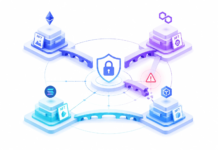

































Azure Key Vault fits into a cloud security stack as the managed control plane for secrets, encryption keys, and certificates. It is not a full security platform by itself. It works best when paired with Microsoft Entra ID, RBAC, Managed Identities, Azure Policy, logging, and workload-level security controls.
For startups and cloud teams, the real value is simple: remove hardcoded credentials, centralize sensitive material, control access by identity, and create an audit trail. But Key Vault is only effective if your architecture, access model, and incident response process are designed around it.
Quick Answer
- Azure Key Vault stores and controls access to secrets, keys, and certificates used by applications, infrastructure, and DevOps pipelines.
- It sits between your workloads and sensitive credentials, reducing secret sprawl across code repositories, CI/CD systems, and virtual machines.
- It works best with Managed Identities and Microsoft Entra ID, so applications authenticate without embedded credentials.
- It is one layer in a broader stack that also includes network controls, logging, IAM, endpoint protection, and policy enforcement.
- It helps with compliance and auditability, but it does not replace secure application design, key rotation discipline, or least-privilege access.
- It can become a bottleneck or single point of operational pain if teams over-centralize every secret lookup at runtime.
What User Intent This Article Matches
This topic is best treated as an explained guide. The likely reader wants to understand where Azure Key Vault belongs in a cloud security architecture, what role it plays, and how it interacts with other tools in a modern stack.
What Azure Key Vault Actually Does
Azure Key Vault is a managed service for handling three categories of sensitive assets:
- Secrets such as API keys, database passwords, tokens, and connection strings
- Keys for encryption, signing, and key management workflows
- Certificates used for TLS and application identity scenarios
In practice, Key Vault is the trusted storage and access control layer for sensitive material. Instead of placing credentials inside app configs, containers, Terraform variables, or GitHub Actions secrets everywhere, teams centralize them in a governed service.
This works because access is tied to identity and policy, not just possession of a file or environment variable.
Where Azure Key Vault Fits in a Cloud Security Stack
A modern cloud security stack has multiple layers. Key Vault belongs in the data protection and secrets management layer, but it depends heavily on identity, network, and monitoring layers around it.
| Security Layer | Role | Where Azure Key Vault Fits |
|---|---|---|
| Identity and Access Management | Controls who or what can access resources | Uses Microsoft Entra ID, RBAC, and Managed Identities for authentication and authorization |
| Secrets Management | Protects credentials and sensitive configuration | Primary role of Azure Key Vault |
| Key Management and Encryption | Manages encryption keys for apps and services | Stores customer-managed keys and supports cryptographic operations |
| Network Security | Restricts traffic paths and service exposure | Can be protected with Private Endpoints, firewalls, and network rules |
| Monitoring and Detection | Tracks events and suspicious access | Emits logs and audit events to Azure Monitor, Log Analytics, and Microsoft Sentinel |
| Governance and Compliance | Enforces standards and policy | Works with Azure Policy, resource locks, and access reviews |
| Application Security | Secures code, APIs, and runtime behavior | Supports apps, but does not fix insecure code or weak auth flows |
How It Works Inside a Real Architecture
1. Workloads authenticate with identity
An Azure Function, AKS workload, VM, or App Service uses Managed Identity to request access. No static password is stored inside the application.
2. Key Vault enforces permissions
Access is granted through RBAC or vault access policies. The workload can read only the specific secret, key, or certificate it needs.
3. Logs are generated for every sensitive action
Secret reads, key operations, failures, and permission changes can be sent to central logging systems. This gives security teams an audit trail.
4. Rotation and lifecycle are managed centrally
Instead of updating credentials in ten systems, teams rotate in one place and let dependent workloads fetch the current version.
Why Azure Key Vault Matters
The main problem Key Vault solves is not “where to store a password.” The real problem is credential sprawl.
In early-stage startups, secrets often live in too many places:
- .env files in laptops
- GitHub repository secrets
- Terraform variables
- Docker images
- Slack messages
- Internal wikis
That setup works until a founder hires the fifth engineer, spins up staging and production, and adds a CI/CD pipeline. At that point, the blast radius grows fast.
Azure Key Vault works well when a team needs central control, access traceability, and separation between application code and secret storage.
It fails when teams assume that putting a secret in Key Vault automatically makes the full system secure. If the app can read everything, the attacker who compromises the app can often read everything too.
Core Security Benefits
Reduced hardcoded secrets
Applications stop embedding credentials in source code or deployment manifests. This lowers accidental exposure in Git, CI logs, and container layers.
Centralized access control
Security teams can apply consistent permissions across environments. This is easier to govern than secret ownership scattered across many tools.
Auditability
Access events and administrative changes can be monitored. This matters for compliance, forensic analysis, and insider-risk detection.
Support for customer-managed keys
Some Azure services can use keys stored in Key Vault for encryption-at-rest scenarios. This is important for regulated workloads that require stronger control over key ownership.
Certificate handling
Teams can manage certificates in a central place instead of manually copying them between services and environments.
What Azure Key Vault Does Not Replace
This is where many teams get the architecture wrong.
- It does not replace IAM. It depends on good identity design.
- It does not replace network security. You still need segmentation, private access, and firewall rules.
- It does not replace SIEM or threat detection. Logging must be sent somewhere useful.
- It does not replace secure coding. If your app leaks tokens or logs secrets, Key Vault cannot save you.
- It does not replace secret rotation policy. Stored secrets still age, expire, and get abused if unmanaged.
Real Startup Scenarios
SaaS product with Azure App Service and PostgreSQL
A B2B SaaS startup runs production APIs on App Service and stores the database password in Key Vault. App Service uses a Managed Identity to retrieve only that secret.
When this works: the app has narrowly scoped access, secret retrieval is cached safely, and production and staging are separated into different vaults or strict scopes.
When this fails: the same vault is shared across all environments, engineers get broad read permissions, and local development falls back to copied production credentials.
AKS-based platform with many microservices
A team runs 20 services in Azure Kubernetes Service. They integrate Key Vault through the Secrets Store CSI Driver so pods can access secrets at runtime.
When this works: services have isolated identities and secret access is limited per namespace or workload.
When this fails: every pod can mount the same shared secrets, making lateral movement easy after one container compromise.
Fintech using customer-managed keys
A regulated startup uses Key Vault to manage encryption keys for storage accounts and databases that support customer-managed keys.
When this works: key ownership, rotation, and access are tightly controlled, and the audit trail supports regulatory review.
When this fails: the team assumes customer-managed keys alone satisfy compliance, while ignoring data access governance and incident response readiness.
Key Design Decisions That Matter
One vault or many?
Small teams often start with one vault. That is easy to manage but risky as environments and teams grow.
A better pattern is usually:
- separate vaults for production and non-production
- tighter RBAC for production
- clear ownership by app or platform domain when scale increases
Trade-off: more vaults improve isolation, but increase operational overhead.
RBAC or access policies?
Most teams should align with Azure RBAC for consistency across Azure resources. It simplifies governance and centralizes access control logic.
Trade-off: RBAC can be more complex to model at first, especially for teams used to vault-specific access policies.
Public endpoint or private access?
If the workload is sensitive, Private Endpoints reduce exposure and enforce controlled network paths.
Trade-off: network complexity increases. Misconfigured DNS and VNet routing are common causes of outages.
Runtime retrieval or secret injection?
Some teams fetch secrets live on every app start or request. Others inject them during deployment.
Runtime retrieval works when you need dynamic rotation and strict control.
It breaks when latency, vault throttling, or transient failures impact application availability.
Pros and Cons of Using Azure Key Vault
| Pros | Cons |
|---|---|
| Centralizes secrets, keys, and certificates | Adds another dependency into application runtime |
| Works well with Managed Identities | Poor access design can still create broad blast radius |
| Improves auditability and governance | Can become operationally complex at scale |
| Supports customer-managed key scenarios | Does not fix insecure application logic |
| Reduces hardcoded secrets in code and pipelines | Improper runtime usage can create latency or availability issues |
Expert Insight: Ali Hajimohamadi
Founders often think centralizing secrets is automatically a security win. It is not. If one compromised workload can still read half the company’s credentials, you just built a cleaner failure point.
The strategic rule is this: design Key Vault around blast-radius reduction, not storage neatness. Separate production early, bind access to workload identity, and assume one service will get breached. The teams that do this treat Key Vault as a damage-containment system. The teams that fail treat it like a password drawer with better branding.
Best Practices for Fitting Key Vault Into the Stack
- Use Managed Identities instead of embedded credentials wherever possible.
- Separate production, staging, and development access paths.
- Prefer least privilege at secret, key, or vault scope.
- Enable diagnostic logging and route events to Log Analytics or Microsoft Sentinel.
- Use Private Endpoints for sensitive workloads.
- Plan for rotation, expiration, and ownership of every secret.
- Cache secrets carefully if runtime calls could impact latency.
- Review access regularly, especially after team changes or incident events.
Who Should Use Azure Key Vault
Good fit for:
- Azure-native startups using App Service, Functions, AKS, or VMs
- Teams needing centralized secret governance
- Companies with compliance or audit requirements
- Organizations adopting customer-managed key models
Less ideal if:
- Your stack is heavily multi-cloud and you want one cloud-agnostic secrets layer
- Your team lacks IAM maturity and cannot maintain clean access boundaries
- Your workloads are extremely latency-sensitive and depend on frequent live secret lookups without caching strategy
Common Mistakes
- Putting all environments in one vault
- Granting developers broad production read access
- Using Key Vault but still keeping backup secrets in .env files and wikis
- Ignoring monitoring and only using it as storage
- Fetching secrets too often at runtime without resiliency design
- Assuming “stored in Key Vault” means “properly rotated”
FAQ
Is Azure Key Vault a full cloud security solution?
No. It is a secrets, key, and certificate management service. It must be combined with IAM, network security, logging, governance, and secure application design.
What is the main security benefit of Azure Key Vault?
The main benefit is reducing secret sprawl. It centralizes sensitive material and controls access through identity and policy instead of hardcoded credentials.
Should every application use Azure Key Vault at runtime?
Not always. Runtime retrieval is useful for rotation and control, but it can add latency and dependency risk. Some workloads need caching or controlled injection patterns.
Does Azure Key Vault improve compliance?
Yes, often. It helps with auditability, key control, and access governance. But compliance still depends on broader controls like logging, segmentation, data handling, and access review processes.
What is better for Azure workloads: Managed Identity or stored secrets?
Managed Identity is usually better. It removes the need to store credentials for service-to-service authentication and reduces credential leakage risk.
Should startups separate production and staging Key Vaults?
Yes, in most cases. Separate vaults reduce blast radius, simplify permission boundaries, and prevent accidental cross-environment secret usage.
Final Summary
Azure Key Vault fits into a cloud security stack as the managed trust layer for secrets, keys, and certificates. Its value comes from reducing credential sprawl, enforcing access through identity, and improving auditability.
It works best when paired with Microsoft Entra ID, Managed Identities, RBAC, Azure Policy, private networking, and centralized monitoring. It works poorly when used as a cosmetic fix for weak architecture.
If you are building on Azure, the right question is not “Should we use Key Vault?” The better question is: How do we use Key Vault to reduce blast radius without creating operational friction? That is where strong cloud security design actually starts.
Useful Resources & Links
- Azure Key Vault
- Microsoft Learn: Azure Key Vault Overview
- Microsoft Entra ID
- Managed Identities for Azure Resources
- Azure RBAC
- Azure Policy
- Azure Monitor
- Microsoft Sentinel
- Key Vault Secrets Best Practices
- AKS Secrets Store CSI Driver




