
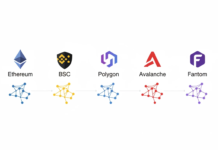
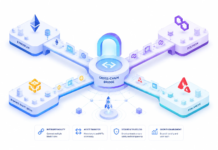
































Blockchain data is abundant, but that doesn’t automatically make it useful. Founders, analysts, and crypto builders are often surrounded by dashboards, token metrics, wallet activity charts, and protocol data—yet still struggle to answer basic strategic questions. Which chains are actually gaining developer and user momentum? Where is liquidity moving? Are NFT volumes recovering, or just rotating between ecosystems? And perhaps most importantly: how do you turn raw on-chain noise into decisions?
That is where Footprint Workflow becomes interesting. It is not just another analytics layer for blockchain data. It is a way to build repeatable, visual, and automated data pipelines that help teams understand trends instead of manually chasing them. For startups operating in Web3, that distinction matters. The winning teams are rarely the ones with the most data—they are the ones with the clearest workflow for turning data into insight.
In this article, we’ll look at how Footprint Workflow helps visualize blockchain trends, where it fits into a modern crypto data stack, how to use it in practice, and where it can fall short.
Why Visualizing Blockchain Trends Is Harder Than It Looks
On the surface, blockchain seems ideal for analytics. Transactions are public. Wallets are traceable. Smart contract activity is transparent. Compared to traditional finance or private SaaS systems, it feels like a dream dataset.
In reality, it’s messy.
Different chains structure data differently. Protocols use inconsistent event models. One “user” may control dozens of wallets. Raw transaction volume can be inflated by bots, wash trading, or internal transfers. Even simple questions like “how many active users does this protocol have?” become subjective once you define what counts as activity.
This is why good blockchain trend visualization requires more than charts. It requires:
- Cleaned and standardized data across chains and protocols
- Repeatable transformation logic so your numbers are consistent over time
- Visual storytelling that highlights trends instead of overwhelming viewers
- Automation so analysis doesn’t break the moment your team gets busy
Footprint Workflow is designed around that problem. It gives teams a way to build analytics processes, not just one-off dashboards.
Where Footprint Workflow Fits in the Web3 Analytics Stack
Footprint Analytics is known in the crypto space for making blockchain data more accessible through dashboards, templates, and data exploration tools. Footprint Workflow extends that idea into something more operational: a no-code or low-code system for collecting, transforming, and delivering data workflows that support reporting and decision-making.
In practical terms, it sits between raw on-chain data and final business insight.
Instead of exporting CSVs, writing ad hoc SQL in five different tabs, and manually updating investor slides every week, a team can define a workflow that pulls the right data, processes it, and pushes it into visual outputs or downstream analysis.
This is especially valuable for:
- Protocol teams tracking growth across chains
- DeFi startups watching liquidity, TVL, and user retention
- NFT marketplaces comparing collection performance
- Crypto research teams building recurring reports
- Growth teams monitoring wallet cohorts and campaign impact
The real value is not that it visualizes data. Many tools do that. The value is that it helps structure the path from blockchain events to a reliable trend view.
From Raw On-Chain Activity to Readable Trends
The biggest shift with a workflow-based approach is that you stop treating analytics as a series of isolated questions and start treating it as infrastructure.
Standardizing the inputs before the dashboard
If you’ve worked with blockchain data directly, you know that the chart is rarely the hard part. The hard part is deciding which addresses matter, filtering spam activity, mapping token contracts correctly, and choosing the right aggregation logic.
Footprint Workflow helps by letting teams create defined transformation steps before visualization happens. That means your dashboard is built on logic you can revisit, improve, and reuse.
For example, if you’re tracking protocol growth, you might define a workflow that:
- Pulls transaction and wallet data across selected chains
- Filters out internal contract interactions and suspicious bot behavior
- Groups activity by protocol, chain, and timeframe
- Calculates trend metrics like active wallets, volume, and retention
- Feeds those outputs into charts or periodic reports
That process sounds simple, but in crypto it prevents a lot of bad interpretation.
Seeing movement instead of snapshots
Many blockchain dashboards fail because they over-index on point-in-time metrics. A chart showing TVL today, or volume this week, is not enough. Founders need to understand trajectory.
Footprint Workflow is useful when it helps answer questions like:
- Is user growth sustained or campaign-driven?
- Are spikes in volume tied to real adoption or short-term speculation?
- Which ecosystem is gaining share over a 30-, 60-, or 90-day window?
- Are wallets returning, or are we just seeing one-time activity?
That’s where visual trend analysis becomes strategic. A clean line chart is only valuable if the underlying workflow helps you trust what it says.
A Practical Workflow for Visualizing Blockchain Trends with Footprint
If you’re a startup team, the best way to use Footprint Workflow is to build around a narrow business question first—not around every metric you can possibly collect.
Here’s a practical workflow that works well for early-stage teams.
1. Start with a decision, not a dashboard
Before touching the tool, define the exact decision you want the data to support.
Examples:
- Should we expand to another chain this quarter?
- Is our liquidity mining campaign attracting sticky users?
- Which wallet segments are driving protocol revenue?
- Are NFT traders migrating from one ecosystem to another?
This matters because blockchain analytics gets bloated fast. If your workflow doesn’t connect to a decision, it becomes vanity reporting.
2. Choose the core on-chain entities you want to track
Most blockchain trend analysis revolves around a few recurring entities:
- Wallets
- Transactions
- Tokens
- Contracts
- Protocols
- Chains
In Footprint Workflow, you want to be intentional about which of these are your primary lens. A protocol growth team may center everything around active wallets and transaction cohorts. A treasury team may care more about token flows and liquidity destinations.
3. Build transformation logic that removes misleading signals
This is where serious teams separate themselves from surface-level analytics.
You may need to:
- Exclude known bot wallets
- Merge contract interactions into higher-level protocol activity
- Normalize token values to USD
- Handle bridges and cross-chain movements carefully
- Separate organic user activity from incentive-driven spikes
With a workflow tool, these become repeatable steps instead of tribal knowledge buried in one analyst’s notebook.
4. Visualize trends at multiple time horizons
One of the easiest mistakes in crypto is reacting to weekly volatility. Good visualization should include more than one timeframe.
A strong setup often includes:
- Daily activity for near-term shifts
- Weekly summaries for cleaner operating insight
- Monthly views for strategic trend validation
If all three tell the same story, you likely have signal. If they conflict, you should investigate before making decisions.
5. Turn the workflow into recurring team output
The final step is operational. A trend dashboard that no one checks is wasted effort.
Use Footprint Workflow to create outputs that fit how your team already works:
- Weekly growth reports
- Investor update charts
- Internal KPI dashboards
- Ecosystem monitoring views
- Campaign post-mortem reports
The goal is not more data. The goal is faster, better team judgment.
Where Footprint Workflow Delivers Real Value for Startups
For early-stage crypto companies, tooling choices should be judged by speed, clarity, and leverage. Footprint Workflow is strongest when the team needs analytics discipline without building a heavy internal data engineering stack from day one.
That makes it particularly helpful in three scenarios.
Cross-chain market intelligence
If you’re deciding where to deploy a product next, trend visualization across chains can reveal where users, liquidity, and protocol activity are actually accumulating. This is more useful than relying on social hype or isolated ecosystem reports.
Growth and retention analysis
Wallet acquisition is easy to overstate in crypto. A workflow-based approach helps teams track whether users return, transact again, and create economic value.
Competitive monitoring
Most founders underestimate how much they can learn by consistently tracking adjacent protocols. A clean trend workflow can show whether a competitor’s growth is broad-based, campaign-driven, or already fading.
Expert Insight from Ali Hajimohamadi
For founders, Footprint Workflow is most valuable when analytics is directly tied to market timing and product strategy. If you are building in DeFi, NFT infrastructure, wallets, or on-chain consumer apps, you should not rely on scattered dashboards and intuition alone. You need a repeatable way to see where attention, liquidity, and real usage are moving.
A strategic use case is chain expansion planning. Founders often choose a new ecosystem based on narrative momentum, grant availability, or investor pressure. That is a mistake. You should look at user activity quality, protocol category growth, wallet retention, and whether your target behavior is actually increasing on that chain. A workflow-driven analytics process makes that decision much less emotional.
Another strong use case is post-launch measurement. Many Web3 teams celebrate transaction spikes that are mostly incentives or low-quality farming behavior. The better question is whether behavior persists after the event. If your workflow tracks cohorts and recurring wallet activity, you can see whether growth is durable.
Founders should avoid overusing tools like this when they are still at the zero-to-one problem validation stage. If you do not yet have a product people want, deep analytics can become a distraction that creates a false sense of sophistication. At that stage, direct user conversations and tight product iteration matter more than polished dashboards.
The biggest misconception is that more on-chain visibility automatically creates better strategy. It doesn’t. Blockchain data is still interpretation-heavy. Teams often confuse visible activity with meaningful adoption. A wallet count is not a customer base. Volume is not loyalty. TVL is not product-market fit.
The smartest startup teams use Footprint Workflow as a decision support system, not a vanity reporting engine. They define one or two strategic questions, build trusted metrics around them, and revisit those signals consistently. That discipline matters much more than having the most complex dashboard in the room.
Where It Falls Short—and When Another Approach May Be Better
No analytics platform is a complete answer, and Footprint Workflow has trade-offs founders should understand.
It can’t fix bad analytical thinking
If your team chooses weak metrics, no workflow layer will save you. You still need sound definitions, domain knowledge, and skepticism about what on-chain data actually represents.
Highly custom analysis may still require engineering depth
For complex proprietary models, unusual contract logic, or advanced predictive analysis, you may still need SQL-heavy workflows, custom ETL pipelines, or a dedicated data team. Workflow tools accelerate standardization, but they do not replace all technical depth.
Too many dashboards can create false confidence
This is a common founder mistake. Once analytics becomes easy to produce, teams start tracking everything. That often leads to reporting overhead and noisy decision-making. If a metric doesn’t change strategy, it probably doesn’t deserve dashboard space.
Early-stage startups may not need full workflow maturity yet
If your product is pre-traction and your core challenge is finding a compelling use case, a lightweight analytics setup may be enough. Footprint Workflow becomes more compelling once the business has enough activity to measure patterns over time.
How to Get the Most Out of It Without Overbuilding
The best implementation approach is narrow, iterative, and tied to real decisions.
- Start with one strategic question
- Define 3–5 metrics that genuinely matter
- Build one reusable workflow before creating more
- Review trends on a fixed cadence
- Refine logic as your understanding improves
Think of Footprint Workflow as part of your operating system, not just your reporting stack. If your team uses it to repeatedly answer the same high-value questions with increasing clarity, it will create leverage. If you use it to generate more charts than decisions, it will become expensive decoration.
Key Takeaways
- Footprint Workflow helps teams move from raw blockchain data to structured, repeatable trend analysis.
- Its strength is not just visualization, but the workflow layer that standardizes data transformation and reporting.
- It is especially useful for cross-chain analysis, growth tracking, retention measurement, and competitive monitoring.
- Founders should begin with a business question, not a dashboard template.
- On-chain data can be misleading without filtering, normalization, and strong metric definitions.
- It is best suited for teams with enough activity or market exposure to benefit from recurring analytics workflows.
- It should support decisions—not replace product judgment or customer understanding.
Footprint Workflow at a Glance
| Category | Summary |
|---|---|
| Tool Type | Blockchain analytics workflow and visualization platform |
| Best For | Founders, analysts, crypto researchers, protocol teams, growth teams |
| Core Strength | Turning on-chain data into repeatable, visual, decision-ready workflows |
| Typical Use Cases | Cross-chain trend analysis, protocol growth tracking, user retention, competitive monitoring |
| Main Advantage | Reduces manual reporting and improves consistency in blockchain analytics |
| Main Limitation | Still depends on strong metric design and may not cover highly custom analytics needs |
| Good Fit Stage | Post-launch startups, scaling Web3 products, research-driven crypto teams |
| Less Ideal For | Very early-stage teams without clear product traction or teams needing deeply custom data engineering |
Useful Links
- Footprint official website
- Footprint documentation
- Footprint dashboards
- Footprint Data API
- Footprint research resources




