




















Introduction
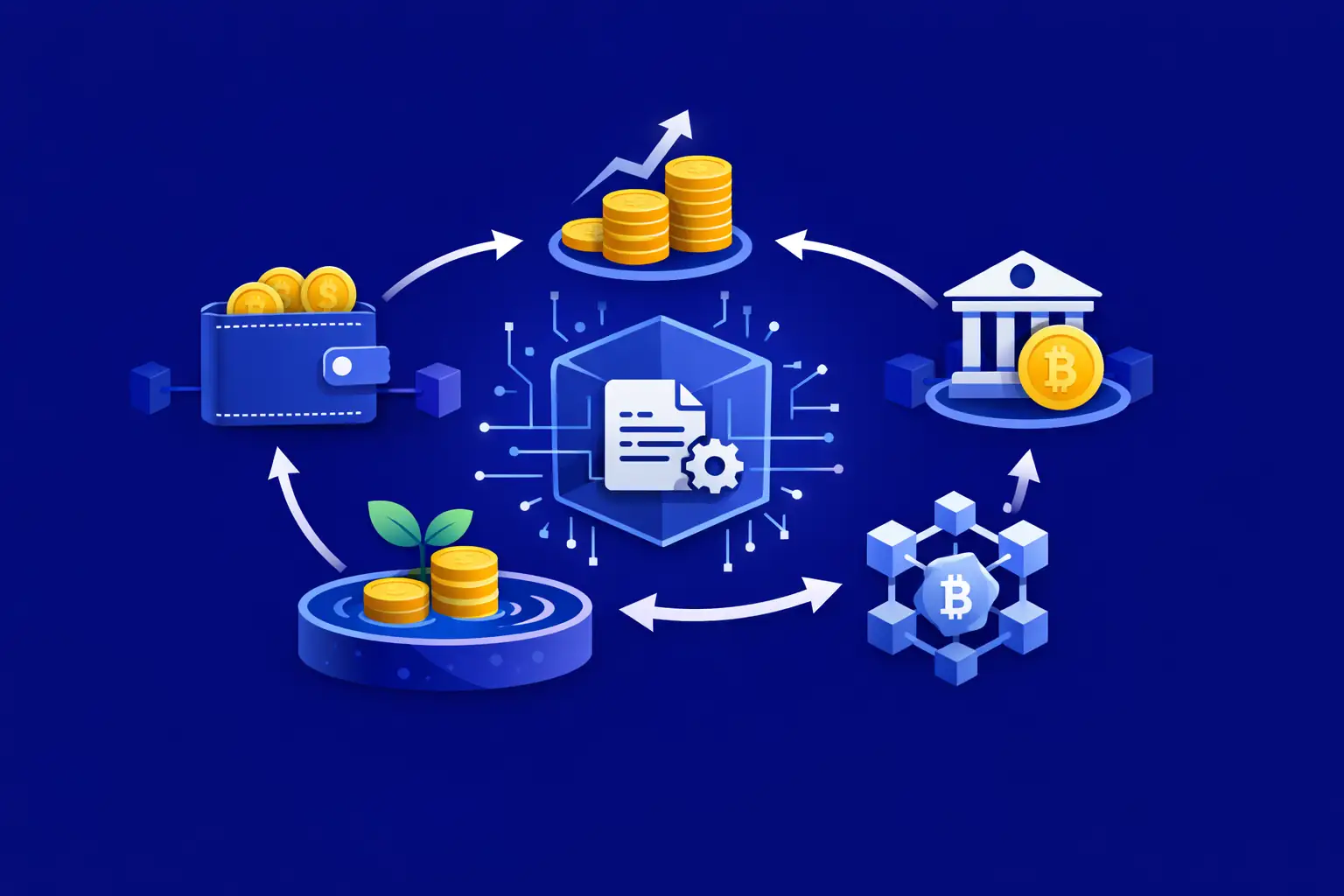
DeFi yield optimization tools help investors find better returns, track positions, reduce risk, and make faster decisions across lending, liquidity provision, farming, and on-chain trading.
These tools are useful for:
- Passive investors looking for stable yield
- Active DeFi users rotating capital between protocols
- Yield farmers comparing pools and incentives
- Borrowers managing collateral and liquidation risk
- Advanced users hunting arbitrage or mispriced yield
The goal is not just to find the highest APY. The real goal is to improve risk-adjusted returns. That means choosing tools that help you answer practical questions:
- Where is the yield coming from?
- How sustainable is it?
- What risks am I taking?
- Can I monitor and exit fast if conditions change?
The best DeFi strategy is usually built from a stack of tools, not one app. You may use one platform to earn yield, another to track portfolio health, another to analyze token incentives, and another to monitor smart contract or liquidation risk.
Best Tools (Quick Picks)
| Tool | One-line value | Best for |
|---|---|---|
| DefiLlama | Compares protocols, chains, yields, and TVL in one place | Finding opportunities and validating protocol strength |
| DeBank | Tracks wallet positions across chains with clean portfolio visibility | Portfolio tracking and exposure monitoring |
| Yearn Finance | Automates yield strategies through vaults | Passive yield optimization |
| Summer.fi | Helps manage lending, leverage, and automated DeFi positions | Borrowing strategies and risk-managed leverage |
| Aave | Core lending market for earning interest and borrowing against assets | Low-complexity lending and collateral strategies |
| Zapper | Shows DeFi positions, historical performance, and wallet actions | Multi-protocol portfolio management |
| Token Terminal | Provides protocol financial data and fundamental metrics | Analyzing protocol quality before deploying capital |
Tools by Strategy
Yield Farming
What the strategy is: Yield farming means depositing capital into liquidity pools, vaults, or incentive programs to earn trading fees, token rewards, or auto-compounded returns.
Which tools help:
- DefiLlama for comparing yields and chain opportunities
- Yearn Finance for automated vault execution
- Beefy for auto-compounding vaults across chains
- Zapper for tracking LP and vault positions
When to use them:
- When you want to compare net yield across protocols
- When you do not want to manually harvest and reinvest rewards
- When incentives are changing quickly and you need monitoring
Lending / Borrowing
What the strategy is: Supply assets to earn interest, or borrow against collateral to create stablecoin liquidity, leverage yield, or avoid selling long-term holdings.
Which tools help:
- Aave for lending and borrowing
- Compound for simple money market exposure
- Summer.fi for position automation and collateral management
- DeBank for tracking debt and collateral ratios
When to use them:
- When you want lower-complexity yield
- When you need stablecoins without selling assets
- When rates are favorable and collateral risk is manageable
Portfolio Tracking
What the strategy is: Monitor wallet exposure, total return, protocol concentration, debt levels, and multi-chain positions.
Which tools help:
- DeBank for real-time wallet visibility
- Zapper for position summaries and interaction history
- Rotki for detailed self-managed portfolio accounting
When to use them:
- When you have positions across multiple chains or wallets
- When you need to spot hidden risk concentration
- When you are rotating capital frequently
Arbitrage
What the strategy is: Capture price differences across DEXs, chains, or yield markets. This can include token arbitrage, funding spreads, or stablecoin dislocations.
Which tools help:
- DEX Screener for price movement and liquidity visibility
- DefiLlama for yield spread comparison
- Dune for custom dashboards and market behavior analysis
- Tenderly for simulating transactions before execution
When to use them:
- When market inefficiencies appear during volatility
- When stablecoins depeg temporarily
- When rewards on one venue materially exceed another after fees
Risk Management
What the strategy is: Reduce the chance of permanent capital loss from smart contract exploits, liquidation, low liquidity, reward token collapse, or unstable incentives.
Which tools help:
- DeBank for exposure monitoring
- Summer.fi for automated debt management
- Token Terminal for protocol quality checks
- DefiLlama for TVL and protocol change tracking
When to use them:
- Before entering a new protocol
- When using leverage or borrowing
- When yields look unusually high
Analytics
What the strategy is: Use data to determine if yield is organic, incentive-driven, sustainable, or risky.
Which tools help:
- DefiLlama for TVL, chain flows, and protocol comparisons
- Dune for custom on-chain dashboards
- Token Terminal for fees, revenue, and protocol fundamentals
- Nansen for wallet behavior and smart money tracking
When to use them:
- Before deploying size into a new strategy
- When comparing two similar protocols
- When trying to understand where returns actually come from
Detailed Tool Breakdown
DefiLlama
- What it does: Aggregates DeFi data across chains, protocols, yields, DEX volume, bridges, and TVL.
- Strengths: Broad market view, fast comparison, strong for discovery, useful for filtering by chain and category.
- Weaknesses: It is an aggregator, so it does not replace direct protocol due diligence.
- Best for: Finding new yield opportunities and comparing protocol scale.
- Use case in DeFi strategy: Start here to shortlist protocols with strong TVL, reasonable yields, and active ecosystems before allocating capital.
DeBank
- What it does: Tracks wallet assets, liabilities, LP positions, staking positions, and protocol exposure across chains.
- Strengths: Excellent wallet-level clarity, good multi-chain support, fast portfolio view.
- Weaknesses: Limited deep strategy analytics compared with custom dashboards.
- Best for: Monitoring overall DeFi exposure and debt risk.
- Use case in DeFi strategy: Use it daily to check if stablecoin borrowing, LP exposure, or token concentration has drifted beyond your target risk level.
Yearn Finance
- What it does: Offers vaults that automate complex yield strategies like lending rotation, farming, and compounding.
- Strengths: Passive, strategy automation, reduced manual work.
- Weaknesses: Less control over exact strategy timing and asset routing.
- Best for: Users who want optimized yield without active management.
- Use case in DeFi strategy: Park stablecoins or major assets in vaults when you want efficient yield but do not want to manage reward harvesting or rotation yourself.
Summer.fi
- What it does: Helps manage DeFi borrowing, leverage, and automated position adjustments.
- Strengths: Strong for collateral management, automation, and structured strategies.
- Weaknesses: Better suited to users who understand leverage and liquidation mechanics.
- Best for: Borrowing against collateral with active risk controls.
- Use case in DeFi strategy: Deposit ETH, borrow stablecoins conservatively, and automate risk thresholds so a drawdown does not turn into liquidation.
Aave
- What it does: Enables lending and borrowing across major crypto assets and stablecoins.
- Strengths: Blue-chip reputation, high liquidity, widely used, straightforward mechanics.
- Weaknesses: Base yields can be lower than more aggressive farming options.
- Best for: Reliable DeFi lending and collateralized borrowing.
- Use case in DeFi strategy: Earn passive yield on idle stablecoins or borrow against long-term assets to deploy into lower-risk secondary strategies.
Zapper
- What it does: Aggregates DeFi positions and shows wallet exposure, token balances, historical interactions, and app integrations.
- Strengths: Clean interface, easy portfolio checks, useful for active users.
- Weaknesses: Not a full analytics replacement for serious research.
- Best for: Everyday portfolio tracking and position oversight.
- Use case in DeFi strategy: Use it to review all active positions before rebalancing, harvesting rewards, or exiting underperforming farms.
Token Terminal
- What it does: Provides protocol-level financial metrics like fees, revenue, usage, and valuation indicators.
- Strengths: Good for fundamentals, helps separate durable protocols from short-term incentive games.
- Weaknesses: Less useful for real-time execution decisions.
- Best for: Evaluating protocol quality before allocating larger capital.
- Use case in DeFi strategy: Before entering a farm, check whether the protocol has real usage and fee generation instead of relying only on token emissions.
Dune
- What it does: Lets users query blockchain data and build custom dashboards.
- Strengths: Powerful custom analytics, useful for advanced users and strategy research.
- Weaknesses: Learning curve is higher.
- Best for: Deep on-chain analysis and strategy validation.
- Use case in DeFi strategy: Track user inflows, protocol retention, emissions behavior, or whale movement before deciding whether yield is likely to compress.
Nansen
- What it does: Tracks wallet behavior, fund flows, and smart money activity on-chain.
- Strengths: Useful for seeing where experienced capital is moving.
- Weaknesses: Not every smart-money move is right for your risk profile.
- Best for: Flow analysis and idea generation.
- Use case in DeFi strategy: Watch whether sophisticated users are rotating into a new protocol early, or exiting while retail still chases headline APY.
DEX Screener
- What it does: Tracks token prices, liquidity, volume, and market movement across decentralized exchanges.
- Strengths: Fast market visibility, good for volatile tokens and new opportunities.
- Weaknesses: Market data alone does not explain protocol risk.
- Best for: Price discovery, liquidity checks, and trade timing.
- Use case in DeFi strategy: Before entering an incentive farm, check whether the reward token has enough liquidity and stable volume to avoid painful slippage on exit.
Example DeFi Workflow
Here is a practical workflow for a user with $20,000 who wants balanced yield with controlled risk.
1. Capital Allocation
- $8,000 in stablecoins for lower-volatility lending
- $6,000 in ETH as long-term collateral
- $4,000 in a diversified yield vault allocation
- $2,000 reserved as dry powder for market dislocations or gas
2. Strategy Selection
- Use Aave to lend stablecoins and earn base yield
- Use Summer.fi to deposit ETH collateral and borrow a modest amount of stablecoins
- Deploy part of the borrowed stablecoins and idle cash into Yearn Finance or Beefy vaults
- Avoid concentrated LPs unless you are actively monitoring impermanent loss
3. Tool Usage Before Entry
- Check DefiLlama to compare yields across chains and protocols
- Use Token Terminal to assess protocol quality and revenue profile
- Review reward token liquidity with DEX Screener
4. Monitoring
- Track all wallet exposure with DeBank and Zapper
- Watch collateral ratio closely on leveraged or borrowed positions
- Reassess weekly if yields are dropping or incentives are being reduced
5. Optimization
- Move capital if net yield falls below your minimum target after gas and risk
- Exit farms where emissions are high but token price is weak
- Reduce leverage if volatility increases
- Keep some capital liquid so you can buy panic-driven yield dislocations instead of being forced to sell
The key lesson is simple: optimization is a process, not a one-time deposit. The best users keep comparing, tracking, and adjusting.
Risks and How to Manage Them
Smart Contract Risk
Any DeFi protocol can fail due to bugs, exploits, or poor architecture.
- Use DefiLlama and Token Terminal to filter toward established protocols with stronger adoption
- Avoid putting all capital into a new protocol with unproven code
- Diversify across multiple protocols instead of one high-APY venue
Impermanent Loss
This happens when LP token pairs diverge in price and your pool position underperforms simply holding the assets.
- Use tracking tools like Zapper and DeBank to monitor LP exposure
- Prefer stablecoin pairs or vault strategies if you do not want directional risk
- Do not chase farming rewards without understanding the pair mechanics
Liquidity Risk
You may not be able to exit efficiently if TVL is low or token liquidity is weak.
- Use DEX Screener to evaluate token liquidity and volume
- Use DefiLlama to check protocol TVL trends
- Avoid large positions in thin markets if you need flexibility
Token Risk
High APY often depends on reward tokens that may lose value faster than yield accrues.
- Use Token Terminal to assess protocol fundamentals
- Use DEX Screener to check whether reward tokens have healthy trading activity
- Sell or rotate emissions regularly if your thesis is yield capture, not token exposure
Liquidation Risk
Borrowing strategies can fail quickly in volatile markets.
- Use Summer.fi for risk controls and automation
- Use DeBank to monitor debt and collateral health
- Borrow less than the platform maximum to leave a safety buffer
Best Tools by Experience Level
Beginners
- Aave for simple lending and borrowing
- Yearn Finance for passive vault-based yield
- DeBank for clean portfolio tracking
Best for users who want low operational complexity and easy monitoring.
Intermediate
- DefiLlama for yield research and protocol comparison
- Zapper for multi-position management
- Summer.fi for structured collateral and borrowing strategies
- Beefy for cross-chain vault optimization
Best for users willing to compare opportunities and rebalance capital regularly.
Advanced
- Dune for custom on-chain analysis
- Nansen for wallet flow and smart money tracking
- DEX Screener for trade timing and liquidity checks
- Tenderly for transaction simulation and execution testing
Best for users running active strategies, building dashboards, or capturing short-lived inefficiencies.
Common Mistakes in DeFi
- Chasing APY without checking source of yield. Temporary emissions are not the same as durable returns.
- Ignoring token liquidity. A reward token can look attractive until you try to exit size.
- Using leverage without a buffer. Borrowing near the limit leaves no room for volatility.
- Overconcentrating in one protocol. Even strong protocols carry smart contract and governance risk.
- Not tracking total portfolio exposure. You may think you are diversified while holding the same underlying risk across multiple apps.
- Forgetting gas, bridging, and slippage costs. Net return matters more than headline yield.
Frequently Asked Questions
What is the best tool for DeFi yield optimization?
There is no single best tool. DefiLlama is best for research, Yearn Finance and Beefy are strong for passive yield, and DeBank is excellent for monitoring. The right stack depends on your strategy.
How do I know if a DeFi yield is sustainable?
Check whether returns come from real borrowing demand, trading fees, or temporary token emissions. Tools like Token Terminal, DefiLlama, and Dune help you assess sustainability.
Are auto-compounding vaults better than manual farming?
For many users, yes. They reduce time, improve consistency, and can increase efficiency. But they add strategy-layer risk and reduce direct control over execution.
What is the safest DeFi yield strategy?
Usually, lending blue-chip stablecoins or major assets on established platforms like Aave is lower risk than leveraged farming or volatile LP strategies. Lower risk usually means lower return.
Which tool is best for tracking DeFi portfolio risk?
DeBank is one of the best for fast wallet-level risk monitoring. Zapper is also useful for aggregated position visibility.
Should I use leverage to improve DeFi returns?
Only if you understand liquidation mechanics, collateral volatility, and the cost of borrowing. Leverage can improve yield, but it also amplifies mistakes.
How often should I review DeFi positions?
Active strategies should be checked daily or several times a week. Passive vaults can be reviewed weekly, but borrowing positions need closer monitoring during market volatility.
Expert Insight: Ali Hajimohamadi
One of the biggest mistakes in DeFi is treating every yield opportunity as if it deserves capital. In practice, the best returns often come from avoiding bad setups, not from finding the highest APY.
A practical rule I use is this: if I cannot explain the yield source in one sentence, I do not enter with size. If the yield depends mostly on a weak reward token, low liquidity, and rising user inflows, that is usually a short window trade, not an investment-grade position.
Tool selection should match the decision you need to make. Use DefiLlama to screen, Token Terminal to test protocol quality, DEX Screener to judge exit liquidity, and DeBank to control exposure after entry. This sequence matters. Many users only start using risk tools after they already have a problem.
For most investors, better performance comes from three habits:
- Size smaller in new protocols
- Rotate out of weak emissions faster than the crowd
- Keep enough liquid capital to act during market stress
In DeFi, flexibility is a profit edge. The user who can exit, rebalance, or redeploy quickly often outperforms the user who simply found the highest number first.
Final Thoughts
- Use multiple tools together, not one platform for every decision.
- Start with yield discovery using DefiLlama, then validate protocol quality before entering.
- Track your full portfolio with DeBank or Zapper so hidden risks do not build up.
- Prefer risk-adjusted returns over the highest headline APY.
- Be careful with leverage and use automation when collateral risk matters.
- Watch reward token liquidity because exit quality affects real profits.
- Review positions regularly and treat optimization as an ongoing process.
Useful Resources & Links
- DefiLlama
- DeBank
- Yearn Finance
- Summer.fi
- Aave
- Zapper
- Token Terminal
- Beefy
- Compound
- Rotki
- DEX Screener
- Dune
- Nansen
- Tenderly




