

























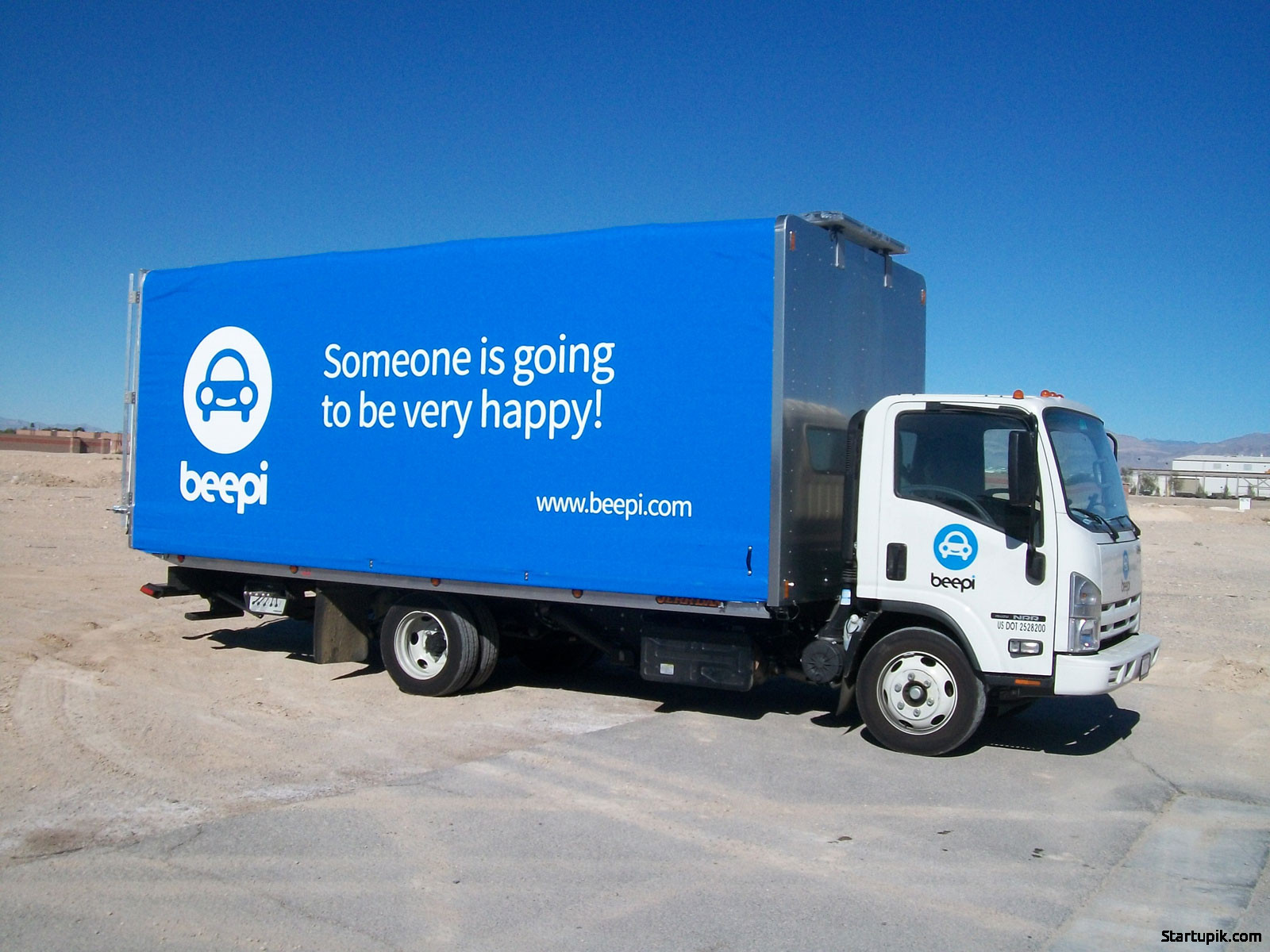
Beepi: The Used-Car Startup That Burned $150M
Introduction
For a brief, wild period in the mid-2010s, Beepi was one of Silicon Valley’s favorite stories: a shiny, app-powered marketplace that promised to fix one of the most hated experiences in consumer life — buying and selling used cars.
Founded in 2013 and shut down by early 2017, Beepi raised around $150 million, hit a reported $560 million valuation, and expanded across multiple U.S. markets. Then it imploded in dramatic fashion: mass layoffs, failed acquisition talks, and fire-sale asset deals.
Beepi’s story matters because it sits at the intersection of several recurring startup themes:
- Marketplaces with heavy operational complexity.
- Hyper-growth fueled by “free money” and premium investor brands.
- Unit economics ignored in favor of vanity metrics.
- Founders unprepared for operationally intense, low-margin businesses.
For founders and operators, Beepi is a vivid case study: how a strong idea in a massive market can still fail if strategy, execution, and discipline are misaligned.
 Early Days: A Big Idea in a Broken Market
 Early Days: A Big Idea in a Broken Market
Beepi was founded in 2013 by Alejandro Resnik and Owen Savir.
The founding insight was simple and compelling: used car transactions are painful. The traditional process involves pushy salespeople, information asymmetry, questionable vehicle condition, paperwork headaches, and a deep lack of trust on both sides.
Beepi’s original vision was to be a peer-to-peer marketplace for used cars, but with the reliability and convenience of buying from a trusted dealer. The company would:
- Inspect cars using certified inspectors.
- List only vehicles that passed a strict quality standard.
- Handle payment, paperwork, delivery, and warranties.
- Promise no-haggle pricing and a seamless app-based experience.
In theory, this would allow:
- Sellers to get more than trade-in value from a dealer.
- Buyers to get lower prices than franchise dealerships, but with more trust than Craigslist.
Resnik, an Argentine-born entrepreneur, and Savir, with a background in finance and consulting, pitched Beepi as the Airbnb of cars: an asset-light, tech-enabled marketplace that would sit between buyers and sellers, managing trust and logistics.
Early Traction
Beepi launched first in the San Francisco Bay Area in 2014. The startup offered perks that felt radically better than the status quo:
- Beepi inspected the car at the seller’s home.
- Sellers could keep their car until it sold.
- Buyers could browse online, complete the purchase, and have the car delivered to their door.
- A money-back guarantee reduced perceived risk.
Early adopters loved the experience. Word-of-mouth and glowing press stories helped the company quickly outgrow its local niche.
The Hype: From Craigslist Killer to Unicorn-in-Waiting
Beepi timed its story perfectly. In the early to mid-2010s, investors were eager to fund “Uber for X” and “Airbnb for Y” plays. Beepi sounded like both:
- Peer-to-peer marketplaces were in vogue.
- Offline, antiquated industries were seen as ripe for disruption.
- Massive TAM: the U.S. used car market is worth hundreds of billions annually.
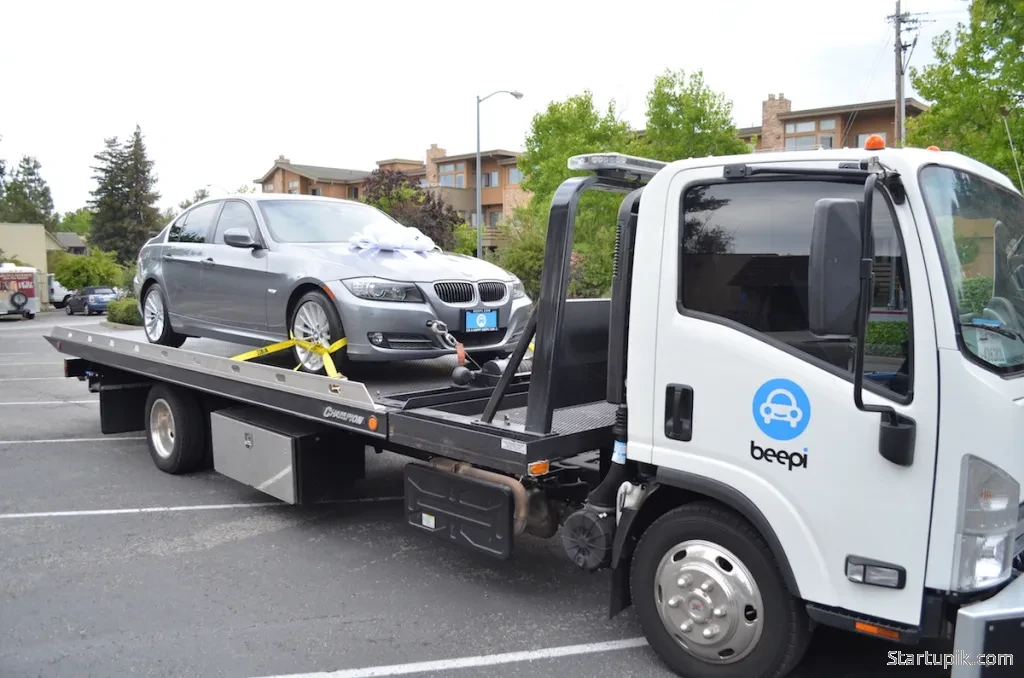
Media outlets loved the narrative: smart founders, sleek branding, and a charismatic pitch about “ending the nightmare of used car shopping.” Beepi cars were delivered with “bow on top” theatrics and high-touch customer service, which created memorable anecdotes for press coverage and social media.
Branding & Experience as Differentiators
Beepi obsessed over the buyer experience:
- Clean, curated listings with high-quality photos.
- Strong warranties and guarantees.
- Friendly, uniformed delivery staff.
- Digital-first process that tried to make cars feel like e-commerce purchases.
While this generated buzz and loyalty, it also concealed a key problem: every delightful touchpoint was expensive in a fundamentally low-margin business.
The Peak: Funding, Expansion, and a Soaring Valuation
Beepi’s fundraising timeline shows how rapidly the company was pushed to scale:
| Year | Milestone | Notes |
|---|---|---|
| 2013 | Company founded | Concept and early team formation |
| 2014 | Launch in Bay Area | Initial traction, strong local buzz |
| 2014–2015 | Series A/B funding | Raised tens of millions; expanded beyond CA |
| 2015 | Valuation peaks | Reported valuation around $560M |
| 2016 | Attempted expansion & global talks | Discussions with foreign investors and partners |
By 2015, Beepi had raised roughly $150 million from well-known investors. It began expanding into multiple markets beyond California, including Arizona and Texas, and explored strategic partnerships abroad.
Growth at All Costs
With plenty of capital and high expectations, Beepi focused on:
- Geographic expansion: entering new cities before perfecting operations in existing ones.
- Brand-building: high marketing spend to create a premium, trusted consumer brand.
- Top-line metrics: GMV (gross merchandise volume) and transaction counts to impress investors.
On the surface, Beepi looked like a future unicorn: big market, great NPS, and a consumer love story. Underneath, the financial core was rotting.
What Went Wrong: When Story Collides with Reality
Beepi’s failure was not about a lack of demand; used car buyers and sellers clearly wanted a better experience. The collapse was driven by a combination of strategic missteps, operational complexity, and brutal economics.
1. Broken Unit Economics
Each Beepi transaction involved:
- Inspector visits and detailed checks.
- Photography and listing management.
- Customer support on both sides of the transaction.
- Logistics and delivery costs (often “free” or heavily subsidized).
- Warranties and returns risk.
All of this was layered on top of a business where gross margins are historically thin. Traditional dealerships balance this with finance & insurance products, trade-ins, upsells, and scale efficiencies. Beepi, built as a tech-first startup, underestimated just how little margin there was to play with.
Reports from former employees and investors suggested that Beepi lost thousands of dollars per car in some cases, especially in new markets where operations were immature. Growth simply amplified the losses.
2. Asset-Light Vision, Asset-Heavy Reality
On slide decks, Beepi was a platform. In practice, it looked more like a vertically integrated, capital-intensive retailer:
- It touched the car physically (inspection, transport, sometimes storage).
- It was deeply involved in title transfer and financing workflows.
- It managed a large operations workforce: inspectors, drivers, coordinators.
This erased many of the supposed advantages of being “just a marketplace.” Instead of scaling like Airbnb, which doesn’t clean or own properties itself, Beepi scaled more like an operations-heavy retailer — but without the margin profile or process discipline those businesses require.
3. Expanding Before Nailing the Model
Beepi expanded into new markets even though its core economics and processes in the Bay Area were not fully stable. Each new geography:
- Added regulatory complexity.
- Required new operational setups and hires.
- Experienced its own learning curve in inspections and logistics.
Instead of iterating into a profitable or at least breakeven playbook in one or two markets, Beepi spread its operational attention and cash across too many fronts.
4. Leadership and Culture Misalignment
Insiders later described a culture that prized vision and growth far above discipline and frugality. The founders were strong storytellers, which helped with fundraising and PR, but the company lacked enough seasoned, operations-focused leadership for a business this complex.
This manifested as:
- Overly optimistic assumptions in financial forecasting.
- Resistance to “boring” cost-cutting measures that might hurt the brand magic.
- Slow, painful adaptation when early warning signs appeared.
5. Funding Environment Turned
From 2013–2015, capital was abundant and investors were eager to fund bold consumer plays. But by 2016, sentiment shifted. The market grew skeptical of heavily subsidized, low-margin businesses that needed infinite capital.
Beepi’s cash burn, reportedly in the range of several million dollars per month, became untenable when new funding rounds faced more scrutiny. Potential investors balked at the unit economics and operational chaos.
The Collapse: Failed Lifelines and Sudden Shutdown
By 2016, Beepi was in trouble. It needed fresh capital or a strategic exit.
Failed Acquisition Talks
Multiple reports indicated that Beepi engaged in acquisition or merger talks with other automotive players and international investors. Some deals reportedly came close but fell apart during due diligence:
- Potential acquirers scrutinized burn rate, unit economics, and operational overhead.
- Concerns around leadership style and spending surfaced.
When the big, reputation-saving acquisition didn’t materialize, Beepi ran out of runway.
Layoffs and Fire Sale
In late 2016 and early 2017, Beepi began laying off a large portion of its staff and winding down operations step by step.
As cash dried up:
- Some assets and technology were sold off to other automotive startups and players at heavily discounted prices.
- Customers and partners were left confused and frustrated by the sudden disappearance of a once-promising brand.
By early 2017, Beepi was effectively dead. Its website went dark, and the company became one of Silicon Valley’s most prominent “burned $150M and vanished” cautionary tales.
Lessons for Founders
Beepi’s story offers sharp lessons for startup founders and operators, especially in complex, operationally heavy markets.
1. Don’t Confuse a Great Experience with a Great Business
Customers loved Beepi, but love isn’t enough. If each delighted customer is fundamentally unprofitable and cannot realistically become profitable with scale, the model is flawed.
Founders should ask early:
- Can this experience be delivered at a sustainable margin?
- What does the cost structure look like at scale, not just at a few hundred or thousand transactions?
2. Nail Unit Economics Before Hyper-Growth
Growth amplifies both strengths and weaknesses. Scaling broken economics just increases the size of the crater when things go wrong.
In marketplaces and logistics-heavy businesses, founders should:
- Prove positive or clearly improving unit economics in at least one core market.
- Understand every cost line item per transaction.
- Resist investor pressure to expand prematurely.
3. Respect Operational Complexity
Not every big market can be disrupted using a light-touch, software-only mindset. Cars are physical, regulated, expensive, and heavily intertwined with financing and insurance.
If your startup touches real-world assets:
- Bring in operations leaders early who have scaled complex businesses.
- Invest in process engineering, not just product design.
- Be honest about the difference between a “platform” and a “retailer.”
4. Fundraising Is Not Product-Market Fit
Beepi’s large rounds and big-name investors created an illusion of inevitability. The company looked successful from the outside long after its internal economics were clearly shaky.
Founders should treat fundraising as:
- A tool to extend runway and fuel validated growth.
- Never as validation that the model is inherently sound.
5. Culture Must Balance Vision with Discipline
Big visions need equally strong operating discipline. Celebrating only growth and press while ignoring cost controls, basic financial hygiene, and hard trade-offs is a recipe for collapse.
Healthy startup cultures:
- Reward truth-telling about numbers, not just optimism about the future.
- Make it acceptable to “slow down to fix the plane” instead of always flooring the throttle.
Key Takeaways
- Massive market, strong demand, and great UX are not enough if the underlying economics are broken.
- Beepi tried to be a tech marketplace but became an operations-heavy retailer without the margin structure or discipline such a business requires.
- Rapid geographic expansion before proving unit economics in a core market magnified losses and complexity.
- Leadership and culture skewed toward vision and growth while underweighting operational rigor and financial discipline.
- Shifts in the funding environment exposed weaknesses that had been hidden by easy capital and investor enthusiasm.
- For founders, the lesson is clear: focus relentlessly on unit economics, operational excellence, and sustainable growth, especially in low-margin, logistics-heavy businesses.

