

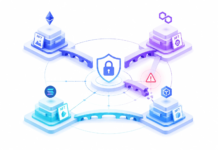





























Blockchains were supposed to create a more open internet for value. Instead, they created islands. One app lives on Ethereum, another on Avalanche, liquidity sits on Cosmos, users hold assets on multiple chains, and developers end up rebuilding the same product logic over and over just to reach different ecosystems. That fragmentation is exactly where Axelar enters the picture.
Axelar is not just another bridge in the usual sense. It is a cross-chain communication network designed to let applications, users, and assets move across blockchains with less friction. For founders and builders, that changes the conversation from “Which chain should we choose?” to “How do we build once and operate across many chains?”
That sounds ambitious, and it is. But the real value of Axelar becomes clearer when you understand its workflow: how messages move, how tokens transfer, who validates those interactions, and where the trade-offs appear in practice. If you are building a multi-chain product, evaluating interoperability infrastructure, or simply trying to understand how modern blockchain systems talk to each other, Axelar is worth a serious look.
Why interoperability stopped being optional
In the early days of crypto, most teams picked one ecosystem and stayed there. That decision was manageable when users were concentrated and network effects were strong. Today, that model feels outdated. Users expect access from multiple chains, liquidity moves where incentives are strongest, and protocols increasingly compete on distribution as much as on core product quality.
For startups, this creates a practical problem. Every new chain adds engineering overhead, security complexity, and operational maintenance. A team can either deploy separate versions of its app and manually connect them with custom bridge logic, or it can use an interoperability layer that treats chains as connected environments rather than isolated markets.
Axelar was built around this second idea. Instead of focusing only on asset transfers, it aims to provide a generalized communication layer for Web3. That means developers can send not only tokens, but also messages and instructions across chains. This distinction matters because most meaningful multi-chain apps require more than just moving value.
Axelar’s role in the stack: more than a bridge, less than a full application layer
A useful way to think about Axelar is as a decentralized routing and verification network for cross-chain operations. It sits between blockchains and helps them communicate through a common system.
At a high level, Axelar provides three things:
- Cross-chain messaging so smart contracts on one chain can trigger actions on another
- Cross-chain asset transfer so tokens can move between ecosystems
- Developer tooling that abstracts some of the complexity of dealing with many chains directly
Under the hood, Axelar relies on a decentralized validator set that observes events on connected blockchains, reaches consensus, and authorizes actions on destination chains. This design is meant to avoid relying on a single relayer, custodian, or centralized operator.
That’s the promise. In practice, the workflow is where the product becomes real.
Inside the Axelar workflow: how a cross-chain action actually happens
Step 1: A user or application initiates an action on the source chain
Everything begins with an on-chain event. That event could be a token transfer request, a contract call, or a transaction that bundles both value and logic. For example, a user may want to move USDC from Ethereum to Polygon, or a dApp on Arbitrum may want to trigger a contract on Avalanche after a deposit is confirmed.
The source-chain transaction is sent to an Axelar-enabled gateway contract. This contract acts as the entry point into the Axelar network.
Step 2: Axelar validators observe and verify the event
Once the event is emitted on the source chain, Axelar’s validator network monitors it. Validators independently verify that the transaction occurred and that it meets the required conditions. They then participate in consensus within the Axelar network.
This is a crucial part of the model. Axelar is not simply passing a message from point A to point B. It is creating a verified cross-chain instruction based on decentralized observation and agreement.
The stronger this validator network is, the more trustworthy the interoperability layer becomes. That also means the security assumptions of Axelar are separate from the security assumptions of the connected chains themselves.
Step 3: The network generates an approved message for the destination chain
After consensus is reached, Axelar produces a command that can be executed on the destination chain. This command may mint or release wrapped assets, invoke a contract function, or pass along data required for downstream logic.
In practical terms, this is where a source-chain event is translated into a destination-chain action.
Step 4: The destination chain receives and executes the command
On the destination chain, Axelar-connected contracts receive the approved command and execute it. If the workflow is a token transfer, the user receives the corresponding asset representation. If the workflow is general message passing, the destination contract processes the payload and continues the application flow.
This is the part that makes Axelar more interesting than older bridge models. A simple bridge says, “move token from chain A to chain B.” Axelar allows a developer to say, “when this happens on chain A, trigger this logic on chain B.”
Where General Message Passing changes the game
One of Axelar’s most important capabilities is General Message Passing, often shortened to GMP. This is the layer that enables cross-chain smart contract calls, not just token movement.
For builders, GMP opens the door to more sophisticated product design:
- A lending app can manage collateral or liquidation actions across chains
- A game can sync state between ecosystems
- A DAO can execute governance decisions across multiple networks
- An onboarding flow can abstract chain complexity away from the end user
The startup-level implication is significant. Instead of launching fragmented mini-products on separate chains, teams can build coordinated multi-chain experiences. That does not remove all complexity, but it changes the architecture from disconnected deployments to networked applications.
There is a subtle but important shift here: interoperability stops being a post-launch add-on and becomes part of product design from the beginning.
How teams are using Axelar in real product workflows
Multi-chain DeFi without forcing users to think about bridges
A DeFi startup can use Axelar to let users deposit on one chain while strategies, liquidity, or execution happen elsewhere. Instead of telling users to bridge manually and repeat the same process on another network, the app can route the required assets and messages behind the scenes.
That leads to a much better product experience. Users care about outcomes, not interoperability jargon.
Cross-chain governance that actually executes
Governance often breaks down in multi-chain environments because voting may happen on one chain while contracts live on several others. Axelar can help connect that gap. A governance result can be transmitted as a cross-chain command and executed where the relevant protocol contracts are deployed.
This is one of those workflows that sounds niche until a protocol scales. Then it becomes operationally essential.
Unified NFT and gaming experiences
Gaming and NFT projects often care more about user reach than ideological chain loyalty. Axelar allows game logic or asset-related instructions to travel across chains, helping projects build experiences where users are not trapped in a single ecosystem.
That said, gaming teams still need to be realistic about latency, cost, and state coordination. Multi-chain design can improve reach, but it can also introduce edge cases that a single-chain game avoids.
Enterprise and infrastructure-level integrations
For infrastructure startups, wallets, custody providers, or payment layers, Axelar can act as the interoperability engine that connects several chains through one common integration approach. This is especially useful when the real business goal is not “be a cross-chain company,” but “serve customers wherever they are.”
Where the model gets harder: security, latency, and operational trade-offs
Interoperability is one of the most attractive categories in crypto, and one of the most dangerous. Bridges have historically been major attack targets, and any cross-chain network introduces another layer of trust assumptions.
Axelar improves on simplistic bridge designs by using decentralized validators and generalized communication, but that does not mean it eliminates risk. It shifts risk into a broader system that includes validator security, contract correctness, integration quality, and chain-specific execution behavior.
Founders should evaluate Axelar with the same seriousness they would apply to a core infrastructure dependency.
The extra trust surface is real
When you use Axelar, you are not relying only on the source and destination chains. You are also relying on Axelar’s validator network and protocol design. That may be an acceptable trade-off, especially compared to centralized bridges, but it is still a trade-off.
Latency can shape the user experience
Cross-chain workflows are not always instant. Finality on the source chain, validator observation, consensus, and destination execution all take time. For some apps, that is fine. For high-frequency experiences or highly interactive products, it can become noticeable.
If your product requires near-real-time responsiveness, you need to model these delays before making interoperability central to the UX.
Debugging is more complex than single-chain development
Once an app spans chains, failures become harder to trace. Did the issue happen on the source chain, inside Axelar, in the message payload, on destination execution, or in gas handling? Teams that underestimate this operational complexity often discover too late that multi-chain systems are harder to test and support than they first appeared.
Expert Insight from Ali Hajimohamadi
From a startup strategy perspective, Axelar makes the most sense when interoperability is tied to distribution, liquidity access, or workflow efficiency, not when it is used just to sound more “Web3 native.” Founders should ask a simple question: does being cross-chain create real product leverage, or are we adding architecture because the market expects it?
The strongest use cases are usually:
- products that need to aggregate users or liquidity across ecosystems,
- protocols that want one coordinated experience instead of fragmented deployments,
- infrastructure companies that need broad chain support without building custom bridge logic every time.
Where founders go wrong is assuming interoperability automatically expands growth. It often expands maintenance first. Every extra chain increases QA burden, support complexity, monitoring needs, and edge cases around execution. If the product is still searching for product-market fit, multi-chain architecture can become an expensive distraction.
Another common misconception is that a cross-chain network removes the need for careful product design. It does not. It simply gives you better primitives. You still need to think through failure states, message ordering, delayed execution, destination gas, and user communication. If a user triggers a cross-chain flow and something takes longer than expected, your app needs to explain that clearly. Otherwise, trust drops fast.
My view is this: founders should use Axelar when cross-chain capability is part of the business model or user acquisition strategy. They should avoid it when they are still validating the basics of their product or when a single-chain deployment can serve 80% of the demand with far less risk. The biggest mistake is treating interoperability as a branding decision instead of an infrastructure decision.
When Axelar is the right bet—and when it probably isn’t
Axelar is a strong fit when your application genuinely benefits from moving data, logic, or assets across multiple ecosystems. It is particularly useful for teams that want a standardized approach rather than maintaining custom integrations chain by chain.
It is probably not the best fit if:
- your app only has traction on one chain and does not yet need expansion,
- your UX depends on immediate synchronous execution,
- your team lacks the resources to monitor and debug cross-chain workflows,
- your security model cannot tolerate the additional infrastructure dependency.
In other words, Axelar is powerful, but it rewards teams with clear multi-chain reasons and enough technical maturity to manage the complexity responsibly.
Key Takeaways
- Axelar is an interoperability network that supports both token transfers and cross-chain messaging.
- Its core workflow involves source-chain events, validator verification, consensus, and destination-chain execution.
- General Message Passing is the feature that makes Axelar more than a basic bridge.
- Best-fit use cases include multi-chain DeFi, governance, gaming, and infrastructure services.
- Main trade-offs include extra trust assumptions, latency, and increased debugging complexity.
- Founders should adopt it strategically, not just because multi-chain sounds impressive.
Axelar at a glance
| Category | Summary |
|---|---|
| Primary role | Cross-chain communication and asset transfer network |
| Core capability | General Message Passing between smart contracts on different chains |
| Security model | Decentralized validator network verifies source-chain events and authorizes destination actions |
| Best for | Teams building coordinated multi-chain applications or infrastructure products |
| Main advantage | Abstracts cross-chain logic into a more unified developer workflow |
| Main limitation | Introduces additional trust, latency, and operational complexity |
| Not ideal for | Very early-stage products, single-chain apps, or ultra-low-latency experiences |




