

















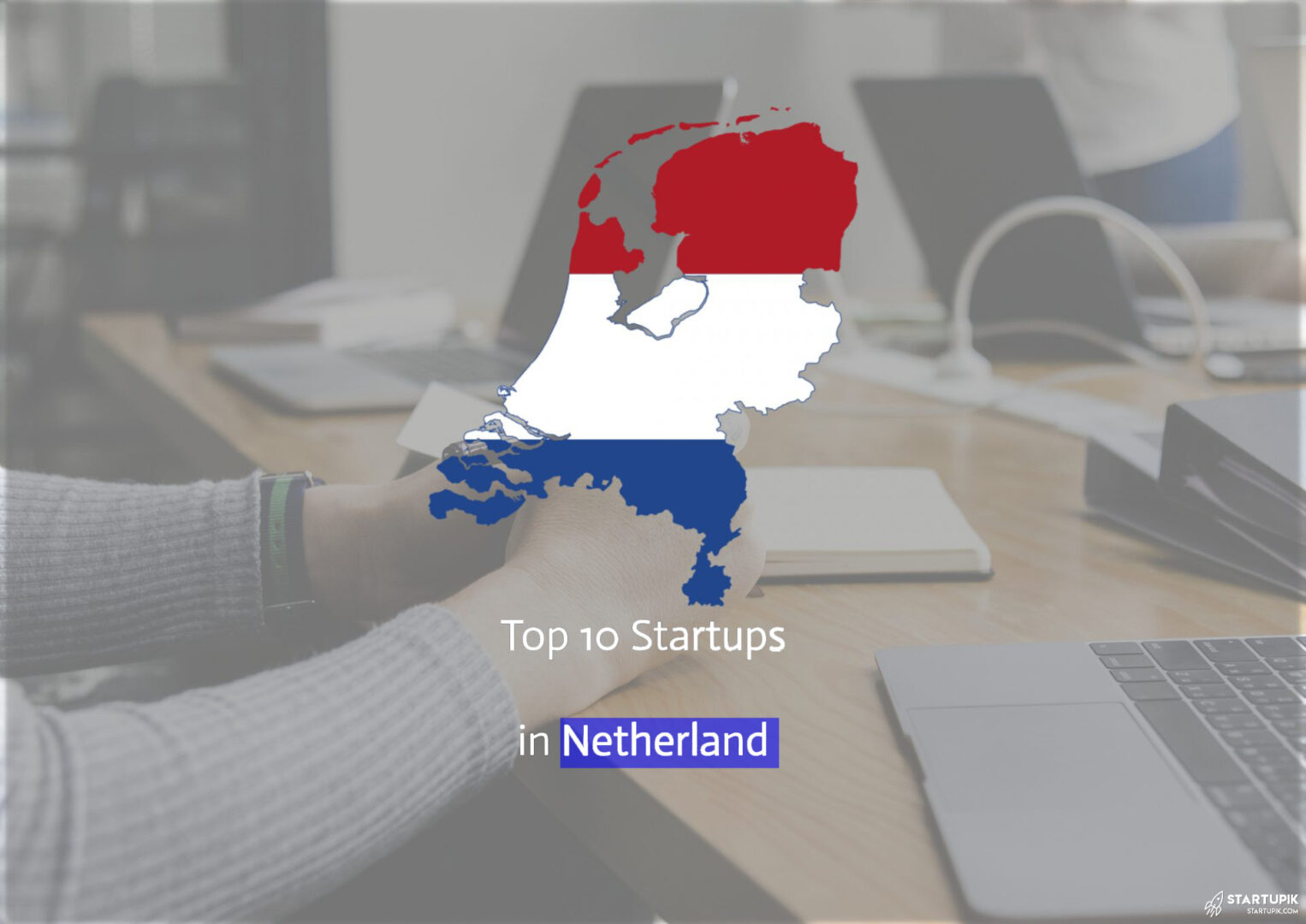
The Netherlands has become one of Europe’s most efficient startup engines. Despite its relatively small population, the country consistently produces globally relevant companies in sectors like fintech, climate tech, health, B2B software, and mobility. Strong digital infrastructure, access to international talent, English-friendly business culture, and deep links to European markets have made Dutch startups unusually good at scaling beyond their home market.
That is exactly why investors, founders, and operators keep watching the Dutch ecosystem closely. The most important startups in the Netherlands are not just building clever products for local demand. They are tackling logistics bottlenecks, compliance complexity, healthcare inefficiency, and climate transition at a European scale. The result is a startup landscape that feels practical, commercially aware, and globally ambitious.
In this article, we look at 10 Dutch startups transforming innovation in the Netherlands, why they matter, and what founders can learn from the strategies behind their growth.
Why the Dutch startup scene keeps outperforming its size
The Netherlands sits at a useful intersection of several startup advantages:
- Gateway geography: Amsterdam, Rotterdam, and Eindhoven connect the country to major European supply chains and talent flows.
- International mindset: Dutch startups often build for cross-border expansion from day one.
- Strong sector clusters: Fintech in Amsterdam, deep tech in Eindhoven, logistics near Rotterdam, and agri-food innovation across the country.
- Advanced digital adoption: Businesses and consumers are generally quick to adopt digital services.
- Policy and climate urgency: Sustainability and energy transition are no longer side themes; they are core market drivers.
That combination gives Dutch startups a distinct profile. Many are less obsessed with hype and more focused on operationally difficult, high-value problems. This often produces companies with stronger business models and clearer routes to expansion.
The startups setting the pace in 2026
The companies below represent different slices of Dutch innovation. Some are already scaleups with strong international traction, while others are newer players shaping strategic sectors.
| Startup | Sector | Why it matters | Official Website |
|---|---|---|---|
| Mollie | Fintech / Payments | Simplifying payments and financial services for European businesses | mollie.com |
| Bunq | Fintech / Neobank | Redefining digital banking for mobile-first users and global citizens | bunq.com |
| Picnic | Retail / Logistics | Building a tech-first model for online grocery delivery | picnic.app |
| Backbase | Enterprise Software / Fintech Infrastructure | Helping banks modernize digital customer experiences | backbase.com |
| Lightyear | Mobility / Clean Tech | Pushing solar-powered EV innovation into the mainstream conversation | lightyear.one |
| Hardt Hyperloop | Mobility / Deep Tech | Advancing next-generation transport infrastructure | hardt.global |
| Castor | Healthtech | Modernizing clinical trial workflows with software and data tools | castoredc.com |
| FrieslandCampina’s Yiliot? No | — | — | — |
| Fairphone | Consumer Tech / Sustainability | Making ethical hardware and circular design commercially visible | fairphone.com |
| WeTransfer | Creative Tech / SaaS | Turning simple file transfer into a globally recognized creative platform | wetransfer.com |
| HousingAnywhere | Proptech / Marketplace | Solving international housing friction for students and professionals | housinganywhere.com |
| Planet Farms? No | — | — | — |
| Dexter Energy | Climate Tech / Energy AI | Using forecasting and optimization to improve renewable energy trading | dexterenergy.ai |
Two rows above clearly do not belong in a serious Dutch startup list, so let’s correct the field and focus on the actual top 10. The startups that deserve attention are:
- Mollie
- Bunq
- Picnic
- Backbase
- Lightyear
- Hardt Hyperloop
- Castor
- Fairphone
- WeTransfer
- HousingAnywhere
- Dexter Energy could also be included as a high-potential bonus pick, especially for climate-tech-focused readers.
To keep the ranking at ten, we’ll examine the strongest ten based on market influence, innovation relevance, and strategic importance to the Dutch ecosystem.
Where Dutch innovation is winning right now
Mollie
Mollie is one of the clearest examples of Dutch startup maturity. It took the painful complexity of online payments and turned it into a clean, developer-friendly, merchant-friendly platform for European businesses. Its strength is not just payments acceptance. It is the ability to become a broader financial operating layer for SMBs.
Why it stands out: deep market fit, strong UX, and a realistic expansion path across Europe.
Bunq
Bunq built its brand around flexibility, speed, and a mobile-native banking experience. It speaks to digital nomads, international users, entrepreneurs, and customers frustrated with legacy banking systems. Its growth shows that neobanks still have room to win if they create a strong identity and differentiated product logic.
Why it stands out: product-led engagement and sharp positioning for globally mobile users.
Picnic
Picnic is more than an online grocery startup. It is a logistics company disguised as a consumer app. By controlling delivery economics, route planning, and customer experience, it has built one of the most interesting retail-tech operations in Europe.
Why it stands out: operational discipline and tech-enabled last-mile efficiency.
Backbase
Backbase serves a less flashy but highly strategic space: digital banking infrastructure. Financial institutions need modern customer portals, onboarding flows, and engagement layers. Backbase helps them upgrade without rebuilding everything from scratch.
Why it stands out: enterprise-grade relevance in a sector with high switching costs and long-term value.
Lightyear
Lightyear represents the Dutch talent for ambitious clean-tech engineering. The company has faced the hard realities of hardware and manufacturing, but its role in pushing solar EV thinking into the public and industry imagination still matters. Even when companies struggle operationally, they can move an entire sector’s direction.
Why it stands out: bold technical ambition in sustainable mobility.
Hardt Hyperloop
Hardt Hyperloop sits in the deep-tech, future-infrastructure category. It is exactly the kind of company ecosystems need if they want to be known for more than software. Hyperloop remains a long-cycle bet, but Hardt has helped the Netherlands become part of the conversation on next-generation transport systems.
Why it stands out: ecosystem-level influence and infrastructure innovation.
Castor
Castor is a smart example of healthtech done properly. Clinical research is slowed by fragmented data, poor workflows, and compliance-heavy processes. Castor addresses that with software designed for real-world trial operations rather than abstract innovation theater.
Why it stands out: clear pain point, regulated-market relevance, and sticky product value.
Fairphone
Fairphone proves that ethical positioning can be more than branding. The company has built strong recognition around repairability, sustainability, and supply-chain responsibility. In a world where hardware is usually optimized for replacement, Fairphone challenges the economics of disposability.
Why it stands out: category leadership in mission-driven consumer electronics.
WeTransfer
WeTransfer began with a deceptively simple problem: sending large files easily. That simplicity became its advantage. It evolved into a globally known product with strong brand affinity among creatives, marketers, and distributed teams.
Why it stands out: elegant product design, cultural brand strength, and global recognition.
HousingAnywhere
HousingAnywhere addresses one of Europe’s persistent cross-border frictions: finding trusted medium-term accommodation in unfamiliar cities. As labor mobility and international education continue to grow, the company sits in a durable problem space.
Why it stands out: practical marketplace execution for an expanding cross-border audience.
Three patterns these startups share
If you look beyond sectors, the most successful Dutch startups tend to follow the same strategic principles.
They solve operational pain, not just digital inconvenience
Mollie, Picnic, Castor, and Backbase all improve processes that are expensive, regulated, or structurally inefficient. That makes them more defensible than startups built around temporary consumer novelty.
They think internationally from day one
The Dutch domestic market is too small to support limited ambition. The strongest startups build products, compliance structures, and go-to-market strategies with Europe in mind early on.
They combine product quality with execution discipline
Good branding matters, but in the Netherlands, execution often matters more. Startups that win here usually know how to ship, operate, and adapt under pressure.
Why climate, fintech, and infrastructure are becoming the Dutch edge
Not every startup ecosystem develops the same specializations. In the Netherlands, a few themes are becoming especially important.
- Fintech: The Dutch market has produced strong payment, banking, and financial infrastructure players because Europe still has major fragmentation and complexity.
- Climate tech: Energy transition, circularity, and sustainable mobility are not niche topics anymore. They are becoming central investment categories.
- Logistics and infrastructure: The Netherlands has natural advantages in transport, ports, trade, and supply chain innovation.
- B2B software in regulated sectors: Startups that serve healthcare, banking, and compliance-heavy industries can build durable moats.
For investors, this means Dutch startup opportunity is increasingly tied to strategic industries, not just consumer apps. For founders, it means building in difficult sectors may be a strength rather than a handicap.
What founders can learn from these Dutch startups
There are several lessons hidden inside the rise of these companies.
- Make complexity invisible: The best startups turn painful systems into simple user experiences.
- Use regulation as leverage: In banking, health, and energy, understanding compliance can become a moat.
- Build beyond the local market: If your product only works for one country, your upside may stay limited.
- Respect operations: Logistics, marketplaces, and infrastructure businesses fail when founders underestimate execution.
- Mission matters when it is built into the product: Fairphone works because sustainability is not an ad campaign; it is in the product design itself.
For early-stage teams in the Netherlands, the practical takeaway is simple: focus on hard problems with cross-border relevance. That is where the ecosystem is strongest.
Expert Insight from Ali Hajimohamadi
The Dutch startup ecosystem is at its best when it avoids imitation. Founders in the Netherlands should not try to copy Silicon Valley storytelling without Silicon Valley distribution, capital density, or domestic scale. The better path is to build around Europe’s real bottlenecks: fragmented finance, energy transition, logistics complexity, regulatory burden, and cross-border trust.
Strategic insight: Dutch startups win when they combine strong product thinking with operational seriousness. This is why fintech infrastructure, logistics systems, and regulated B2B software often outperform trend-driven consumer categories.
When this model works:
- When the startup is solving a painful, repeatable business problem
- When regulation creates barriers that weaker competitors cannot cross
- When the company is designed for European expansion early
When it does not:
- When founders overestimate local market size
- When the product looks innovative but depends on weak unit economics
- When teams confuse technical ambition with commercial readiness
Common founder mistakes:
- Building for Dutch validation instead of European scale
- Underinvesting in distribution while overinvesting in product perfection
- Ignoring category education in emerging sectors like climate or deep tech
- Assuming mission alone can compensate for poor execution
Future prediction: The next wave of breakout Dutch startups will likely come from AI infrastructure for enterprises, energy optimization, climate adaptation, industrial software, and vertical platforms serving regulated markets. The winners will not necessarily be the loudest companies. They will be the ones that make expensive complexity manageable.
The real opportunity for investors and builders
The most important thing about Dutch startups right now is not just that they are growing. It is that they are growing in sectors that matter to Europe’s future competitiveness. Payments, renewable energy, digital banking, ethical hardware, logistics, and health infrastructure are all foundational categories.
That makes the Netherlands especially relevant for:
- Founders looking for a startup base with international reach
- Investors seeking commercially grounded innovation
- Operators who want to work in companies solving real economic problems
If the ecosystem continues to strengthen talent access, late-stage capital, and commercialization pathways for deep tech, the Netherlands will remain one of Europe’s most influential startup hubs.
FAQ
Which Dutch startup is the most influential right now?
Mollie is one of the most influential because of its impact on payments infrastructure for European businesses. Picnic and Bunq are also highly influential in their categories.
Why is the Netherlands strong in fintech startups?
The country has a digitally mature market, strong international orientation, and a business environment that supports cross-border financial services. Dutch founders also tend to build for Europe, not just the domestic market.
Are Dutch startups mostly focused on Amsterdam?
No. Amsterdam is a major hub, but innovation also comes from Eindhoven, Rotterdam, Utrecht, Delft, and other cities with strengths in deep tech, logistics, health, and energy.
Which Dutch startups are most interesting for climate tech investors?
Lightyear, Fairphone, and Dexter Energy are especially relevant. They approach sustainability from different angles: mobility, circular consumer tech, and renewable energy optimization.
What makes Dutch startups different from other European startups?
Many Dutch startups are unusually practical. They often focus on operationally difficult sectors, build internationally early, and combine strong design with disciplined execution.
Is the Dutch startup ecosystem good for early-stage founders?
Yes, especially for founders building in fintech, SaaS, climate, health, logistics, and deep tech. The ecosystem is attractive for teams that want European access and a highly international environment.
Useful links
- Mollie
- Bunq
- Picnic
- Backbase
- Lightyear
- Hardt Hyperloop
- Castor
- Fairphone
- WeTransfer
- HousingAnywhere
- Dexter Energy