


































Introduction
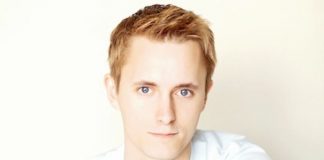
Ilya Sutskever is one of the central technical architects of the modern AI revolution. As co-founder and former Chief Scientist of OpenAI, and later co-founder of Safe Superintelligence Inc. (SSI), his research and strategic decisions have helped move artificial intelligence from academic curiosity to the core infrastructure of the global startup ecosystem.
Founders and investors may not interact with Sutskever directly, but they build on the world he helped create: foundation models, generative AI platforms, and an emerging AI stack that redefines what small, fast-moving teams can do. Understanding his journey offers a rare window into how a deeply technical founder can shape markets measured in trillions, while wrestling with questions of safety, governance, and long-term impact.
Early Life and Education
Ilya Sutskever’s path to becoming a defining AI researcher began far from Silicon Valley. Born in the former Soviet Union and raised across Israel and Canada, he grew up in environments where scientific achievement and educational rigor were highly valued. This combination of intellectual intensity and immigrant drive became part of his personal operating system.
In Canada, Sutskever studied at the University of Toronto, where he eventually completed a PhD under Geoffrey Hinton, one of the pioneers of neural networks. At a time when much of the machine learning community had written off deep neural networks as a dead end, the Toronto group was quietly producing breakthroughs that would soon rewire the industry.
During this period, Sutskever co-authored several foundational works in deep learning, including contributions related to the landmark AlexNet model that dramatically improved image recognition performance. His research established him as one of the leading minds in deep learning, not just theoretically but in building systems that actually worked at scale.
For founders, this stage of his life illustrates an important pattern: before he was a “famous founder,” Sutskever was a deeply embedded specialist in a niche that most of the world still underestimated. He bet his career on a contrarian technical thesis—and it paid off.
Startup Journey
Sutskever’s transition from academic researcher to entrepreneur unfolded in stages.
After completing his PhD, he co-founded DNNResearch with Geoffrey Hinton and Alex Krizhevsky. The startup was quickly acquired by Google, and Sutskever joined the Google Brain team. At Google, he worked on some of the most influential models in machine learning, including sequence-to-sequence learning, which underpinned major advances in machine translation and many other applications.
Yet in 2015, Sutskever made a pivotal move: he left Google to co-found OpenAI with Sam Altman, Elon Musk, Greg Brockman, and others. The new organization was structured initially as a non-profit research lab, with the stated mission of ensuring that artificial general intelligence (AGI) would benefit all of humanity.
For a leading researcher at one of the world’s best-funded AI labs, this was a highly non-traditional career decision. OpenAI had no clear business model, was taking on technically speculative work, and was committed to sharing research openly in a domain that was increasingly strategic for large tech companies.
Over the following years, Sutskever became the technical backbone of OpenAI—guiding research direction, hiring research talent, and shaping the model-centric path that would eventually lead to GPT-3, GPT-4, and ChatGPT.
In 2024, after leaving OpenAI, Sutskever co-founded Safe Superintelligence Inc. (SSI), a new company explicitly focused on building superintelligence with safety and alignment at its core. Unlike OpenAI’s increasingly product-oriented structure, SSI publicly positioned itself as a tightly focused, research-driven effort with safety integrated into the core mission rather than treated as an add-on.
Key Decisions That Shaped the Companies
1. Leaving Big Tech for a Mission-Driven Lab
Walking away from Google Brain to join a not-yet-proven lab was a decisive break. It reflected two beliefs:
- AGI was achievable within his lifetime, and deep learning was the right path.
- Governance and intent would matter as much as technical capability as AI systems became more powerful.
This decision shows how a founder’s willingness to leave comfortable but constrained environments can unlock outsized impact.
2. Betting on Scale and Foundation Models
Inside OpenAI, Sutskever was a champion of the idea that scaling up models and compute would continue to yield dramatic performance gains. This belief drove OpenAI to train increasingly large models and led directly to the “foundation model” era—large, general-purpose models that could be adapted to a wide array of tasks.
Many in the field were skeptical that “just scaling” would work as well as it did. Sutskever’s insistence on this direction—combined with the organization’s willingness to spend heavily on compute—was one of the strategic bets that defined the company.
3. Embracing a Hybrid Structure and Strategic Partnerships
As OpenAI’s ambitions grew, Sutskever was part of the leadership team that endorsed a major structural shift: in 2019, OpenAI created a capped-profit subsidiary, OpenAI LP. This allowed the organization to raise large amounts of capital while preserving some non-profit governance constraints.
This set the stage for a multi-billion-dollar partnership with Microsoft, providing the computing resources required to train frontier models. Without that capital and infrastructure, OpenAI’s aggressive scaling strategy would have been impossible.
4. Putting Safety and Alignment on the Critical Path
Sutskever was also a leading advocate for AI safety within OpenAI. He co-led the Superalignment initiative, focused on controlling systems more intelligent than humans. While OpenAI also pursued commercial success, Sutskever repeatedly pushed the idea that safety research had to be done proactively, not as a reaction to failures.
His later move to found SSI doubled down on this theme: an organizational design where superintelligence safety is the product, not a compliance function attached to other products.
5. Navigating Governance and Internal Conflict
In late 2023, OpenAI went through a highly public governance crisis, including the temporary removal and rapid reinstatement of CEO Sam Altman. Sutskever, then a board member, was briefly aligned with the decision to remove Altman, later publicly expressed regret, and ultimately stepped off the board.
For founders, the underlying lesson is not the drama but the complexity: building institutions around transformative technology forces leaders to confront misalignments between mission, power, and governance well before most startups ever have to.
Growth of OpenAI: From Lab to Platform
Funding and Capital Strategy
OpenAI began with a high-profile pledge of up to $1 billion in funding commitments from its founders and early backers. However, the true scale of its ambition only became clear when the organization committed to training massive models that required extraordinary compute budgets.
The 2019 partnership with Microsoft was a turning point. It provided:
- Access to large-scale cloud compute (Azure), customized for AI workloads.
- Direct investment capital to fund research and training runs.
- A distribution channel to enterprise customers via Azure’s ecosystem.
This model—pairing a frontier AI lab with a large cloud provider—has since been replicated by other players. It highlights how technical founders increasingly need to think in terms of compute as a strategic resource, not just talent and capital.
Scaling, Productization, and Market Expansion
Under Sutskever’s technical leadership, OpenAI progressed from early reinforcement learning work (like Dota-playing bots) to large language models (GPT-2, GPT-3), then to high-impact products like the OpenAI API, Codex, and eventually ChatGPT.
ChatGPT’s launch in late 2022 marked a structural break in the market:
- It reached tens of millions of users within weeks, becoming one of the fastest-growing consumer applications in history.
- It catalyzed an explosion of AI-native startups building on top of OpenAI’s models.
- It forced incumbents and regulators worldwide to respond to generative AI as a platform shift, not a niche feature.
OpenAI evolved from a research lab to a platform company whose APIs and models became the backbone for thousands of startups—developer tools, copilots, creative applications, workflow automation, and more.
Safe Superintelligence Inc.: A Different Kind of Growth Thesis
With SSI, Sutskever signaled a willingness to step away from the flywheel of rapid product growth and focus instead on a narrower, deeper question: can you build superintelligent systems that are provably safe and aligned?
Publicly, SSI has positioned itself as:
- Small and focused, avoiding large product surface areas.
- Optimized for research speed and safety, not near-term revenue.
- Designed to keep governance and technical decisions tightly coupled.
For founders, SSI is interesting not just for what it builds, but for what it chooses not to build: a reminder that in some domains, saying “no” to immediate market opportunities can be a strategic choice rather than a missed one.
Leadership Style
Sutskever is not a “charismatic CEO” in the traditional mold. His influence comes from a combination of technical depth, conviction, and the ability to set a high bar for what “frontier” really means.
Key elements of his leadership style include:
- Technical credibility at the core: As a world-class researcher, he commands deep respect from top-tier engineers and scientists. This makes it possible to recruit and retain exceptional technical talent.
- Long-term, mission-centric thinking: Whether at OpenAI or SSI, Sutskever frames work not just as product development but as shaping the trajectory of intelligence itself. This kind of mission attracts people who want to work above the noise of incremental features.
- Comfort with ambiguity and contrarian bets: Betting on scale, leaving Google for OpenAI, and then leaving OpenAI for SSI all reflect a willingness to act on conviction before consensus forms.
- Deep focus: His public communications and organizational choices suggest a preference for small, highly capable teams working on a narrow set of high-leverage problems.
For founders, Sutskever exemplifies the “technical founder as architect”—someone who shapes both the research agenda and the institutional design required to pursue it.
Lessons for Founders and Investors
- Bet on contrarian technical theses—if you are willing to do the work. Sutskever’s career is built on deep learning at a time when it was unfashionable. The key is not being contrarian for its own sake, but being right and persistent.
- Design your company around the constraint that matters most. For OpenAI, it was compute and talent; for SSI, it is safety. Many startups never explicitly define their primary constraint and end up optimized for the wrong thing.
- Think in terms of platforms, not products. OpenAI’s long-term impact comes from being an enabling layer for thousands of other companies. Founders should ask: “Are we a feature, a product, or a platform?”—and build accordingly.
- Governance is a first-class design problem. The OpenAI saga shows that structure, boards, and incentive models can become existential issues when technology has systemic impact. Founders in emerging, high-stakes fields should treat governance as a core competency, not an afterthought.
- Safety and responsibility can be strategic differentiators. In AI, demonstrating credible safety practices is increasingly a prerequisite for access to capital, customers, and regulators. Sutskever’s career underscores that the people who take these concerns seriously early can retain the right to build at the frontier.
Quotes and Philosophy
Across talks, interviews, and public writings, several consistent themes define Sutskever’s philosophy:
- AI as the most powerful technology humans will build: He has repeatedly argued that artificial general intelligence will be one of the most consequential inventions in history, reshaping economies, science, and daily life.
- Alignment is non-optional: Sutskever emphasizes that as systems become more capable, the challenge is not just making them smarter, but aligning their objectives with human values and interests.
- Speed with caution: His work reflects a dual belief: progress should not be artificially frozen, but it must be accompanied by equally serious investment in understanding and controlling what we build.
- Small teams, large impact: From DNNResearch to the early OpenAI research group and now SSI, Sutskever consistently gravitates toward compact teams with enormous leverage rather than sprawling organizations.
These ideas are especially relevant to founders in AI and other high-leverage technologies, where the line between innovation and risk can be thin and constantly moving.
Key Takeaways
- Ilya Sutskever evolved from a deep learning researcher into a founder whose decisions helped define the modern AI stack.
- His career highlights the power of betting on a contrarian technical thesis and pushing it relentlessly over a decade or more.
- OpenAI’s trajectory—from research lab to platform company—shows how capital, compute, and partnerships can be orchestrated around a clear technical vision.
- SSI represents a different thesis: that in some frontiers, safety and alignment are not constraints on innovation but the central product.
- For founders and investors, Sutskever’s journey is a case study in how deeply technical leaders can influence markets, governance models, and even the direction of civilization-level technologies.