Business Bay as a Mixed-Function Urban Zone Within Dubai’s Central Corridor
Image source: buy-dubai.ae
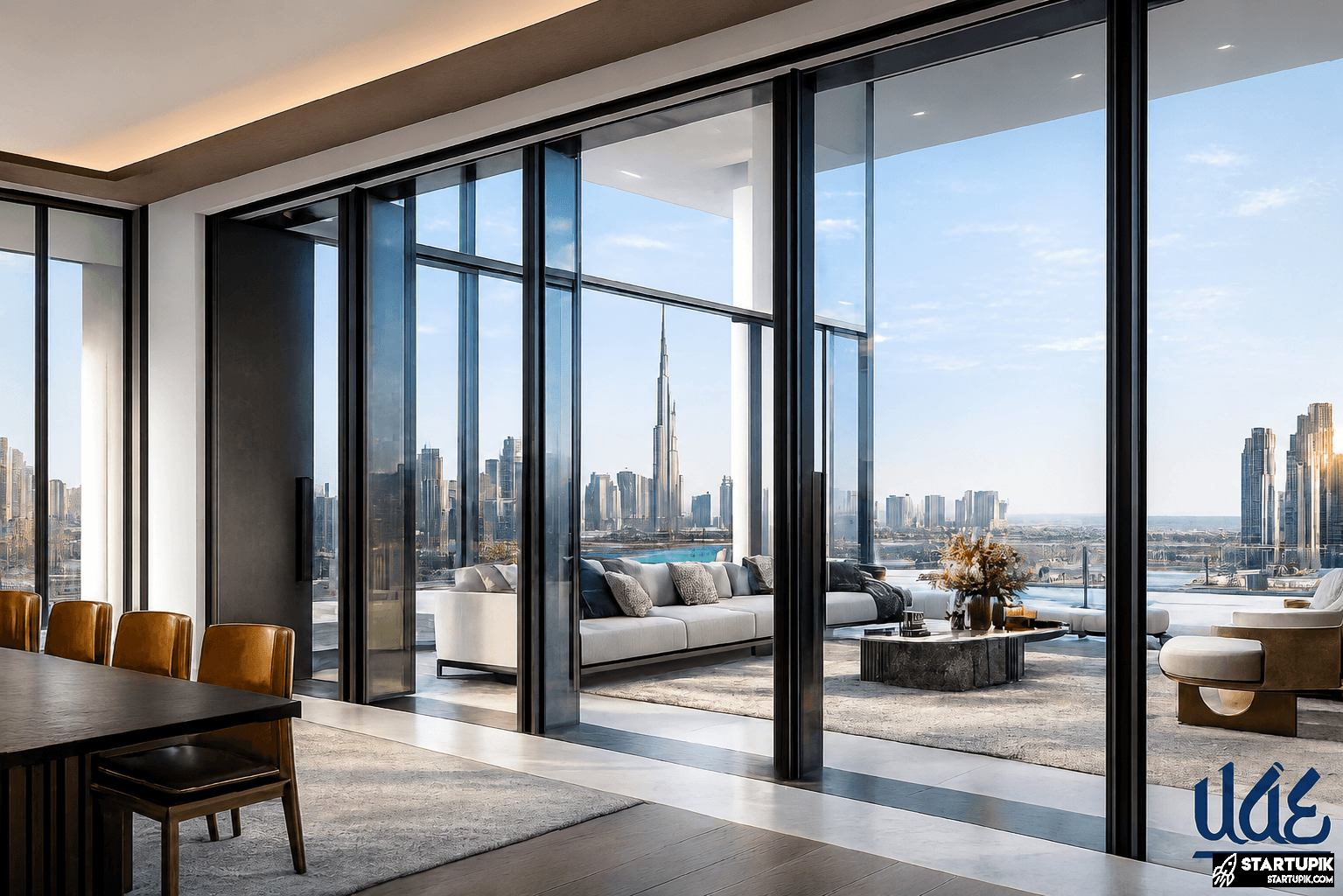
Within Dubai’s central urban structure, certain districts function less as residential areas and more as hybrid spatial systems where working environments and living spaces overlap. Business Bay belongs to this category, operating as a dense cluster of vertically organized buildings positioned along key mobility routes. Interest in Business Bay property options is often connected to this layered configuration rather than to a single functional purpose.
The area developed through a process of vertical concentration, where multiple building types were introduced within a limited geographic frame. As a result, commercial units, housing segments, and hospitality structures are positioned in close proximity, creating a compact spatial structure with overlapping uses.
Structural Characteristics and Spatial Behavior
Image source: buy-dubai.ae
Before outlining key elements, it is important to understand that this district does not function as a single-purpose environment. Instead, it operates through layered zoning, where different building functions coexist within short spatial distances, influencing daily movement patterns and usage intensity.
- High concentration of vertical structures within a compact urban footprint.
- Direct integration with major transport corridors and road networks.
- Co-location of residential units and work-oriented buildings.
- Continuous redevelopment cycles introducing new building phases.
- Strong internal connectivity between adjacent functional zones.
One noticeable feature of the district is the constant transformation of its built form. Construction activity is not limited to expansion at the edges but occurs within existing areas, gradually replacing or modifying earlier structures. This creates a layered architectural timeline visible in the physical environment.
The spatial arrangement also influences how people move through the district. Instead of linear movement between separated zones, activity tends to occur within short distances, often between buildings that serve different purposes. This contributes to a compressed pattern of daily mobility.
From a broader perspective, the district reflects a shift toward multifunctional urban cores where separation between residential and commercial functions becomes less pronounced. Rather than being defined by a single role, the area operates as an interconnected system of overlapping uses shaped by vertical development logic.