





















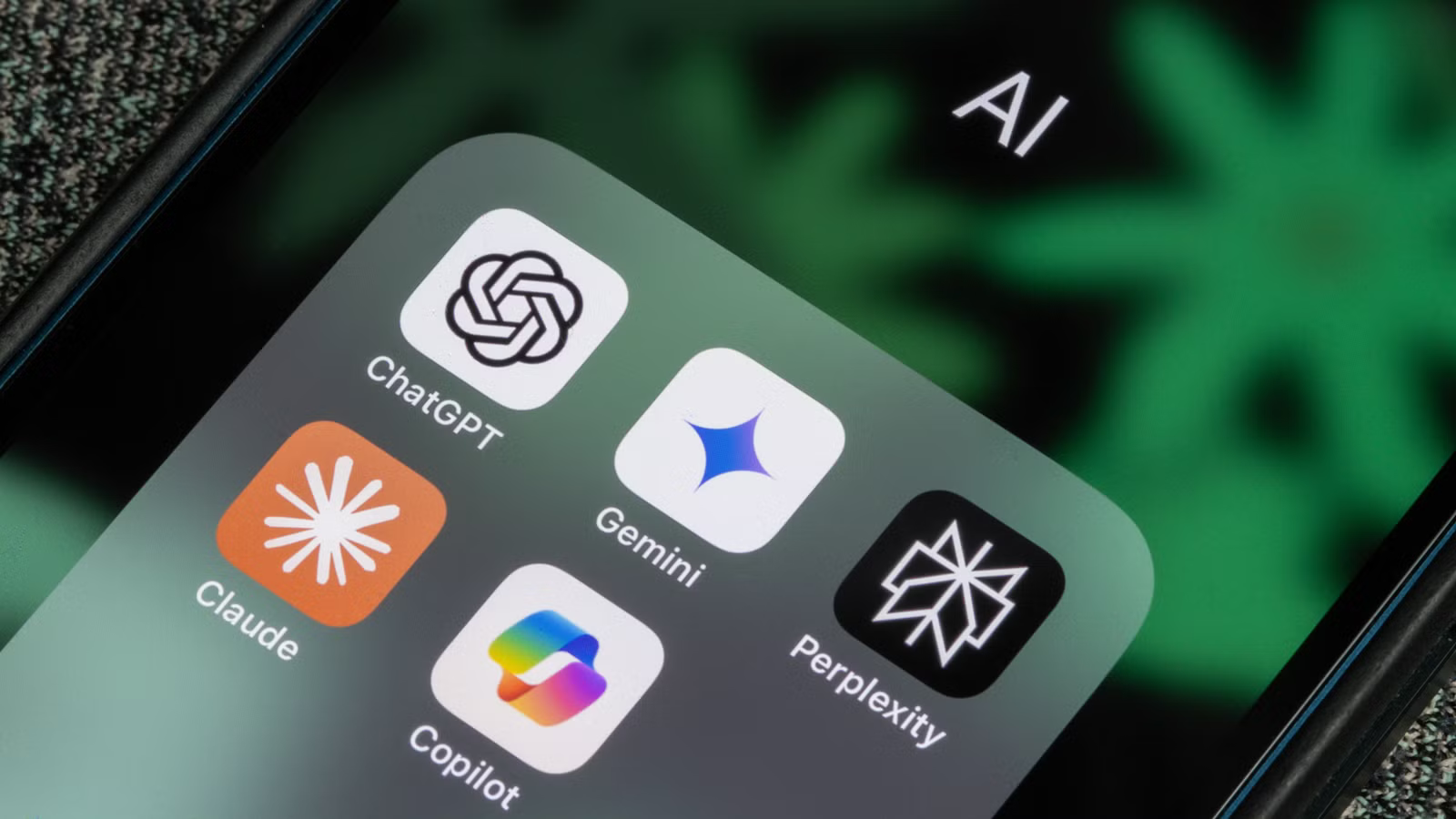
In 2026, the question is no longer whether you should use AI. It is which AI tool actually gives you an edge right now.
That is why “best AI tool” searches have suddenly exploded again. New model updates, autonomous agents, enterprise copilots, and multimodal workflows have made the answer more complicated — and more useful — than it was even a year ago.
Quick Answer
- The best AI tool in 2026 for most people is ChatGPT because it combines strong reasoning, writing, coding, multimodal input, and broad ecosystem support in one place.
- The best AI tool for research-heavy work is Claude when you need long-context analysis, clearer synthesis, and lower-friction document handling.
- The best AI tool inside Google workflows is Gemini for users deeply tied to Gmail, Docs, Sheets, Android, and Google Workspace.
- The best AI tool for visual generation is Midjourney when image quality and style matter more than workflow simplicity.
- The best AI tool for business automation is Microsoft Copilot if your team already lives in Microsoft 365 and wants AI embedded into daily operations.
- There is no universal winner; the best tool depends on whether your priority is speed, accuracy, integration, creativity, or team-wide deployment.
What It Is / Core Explanation
When people ask, “What is the best AI tool in 2026?” they usually mean one of three things: the best general-purpose assistant, the best work productivity tool, or the best specialized AI platform.
That matters because AI is no longer one category. In 2026, “AI tool” can mean a chatbot, a coding assistant, a research engine, a video generator, a design platform, or an autonomous workflow agent.
So the honest answer is this: ChatGPT is the best all-around AI tool, but it is not the best at every job.
Why It’s Trending
The hype is not just about model intelligence anymore. The real reason AI tools are trending in 2026 is that they have moved from novelty to operating layer.
People are no longer opening AI tools just to ask fun questions. They are using them to draft proposals, summarize meetings, analyze contracts, build prototypes, generate reports, create ad creatives, and automate repetitive work.
The second reason is fragmentation. Every major platform now claims to be the best. OpenAI leads in general use, Google pushes integration, Anthropic wins trust in some research workflows, and Microsoft dominates enterprise embedding.
That creates confusion — and confusion drives comparison searches.
A third reason is economic pressure. In 2026, teams are expected to do more with fewer hires. AI tools are trending because they are being judged less on “wow” and more on time saved per week.
Real Use Cases
1. Solo founders
A startup founder might use ChatGPT to turn rough product ideas into landing page copy, investor email drafts, onboarding flows, pricing tests, and support documentation in one afternoon.
Why it works: one tool can cover strategy, writing, analysis, and execution support. When it fails: if the founder treats AI output as market truth instead of a draft to validate.
2. Marketing teams
A content team may use Claude for long brief analysis, ChatGPT for content structuring, Midjourney for campaign visuals, and Gemini for collaboration inside Docs.
Why it works: each tool handles a different bottleneck. When it fails: brand inconsistency appears fast if there is no human editor controlling voice and accuracy.
3. Developers
Developers often use ChatGPT or GitHub Copilot to debug functions, generate boilerplate, explain legacy code, and speed up testing.
Why it works: AI shortens the path from idea to working draft. When it fails: generated code can introduce hidden logic flaws, security risks, or unnecessary complexity.
4. Consultants and analysts
A consultant can upload 100-page reports, extract themes, compare competitors, and generate client-ready summaries in far less time than manual review.
Why it works: AI is especially strong at compression and pattern recognition across large text sets. When it fails: weak source material leads to polished but shallow conclusions.
5. Operations and admin
Teams use Microsoft Copilot to summarize meetings, draft follow-ups, update spreadsheets, and surface information across internal systems.
Why it works: it reduces context switching. When it fails: if company data is disorganized, AI becomes a faster way to retrieve messy information.
Pros & Strengths
- ChatGPT: strongest all-around balance of reasoning, content generation, coding help, and multimodal support
- Claude: excellent for long documents, nuanced writing, and cleaner analytical summaries
- Gemini: strongest fit for users already embedded in Google products
- Microsoft Copilot: practical advantage inside enterprise workflows, especially Outlook, Excel, Teams, and Word
- Midjourney: high-quality image generation with distinct aesthetic control
- Perplexity: fast answer discovery with source-oriented web research behavior
Limitations & Concerns
No serious AI evaluation is honest without the trade-offs.
- Accuracy is still uneven. Even top tools can present false claims confidently, especially in legal, medical, financial, or niche technical contexts.
- Best-in-one means weaker at some edge cases. ChatGPT may be the best overall, but a specialist tool can outperform it in research depth, image quality, or office integration.
- Context does not equal judgment. A tool can process huge amounts of information and still miss what matters strategically.
- Privacy remains a real issue. Businesses handling confidential data need clear governance, permissions, and vendor review before scaling AI use.
- Workflow dependence is rising. Once a team builds around one AI ecosystem, switching becomes harder.
- Output quality depends on operator skill. Teams often blame the tool when the real issue is poor prompting, weak input, or no review process.
The biggest hidden limitation in 2026 is this: AI can make mediocre teams look efficient for a while. But if the underlying strategy is weak, the speed becomes expensive.
Comparison or Alternatives
| Tool | Best For | Where It Wins | Where It Falls Short |
|---|---|---|---|
| ChatGPT | General-purpose AI | Versatility, ecosystem, multimodal capability | Not always the best specialist option |
| Claude | Research and long-form analysis | Document reading, thoughtful summaries | Less integrated into broad consumer workflows |
| Gemini | Google users | Workspace integration, search-adjacent utility | Performance can feel inconsistent by task |
| Microsoft Copilot | Enterprise productivity | Deep Microsoft 365 embedding | Best value mainly inside Microsoft-heavy organizations |
| Midjourney | Image generation | Visual quality and artistic control | Not built for general productivity |
| Perplexity | Fast research | Web-grounded responses and source visibility | Less useful for broader creation workflows |
Should You Use It?
Use ChatGPT if:
- you want one tool that handles writing, analysis, ideation, coding, and everyday tasks
- you are a founder, freelancer, creator, student, or operator who needs flexibility
- you value breadth over niche specialization
Use Claude if:
- your work depends on reading, comparing, and synthesizing long documents
- you care more about clarity than flashy outputs
Use Gemini if:
- your day already runs through Gmail, Docs, Drive, and Android
- you want AI built into tools you already use
Use Microsoft Copilot if:
- your company runs on Microsoft 365
- you need organization-wide productivity gains, not just personal assistance
Avoid chasing a single “best” tool if:
- your needs are highly specialized
- you have compliance-heavy workflows
- you still do not have a review process for AI-generated outputs
FAQ
Is ChatGPT the best AI tool in 2026?
For most users, yes. It is the strongest all-around option, but not the best in every specialized category.
What is the best AI tool for business?
It depends on your stack. Microsoft Copilot is strongest for Microsoft-based organizations, while ChatGPT works better for cross-functional flexibility.
What is the best AI tool for students?
ChatGPT is usually the best starting point because it supports explanation, writing help, brainstorming, and study assistance in one place.
Which AI tool is best for research?
Claude and Perplexity are often better choices for research-heavy tasks, especially when source review and document synthesis matter.
What is the best AI image tool in 2026?
Midjourney remains a top choice when image quality and style are more important than general productivity.
Can one AI tool replace all others?
No. A strong general tool can cover most tasks, but specialists still win in areas like design, coding environments, or enterprise integration.
What is the biggest mistake when choosing an AI tool?
Choosing based on hype instead of workflow fit. The best tool is the one that removes your most expensive bottleneck.
Expert Insight: Ali Hajimohamadi
Most people still ask the wrong question. The real question is not “What is the best AI tool?” It is “Which AI tool improves my decision quality, not just my output speed?”
I have seen teams save hours and still make worse strategic moves because AI made weak thinking look polished. That is the trap in 2026.
The winners are not the companies using the most AI tools. They are the ones designing tighter feedback loops around one or two tools that fit their workflow.
If an AI tool gives you more content but not better judgment, it is not leverage. It is noise at scale.
Final Thoughts
- ChatGPT is the best overall AI tool in 2026 for most users.
- Claude is stronger for deep reading and synthesis.
- Gemini wins when Google integration matters.
- Microsoft Copilot is the practical enterprise choice.
- Midjourney remains a leader in image generation.
- The best tool depends on your bottleneck, not the hype cycle.
- Speed without verification is still the biggest AI risk.




