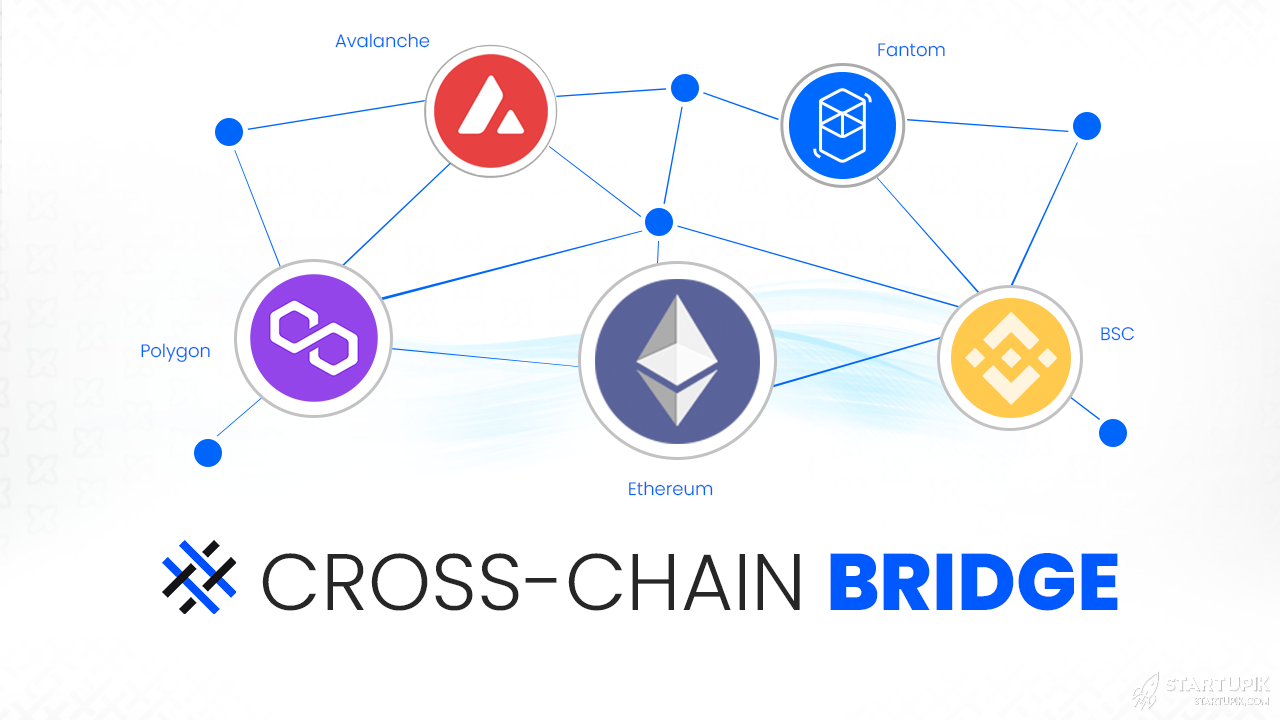
Cross-chain development is powerful, but it carries a higher failure surface than building on a single chain. The biggest risks are bridge exploits, inconsistent security assumptions, message delivery failures, liquidity fragmentation, poor monitoring, and governance mistakes. In 2026, these risks matter even more because apps increasingly depend on multiple ecosystems like Ethereum, Solana, Cosmos, Arbitrum, Base, Avalanche, and OP Stack chains.
Quick Answer
- Bridge security is still the largest cross-chain risk because assets and messages often depend on external validators, relayers, or smart contract wrappers.
- Different chains have different finality models, which can break assumptions about settlement speed and transaction reversibility.
- Cross-chain messaging can fail silently if relayers, oracles, or executors go down or behave unexpectedly.
- Liquidity gets fragmented across ecosystems, which increases slippage, weakens UX, and creates treasury complexity.
- Operational risk is often underestimated because teams monitor smart contracts but ignore bridge health, sequencer downtime, and chain-specific failure modes.
- Governance and upgrade risk grows when apps depend on third-party bridge protocols, multisigs, and external validator sets.
Main Risks in Cross-Chain Development
1. Bridge Exploits and Asset Wrapping Risk
The most obvious risk is still the biggest one. Many cross-chain apps depend on bridges that lock assets on one chain and mint wrapped representations on another.
If the bridge contract, validator network, or message verification logic is compromised, the wrapped asset can lose trust fast. That can turn a product issue into a treasury crisis.
- What breaks: locked funds, wrapped asset integrity, redemptions, protocol solvency
- Who is most exposed: DeFi apps, wallets, treasury products, cross-chain swaps, staking protocols
- Common examples: lock-and-mint bridges, canonical token bridges, liquidity network bridges
This works when the bridge has strong security design, audited contracts, decentralised verification, and battle-tested liquidity paths. It fails when founders assume every bridge is just transport infrastructure.
2. Mismatched Security Assumptions Across Chains
Not all chains provide the same trust model. Ethereum, Cosmos appchains, Solana, rollups, and sidechains each have different guarantees around finality, validator behavior, censorship resistance, and reorg risk.
A team may treat a message from one chain as equivalent to another, but that assumption is often wrong. That is where cross-chain architectures become fragile.
| Risk Area | Why It Happens | Business Impact |
|---|---|---|
| Finality mismatch | Chains confirm at different speeds and certainty levels | Double execution, delayed settlement, user disputes |
| Validator trust mismatch | External bridge validators may not match base-chain security | Hidden trust assumptions, protocol risk |
| Sequencer dependency | Some L2s depend on centralized sequencing paths | Downtime, message delays, degraded UX |
| Upgrade control | Contracts or verification systems may be upgradeable by multisig | Governance capture, emergency freezes |
This is a major issue for founders building products that market themselves as trust-minimized. If the bridge verification layer is weaker than the destination chain, the app inherits the weakest link.
3. Cross-Chain Messaging Failures
Cross-chain apps are not only moving tokens. They also move state, instructions, attestations, and governance messages. That creates a separate class of risk from token bridges.
Protocols such as LayerZero, Wormhole, Hyperlane, Axelar, and Chainlink CCIP help move messages across chains, but message delivery is never “free infrastructure.” It introduces dependencies on relayers, executors, gas funding, endpoint configuration, and verification logic.
- Typical failures: duplicate execution, delayed execution, message stuck in queue, underfunded gas on destination chain
- Operational problem: teams often detect failure only after users complain
- Developer mistake: assuming “sent” means “settled”
This works when the app has idempotent logic, replay protection, timeout handling, and clear message state tracking. It fails when teams treat asynchronous messaging as if it were an atomic transaction.
4. Liquidity Fragmentation
Cross-chain expansion sounds like growth, but it can split user activity across too many networks. That hurts token liquidity, weakens price efficiency, and makes it harder to maintain a strong product experience.
A DEX, lending protocol, or payments app may launch on Ethereum, Base, Arbitrum, BNB Chain, and Avalanche. The result can be five shallow markets instead of one strong one.
- User impact: higher slippage, lower fill quality, inconsistent token availability
- Business impact: more incentives needed, more market-making cost, more treasury overhead
- Product impact: harder analytics, fragmented retention, chain-specific support load
This works for apps with large liquidity programs, strong market-maker relationships, or naturally segmented user bases. It fails for early-stage teams that expand chains before reaching depth on one or two ecosystems.
5. Smart Contract Complexity Across Multiple Execution Environments
Cross-chain products often require contracts, indexers, relayers, off-chain services, and monitoring systems across several execution layers. Each additional chain increases testing and maintenance cost.
Even if the business logic is similar, small differences in gas pricing, tooling, RPC reliability, token standards, and upgrade patterns create new failure modes.
- Ethereum and EVM chains: easier code portability, but not identical operations
- Solana: different account model and runtime assumptions
- Cosmos ecosystems: IBC-native advantages, but different appchain coordination issues
Founders often underestimate how much engineering time goes into cross-chain QA, incident response, and release coordination. Supporting five chains is not 5x more distribution. Sometimes it is 10x more ops.
6. Incomplete Monitoring and Incident Response
Many teams monitor on-chain contract events but not the full cross-chain system. That is dangerous.
You need visibility into bridge status, relayer queue depth, failed messages, RPC degradation, sequencer outages, finality delays, validator changes, and liquidity imbalances. Without that, your team is effectively blind.
In 2026, this matters more because multi-chain stacks are becoming more composable. Apps depend on bridges, intents layers, shared sequencers, oracle networks, and rollup infrastructure at the same time.
- Common blind spots: no alerting for stuck messages, no chain-specific SLAs, no fallback RPC routing
- What happens next: support tickets rise, withdrawals get delayed, social trust drops fast
- Who needs this most: wallets, exchanges, payments apps, DeFi aggregators, gaming infrastructure
7. Governance and Third-Party Dependency Risk
Cross-chain systems are rarely fully self-contained. They often depend on external bridge governance, multisig signers, validator sets, message protocol upgrades, and chain governance proposals.
This creates a strategic risk founders miss: your product roadmap can get blocked by another protocol’s security process or governance timeline.
- Examples: bridge pause, emergency upgrade, token mapping change, validator set rotation
- Hidden issue: legal and reputational exposure from infrastructure you do not control
- Worst case: your app remains live, but a dependency becomes unsafe or politically contested
This works if dependency risk is documented and your product can degrade gracefully. It fails when core functionality depends on a single external protocol with no fallback path.
8. Compliance and Asset Classification Problems
Cross-chain architecture can create compliance issues, especially when wrapped assets, synthetic representations, and cross-border transfers are involved. The legal treatment of a token may differ based on how it is issued, bridged, custodied, or represented.
This is especially relevant for fintech-crypto hybrids, stablecoin products, embedded wallets, and institutional settlement tools.
- Risk areas: custody assumptions, sanctions screening, token provenance, wrapped asset disclosures
- Where founders get stuck: product says “native” but backend depends on a wrapped representation
- Why it matters: legal review becomes harder when message flow and asset control are split across providers
This is not just a legal team issue. It affects UX copy, treasury accounting, support operations, and exchange integrations.
What Founders Must Check Before Building Cross-Chain
- Security model: Is the bridge or messaging layer trust-minimized, externally validated, or multisig-controlled?
- Finality assumptions: When is a deposit or message actually safe to act on?
- Failure handling: What happens if the message never arrives, arrives late, or executes twice?
- Liquidity design: Are you creating shallow markets across too many chains?
- Upgrade control: Who can pause, upgrade, or redirect message flow?
- Monitoring: Can your team detect chain-specific incidents before users do?
- Treasury exposure: How much TVL or operating capital depends on a third-party bridge?
- Compliance scope: Are you dealing with wrapped assets, custody-like flows, or regulated user segments?
Legal and Operational Considerations
Security Audits Are Necessary, But Not Sufficient
An audit can validate code quality, but not the full operational environment. In cross-chain systems, incidents often come from integration mistakes, config drift, validator assumptions, or emergency upgrade paths.
Teams should review the full system, not just the contracts. That includes relayers, off-chain services, RPC providers, key management, failover procedures, and message observability.
Insurance and Risk Disclosures Matter More in Multi-Chain Products
If your product touches user funds, institutional capital, or treasury operations, risk disclosures should clearly explain whether assets are native, wrapped, or represented through an external bridge.
That is especially relevant for wallets, trading apps, staking dashboards, and yield products.
Jurisdictional Exposure Can Expand Quietly
Launching on more chains can also mean touching more exchanges, more wallet providers, and more user regions. That can widen sanctions, KYC, and reporting obligations.
What starts as “just a chain expansion” can become a compliance and support burden if not scoped early.
Practical Checklist for Cross-Chain Teams
- Map every asset and message dependency in the architecture.
- Document which chain is the source of truth for balances and state.
- Use replay protection and idempotent message handling.
- Design for partial failure, not perfect delivery.
- Limit TVL exposure per bridge or messaging route.
- Monitor relayers, executors, sequencers, RPC endpoints, and bridge health.
- Create emergency pause and user communication playbooks.
- Run chain-specific QA before every release.
- Review upgrade keys, multisig permissions, and governance dependencies.
- Do not expand to more chains until liquidity and support can handle it.
Common Mistakes Founders Make
Launching on Too Many Chains Too Early
Teams often expand for narrative value instead of user demand. More chains can look good in fundraising decks, but they usually increase support load faster than revenue.
Treating Cross-Chain as a Growth Feature, Not a Security Decision
Cross-chain support is not just distribution. It changes trust assumptions, treasury risk, and operational complexity.
Ignoring the Difference Between Native and Wrapped Assets
This creates product confusion and real risk. A token with the same ticker on different chains may have very different trust properties.
No Fallback Path for Bridge or Messaging Outages
If one dependency fails, users should still know what happened and what happens next. Many teams have no graceful degradation path.
Underinvesting in Monitoring
A single-chain alert stack is not enough. Multi-chain systems need event tracing, chain-specific alerting, and incident runbooks.
When Cross-Chain Development Works vs When It Fails
| Scenario | When It Works | When It Fails |
|---|---|---|
| Wallets | Clear asset labeling, strong routing, fallback bridging options | Users cannot tell native from wrapped assets |
| DeFi protocols | Deep liquidity, capped bridge exposure, strong risk controls | Liquidity splits across too many networks |
| Payments apps | Reliable settlement paths, monitored infrastructure, predictable fees | Message delays break payment confirmation UX |
| Gaming and consumer apps | Abstraction hides complexity from users | Bridge failures surface directly to end users |
| Institutional products | Clear audit trails, vetted counterparties, defined custody model | Wrapped asset structure creates legal uncertainty |
Expert Insight: Ali Hajimohamadi
The contrarian view: most startups should not start “multi-chain,” even if investors like the story. Cross-chain only becomes a moat when you control demand routing, liquidity, or unique distribution. Otherwise, you are just importing someone else’s infrastructure risk into your own product. A good rule is this: if losing one bridge or one messaging provider would freeze your core UX, you do not have a cross-chain strategy yet—you have a dependency problem. The founders who win usually expand chains after finding a strong home market, not before.
FAQ
What is the biggest risk in cross-chain development?
Bridge security is usually the biggest risk. If the bridge verification model is weak, both assets and application state can be compromised.
Are cross-chain messaging protocols safer than token bridges?
Not automatically. They solve different problems. Messaging protocols can reduce some liquidity issues, but they still introduce external trust, relayer dependencies, and execution risk.
Should early-stage startups build multi-chain from day one?
Usually no. It makes sense only if users are already distributed across chains, or the product depends on chain-specific assets or ecosystems. Otherwise, the complexity often outweighs the upside.
How do wrapped assets increase risk?
Wrapped assets depend on the bridge or custodian model behind them. If redemption trust breaks, the wrapped token may trade at a discount or become operationally unusable.
Is IBC safer than traditional bridging?
IBC can be safer in some Cosmos-based environments because it is designed for interchain communication with clearer protocol-level assumptions. But safety still depends on chain security, relayer behavior, and implementation details.
What should teams monitor in a cross-chain stack?
Monitor bridge status, message queues, relayer health, RPC reliability, sequencer uptime, liquidity depth, failed executions, and chain-specific finality conditions.
Can cross-chain architecture create compliance issues?
Yes. It can affect custody assumptions, asset classification, sanctions exposure, token provenance, and how user balances are represented across networks.
Final Summary
Cross-chain development opens real product opportunities, but it also adds security, operational, liquidity, and governance risk. The largest problems usually come from bridge design, mismatched trust assumptions, weak monitoring, and fragmented liquidity.
The best cross-chain teams in 2026 treat this as a systems design problem, not just a deployment decision. They limit dependencies, cap exposure, monitor aggressively, and expand only when user demand justifies the complexity.
If you are building a wallet, DeFi app, payments product, or crypto infrastructure startup, the right question is not “How do we go cross-chain?” It is “Which risks are we willing to own, and which ones should we avoid entirely?”