Pine pollen tincture vs powder is a practical format question. A tincture may feel quick and flexible because it can be diluted in water. Powder may appeal to people who like smoothies, food mixing, or scoop-based routines. Capsules offer the least taste, while extract powder may suit more advanced users who know how to read label details. The best format depends on taste, preparation time, serving style, travel needs, and safety factors.
Pine pollen is commonly sold as tincture, raw powder, cracked-cell-wall powder, capsules, extract powder, and sometimes blended products. HerbEra approaches this topic as a routine and label-reading decision: choose the format that fits your real day, not the one with the loudest wellness claim.
This article does not provide medical advice. Pine pollen supplements are not intended to diagnose, treat, cure, or prevent any disease. If you have pollen allergies, asthma, hormone-sensitive concerns, take medication, are pregnant or breastfeeding, or are under 18, speak with a qualified healthcare professional before using pine pollen products.
Pine Pollen Tincture vs Powder: What Is the Main Difference?
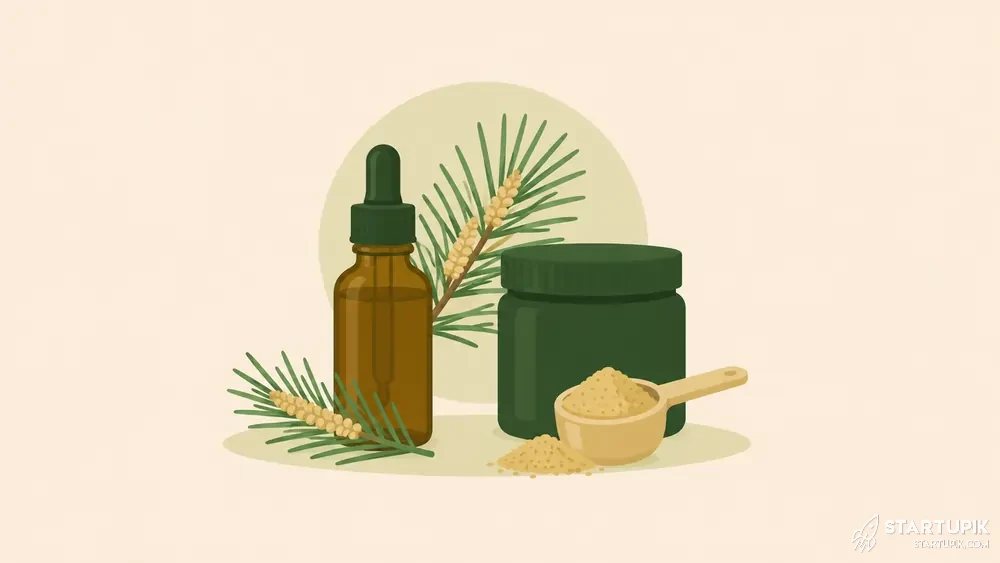 The main difference is preparation and taste exposure. Pine pollen tincture is a liquid extract, usually taken directly or diluted in water. Pine pollen powder is a dry format that can be mixed into drinks, smoothies, yogurt, oatmeal, or other foods.
Tincture usually feels faster. You do not need a blender, spoon, or recipe. You follow the label, dilute if needed, and keep the routine simple.
Powder gives more food-based flexibility. It may fit people who already make smoothies or functional drinks. But it can have a stronger texture, taste, and measuring step.
Quick Comparison: Tincture, Powder, Capsules, and Extract Powder
| Format | Best For | Routine Fit | Watch-Out |
|---|---|---|---|
| Tincture | Flexible liquid serving | Quick drops in water | Alcohol taste or tincture base |
| Powder | Food and smoothie users | Mix into drinks or meals | Stronger texture and taste |
| Capsules | No taste and simple daily habit | Morning or with food | Less flexible serving style |
| Extract powder | More advanced users | Measured mixing routine | Check extract details and serving size carefully |
When Does Pine Pollen Tincture Make More Sense?
Pine pollen tincture makes more sense when you want a fast liquid routine. It can be easier than measuring powder, especially if you already use tinctures or prefer adding drops to water.
A tincture may also suit people who do not want powder texture. Pine pollen powder can feel dry, dusty, or gritty in thin drinks. Tincture avoids that issue.
The main trade-off is the extraction base. Some tinctures contain alcohol. Others use glycerin or an alcohol-free base. The base affects taste, personal preference, and suitability. Read the label before assuming the tincture fits your needs.
When Does Pine Pollen Powder Make More Sense?
Pine pollen powder makes more sense when you like mixing supplements into food or drinks. It may fit a smoothie, yogurt bowl, oatmeal, or morning beverage routine.
Powder also gives a more visible plant-material experience. Some people prefer that. They like seeing and mixing the ingredient themselves.
The downside is preparation. Powder requires measuring, mixing, storage, and cleanup. It may also clump or create a noticeable texture. If you want the lowest-friction routine, tincture or capsules may be easier.
Which Format Has the Least Taste?
Capsules usually have the least taste because the capsule shell keeps pine pollen away from your tongue. Tincture usually has more taste than capsules, especially if the base is alcohol. Powder often has the most noticeable texture and flavor because it spreads through food or drink.
If taste is your main concern, capsules are usually the simplest choice. If you dislike capsules, tincture diluted in water may be easier than powder in a thin drink.
If you enjoy earthy, plant-like flavors and already use powders, pine pollen powder may feel natural in your routine.
Which Format Is Easier for Travel?
Capsules are usually easiest for travel. They are compact, discreet, and do not spill. Tinctures can travel, but liquid bottles require more care. Powder can be messy unless it is pre-portioned.
If you travel often, consider how the format behaves in a bag. A tincture bottle may leak. A powder pouch may spill. Capsules are usually cleaner and faster.
For short trips, the best option is the one with the fewest steps. A travel routine should not require measuring, mixing, and cleaning unless you already have that system in place.
What Is Cracked-Cell-Wall Pine Pollen Powder?
Some pine pollen powders are marketed as cracked-cell-wall or broken-cell-wall powder. This wording refers to processing intended to break the outer structure of pollen grains.
This term often appears in pine pollen marketing, but buyers should still focus on the full label. Look at serving size, source, processing details, other ingredients, testing, and warnings.
Do not assume one processing phrase automatically makes a product better for every person. A clearly labeled product with transparent testing and sensible directions is more useful than a vague product with big claims.
What Is Pine Pollen Extract Powder?
Pine pollen extract powder is different from basic pine pollen powder. It may be more concentrated or processed differently, depending on the manufacturer.
Extract powder is usually better for users who know how to read supplement labels. You need to check the amount per serving, extract ratio if listed, processing method, standardization if any, and safety information.
Beginners may find regular powder, tincture, or capsules easier. Extract powder can be useful, but it should not be chosen only because it sounds stronger.
Alcohol-Based vs Alcohol-Free Pine Pollen Tincture
The tincture base matters. Alcohol-based tinctures may taste sharper and may not fit everyone’s preferences. Alcohol-free tinctures often use glycerin or another base, which may taste sweeter or softer.
Alcohol-free does not automatically mean better. Alcohol-based does not automatically mean stronger. The right choice depends on personal preference, product quality, label directions, and suitability.
If you avoid alcohol for personal, religious, medical, or age-related reasons, check the label before buying a tincture. Do not assume every tincture is alcohol-free.
How to Read a Pine Pollen Label
| Label Detail | What to Look For | Why It Matters |
|---|---|---|
| Format | Tincture, powder, capsule, or extract powder | Shows how the product fits your routine |
| Botanical source | Pine species or clear pine pollen wording | Clarifies what the product contains |
| Serving size | Drops, capsules, scoops, grams, or milliliters | Helps avoid guessing |
| Tincture base | Alcohol, glycerin, water, or blend | Affects taste and suitability |
| Processing | Raw, cracked-cell-wall, extract, or blend | Explains product style |
| Testing | Third-party testing or quality documentation | Helps screen for identity and contaminants |
| Warnings | Allergy, pregnancy, breastfeeding, and medication cautions | Helps avoid unsafe self-directed use |
Why Hormone Claims Need Caution
Pine pollen is often marketed with hormone-related language online. Buyers should be careful with this. Strong claims about hormones, testosterone, fertility, or performance can move beyond responsible supplement education.
A safer approach is to discuss pine pollen as a dietary supplement format and routine choice. Focus on taste, serving style, label directions, source, testing, and personal suitability.
HerbEra takes a conservative editorial stance here: pine pollen content should not depend on dramatic hormone promises. A useful article can help buyers choose between tincture and powder without making medical or performance claims.
Who Should Be Careful With Pine Pollen?
People with pollen allergies should be especially cautious with pine pollen. Sensitive individuals may react to pollen products. People with asthma or a history of allergic reactions should ask a qualified professional before use.
People who are pregnant or breastfeeding should avoid self-directed use unless a qualified professional gives personalized guidance. People under 18 should also avoid self-directed supplement use.
Anyone taking medication, managing a diagnosed health condition, or using hormone-related products should ask a qualified healthcare professional before adding pine pollen.
How to Choose the Right Format
Choose tincture if you want a quick liquid routine and can tolerate the taste or tincture base. Choose powder if you enjoy smoothies, food mixing, or visible plant material. Choose capsules if you want no taste and simple serving control.
Choose extract powder only if you are comfortable reading detailed supplement labels. It may require more attention to serving size and processing claims.
The best format is not the most intense one. It is the one you can use responsibly and consistently while following the label.
Pine Pollen Format Checklist
Use this checklist before choosing pine pollen tincture, powder, capsules, or extract powder. The goal is to match the format to your real routine while avoiding overhyped claims and unclear labels.
Choose Your Taste Tolerance
If you dislike plant taste, capsules are usually easiest. If you like liquid herbal routines, tincture may work. If you enjoy mixing powders, powder may fit.
Check the Tincture Base
Look for alcohol, glycerin, water, or another base. The base affects taste and whether the product fits your preferences.
Read the Serving Size
Check whether the label uses drops, milliliters, capsules, scoops, grams, or another measure. Avoid guessing.
Review Processing Terms
Look for raw powder, cracked-cell-wall powder, extract powder, or tincture wording. Processing terms should be clear, not just impressive.
Look for Testing
Prefer products with third-party testing or batch quality information. Testing matters more than broad marketing claims.
Check Allergy Risk
If you have pollen allergies, asthma, or a history of allergic reactions, ask a qualified professional before using pine pollen.
Avoid Hormone Promises
Be cautious with products that make dramatic hormone, fertility, or performance claims. Choose label transparency over hype.
Common Mistakes to Avoid
Choosing Powder Without Considering Texture
Powder can feel dry, gritty, or noticeable in drinks. If texture bothers you, capsules or tincture may be easier.
Assuming Tincture Is Always Alcohol-Free
Many tinctures use alcohol. Always check the base before buying.
Thinking Extract Powder Is Automatically Better
Extract powder may be more advanced, but it still needs clear serving size, processing details, and testing.
Ignoring Pollen Allergy Risk
Pine pollen may not fit people with pollen allergies or asthma. Ask a professional when allergy risk applies.
Buying Based on Hormone Claims
Do not choose pine pollen because of dramatic hormone language. Read the label and evaluate the format first.
FAQ about Pine Pollen Tincture vs Powder
Is pine pollen tincture better than powder?
Not for everyone. Tincture is better for quick liquid routines, while powder is better for food and smoothie mixing.
Which pine pollen format has the least taste?
Capsules usually have the least taste because they hide the pine pollen flavor and texture.
Does pine pollen powder taste strong?
It can taste earthy, plant-like, and slightly dry. The texture may be more noticeable than the flavor for some users.
Does pine pollen tincture contain alcohol?
Some tinctures contain alcohol, while others are alcohol-free. Always check the tincture base on the label.
What is cracked-cell-wall pine pollen?
It is pine pollen powder processed to break the outer pollen structure. Still check serving size, testing, and warnings.
What is pine pollen extract powder?
Extract powder is a processed or concentrated format. It requires careful label reading and may suit more advanced users.
Can pine pollen be mixed into coffee?
Powder can be mixed into drinks, but taste and texture may be noticeable. Check caffeine stacking if using it in a coffee routine.
Who should be cautious with pine pollen?
People with pollen allergies, asthma, medication use, hormone-sensitive concerns, pregnancy, breastfeeding, or under age 18 should ask a qualified professional first.
Which pine pollen format is best for travel?
Capsules are usually best for travel because they are compact, clean, and do not spill.
Glossary
Pine Pollen
Pollen collected from pine trees and sold in powders, tinctures, capsules, and extract-style products.
Tincture
A liquid extract usually taken directly or diluted in water.
Powder
A dry supplement format that can be mixed into food or drinks.
Capsule
A swallowable supplement format that contains powder or extract inside a shell.
Extract Powder
A processed powder format that may be concentrated or prepared differently from raw powder.
Cracked-Cell-Wall
A processing term used for pollen powder that has been treated to break the outer pollen structure.
Tincture Base
The liquid used in a tincture, such as alcohol, glycerin, water, or a blend.
Serving Size
The amount suggested on the product label for one use.
Third-Party Testing
Testing performed by an outside lab to check identity, potency, contaminants, or other quality factors depending on the test.
Conclusion
Pine pollen tincture vs powder comes down to routine fit: tincture for quick liquid use, powder for food and smoothie mixing, capsules for no-taste simplicity, and extract powder for users who can read detailed labels. Choose the format that fits your day and avoid products built mainly on bold hormone claims.
Sources
Pine pollen benefits, risks, forms, allergy cautions, and supplement quality notes, Verywell Health — verywellhealth.com/heallth-benefits-of-pine-pollen-4066991
Pine pollen overview with allergy caution and supplement discussion, Healthline — healthline.com/health/pine-pollen
Dietary supplement consumer guidance and label-reading basics, U.S. Food and Drug Administration — fda.gov/food/dietary-supplements
Pine pollen chemical composition and product-form discussion, Trends in Food Science & Technology / ScienceDirect — sciencedirect.com/science/article/abs/pii/S0924224423002145
Pollen extract product-form overview mentioning pine pollen powders, capsules, tablets, granules, and tinctures, ScienceDirect Topics — sciencedirect.com/topics/biochemistry-genetics-and-molecular-biology/pollen-extract
General dietary supplement safety and quality guidance, U.S. Food and Drug Administration — fda.gov/food/information-consumers-using-dietary-supplements/questions-and-answers-dietary-supplements