



























Introduction
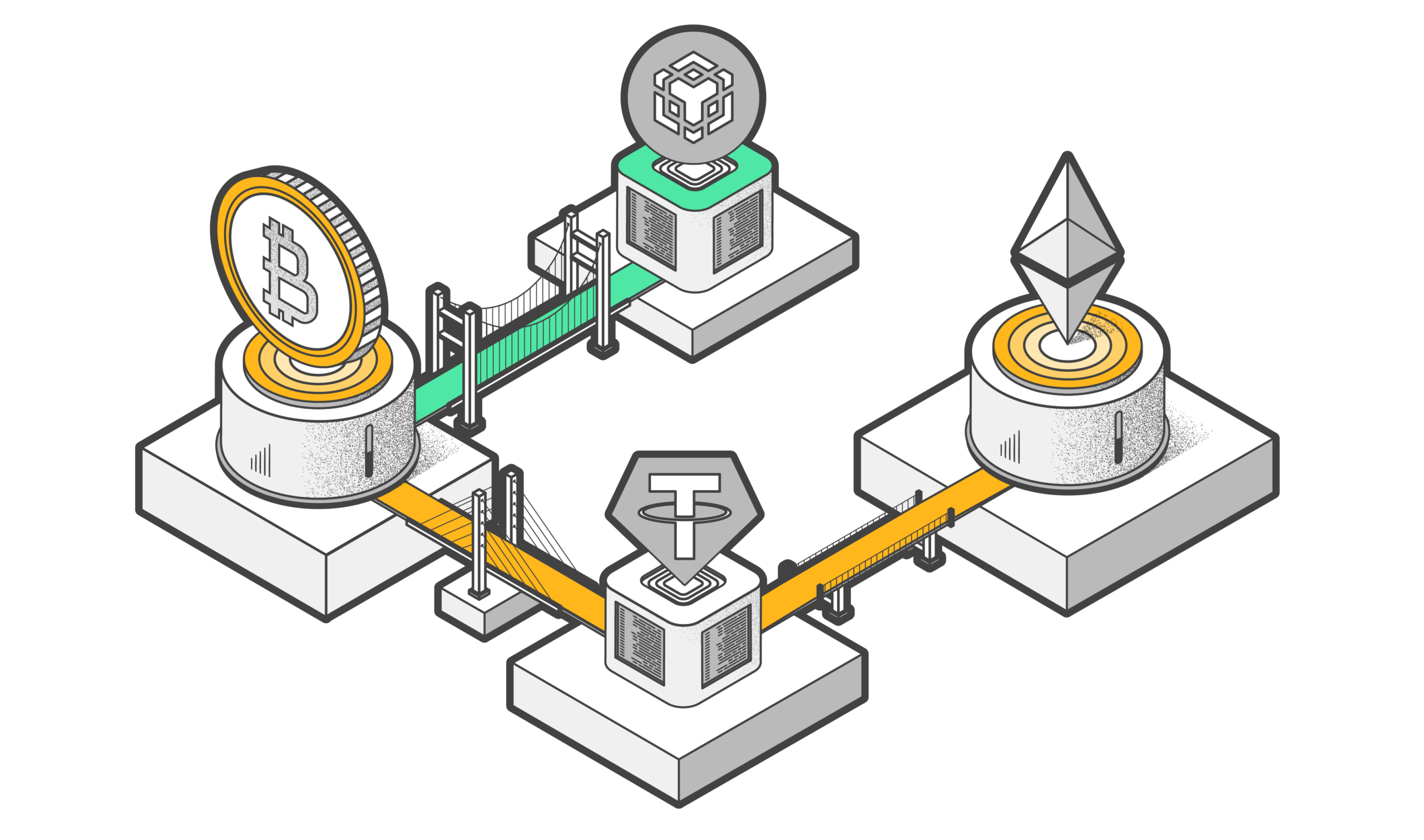
A cross-chain bridge is a product that lets users move assets or messages between blockchains. In simple terms, it helps someone take value from one chain and use it on another chain.
This guide is for founders, product builders, and Web3 operators who want to build a bridge startup or add bridging into an existing crypto product. It is not a smart contract coding tutorial. It is a practical blueprint for turning the idea into a real product.
By the end, you will understand how to define the bridge, choose the right model, build an MVP, launch safely, and scale without making expensive mistakes.
Quick Overview: How to Build a Cross-Chain Bridge
- Define the use case first: token transfers, stablecoin movement, app-specific transfers, or generic messaging.
- Choose the bridge model: liquidity network, lock-and-mint, burn-and-mint, or messaging-based.
- Select chains carefully: start with chains that already share users, liquidity, and demand.
- Build a narrow MVP: support one asset category, a few routes, and clear risk controls.
- Design for trust and safety: audits, monitoring, pause controls, rate limits, and proof verification matter early.
- Launch with real distribution: wallets, dApps, aggregators, and ecosystem partners bring the first users.
- Scale by route quality: improve speed, liquidity depth, fees, uptime, and chain coverage.
Step-by-Step Build Plan
Step 1: Define the Product
What to do
Start by deciding exactly what your bridge will do. This is the most important step. Many teams fail because they build a generic bridge with no clear reason to exist.
- Choose the core use case:
- Move stablecoins between chains
- Bridge major assets like ETH or BTC-wrapped assets
- Support gaming or NFT ecosystems
- Power cross-chain swaps
- Enable app-specific messaging
- Choose your target users:
- Retail users
- Traders
- DAO treasuries
- Protocols
- Wallets and exchanges
- Define the initial chain routes:
- Ethereum to Arbitrum
- Ethereum to Base
- Polygon to BNB Chain
- Solana to Ethereum ecosystem via wrapped assets or partner rails
How to do it
- Study wallet activity and bridge demand across your target chains.
- Talk to 20 to 30 potential users before building.
- Identify where users lose time, pay too much, or face poor UX.
- Pick one painful route and solve that first.
Key decisions
- Bridge type:
- Liquidity network: fast UX, but requires funded pools.
- Lock-and-mint: common for wrapped assets, but increases trust and custody concerns.
- Burn-and-mint: good for canonical assets if you control issuance.
- Message-passing bridge: stronger for infrastructure products, not just token transfers.
- Trust model:
- External validators
- Light clients
- Multi-sig
- Optimistic verification
- Value proposition:
- Cheaper
- Faster
- Safer
- Better UX
- Better route coverage
Common mistakes
- Trying to support too many chains on day one.
- Building a bridge without clear liquidity strategy.
- Ignoring regulatory and asset custody implications.
- Assuming users care about architecture more than speed and trust.
Step 2: Choose the Tech Stack
What to do
Pick a stack that matches your product model. A bridge is not just a frontend and contracts. It is a coordination system with monitoring, validation, liquidity management, indexing, and risk controls.
How to do it
- List product requirements first:
- Wallet connection
- Chain switching
- Route selection
- Fee estimation
- Status tracking
- Liquidity management
- Transaction relaying
- Fraud prevention
- Separate your stack into:
- User interface
- Bridge logic
- Off-chain services
- Monitoring and analytics
- Security and ops
Key decisions
- Will you build your own bridge protocol or integrate existing bridge infrastructure?
- Will you custody liquidity directly or use external market makers?
- Will transfers be fully on-chain verified or partially coordinated off-chain?
Common mistakes
- Overengineering before proving demand.
- Using too many custom components too early.
- Choosing chains your team cannot reliably support.
- Ignoring observability and incident response tooling.
Step 3: Build the MVP
What to do
Your MVP should solve one clear bridge job. It should not try to be the universal bridge for all chains and all assets.
A practical MVP could include:
- 2 to 3 chains
- 1 to 3 high-demand assets
- Basic wallet support
- Simple route and fee display
- Transfer status page
- Admin dashboard
- Pause switch and rate limits
How to do it
- Build the user flow first:
- Connect wallet
- Select source chain
- Select destination chain
- Choose asset and amount
- View estimated fees and time
- Confirm transaction
- Track transfer status
- Build the operator flow:
- Monitor pending transfers
- Track failed transactions
- Watch liquidity levels
- Set alerts for anomalies
- Use testnets and limited mainnet caps first.
Key decisions
- Whether the MVP is direct-to-user or API-first.
- Whether fees are fixed, dynamic, or spread-based.
- Whether you want to optimize for speed or trust minimization.
Common mistakes
- Launching without transaction tracking.
- Weak error messaging when a transfer gets delayed.
- No manual intervention tools for the ops team.
- Bad UX around gas estimation and wallet prompts.
Step 4: Launch and Test
What to do
Launch in controlled stages. A bridge is a high-risk product. Trust is the product. One bad incident can destroy the brand.
How to do it
- Start with:
- Internal testing
- Closed beta with trusted users
- Low transfer caps
- Limited routes
- Set launch controls:
- Per-transaction limits
- Daily transfer limits
- Circuit breakers
- Liquidity thresholds
- Emergency pause mechanism
- Run live monitoring from day one.
- Create incident playbooks before launch.
Key decisions
- Will you publish proof of reserves or route transparency data?
- Will you offer incentives for early users?
- Will you launch under one brand or white-label for partners?
Common mistakes
- Launching publicly before the ops team is ready.
- Underestimating support tickets and stuck transfer cases.
- Running promotions before liquidity is stable.
- Skipping third-party audits and bounty programs.
Step 5: Scale the Product
What to do
Once the MVP proves demand, scale route quality before adding too much complexity. Better execution on a few routes beats wide coverage with poor reliability.
How to do it
- Improve core metrics:
- Transfer completion rate
- Average transfer time
- Cost per transfer
- Failed transaction rate
- Liquidity utilization
- Revenue per route
- Add more assets only after route stability is proven.
- Expand via partnerships:
- Wallets
- DEX aggregators
- L2 ecosystems
- Gaming platforms
- Treasury tools
- Introduce APIs and widgets for distribution.
Key decisions
- Whether to become a consumer app or infrastructure provider.
- Whether to add cross-chain swaps, messaging, or intents later.
- Whether to support institutional volume with separate routing and service levels.
Common mistakes
- Scaling chain count too fast.
- Adding low-demand routes that drain liquidity.
- Ignoring compliance requirements in key markets.
- Hiring too late for security and DevOps.
Recommended Tech Stack
| Layer | Recommended Options | Why It Is Used |
|---|---|---|
| Frontend | Next.js, React, TypeScript, wagmi, RainbowKit | Fast product development, strong wallet support, clean UI flows for Web3 users. |
| Backend | Node.js, NestJS, TypeScript | Good for APIs, transaction orchestration, worker jobs, monitoring services, and dashboards. |
| Blockchain layer | Solidity, OpenZeppelin, Foundry or Hardhat | Reliable smart contract development, testing, role controls, and upgrade patterns. |
| Indexing | The Graph, custom indexers, RPC listeners | Needed for transfer status, event tracking, analytics, and operator visibility. |
| Database | PostgreSQL, Redis | Store transfer states, route metadata, user session data, and caching. |
| Infrastructure | AWS, GCP, Docker, Kubernetes | Scalable backend services, worker queues, high uptime, and controlled deployments. |
| RPC and node access | Alchemy, QuickNode, Infura, self-hosted where needed | Reliable chain access is mission critical for bridge monitoring and execution. |
| Monitoring | Datadog, Grafana, Prometheus, Sentry | Detect failed relays, delayed finality, pool imbalance, and frontend issues quickly. |
| Security | OpenZeppelin Defender, multisig wallet, audit tools | Role management, upgrade safety, transaction approvals, and incident controls. |
| Analytics | Dune, Mixpanel, internal dashboards | Track route demand, user behavior, fees, and drop-off points. |
If your team is small, start with a simple stack. Reliability matters more than novelty.
Example Architecture
Here is a simple way to think about the product architecture of a cross-chain bridge.
User Layer
- Web app
- Wallet connection
- Transfer form
- Status tracker
Application Layer
- API server
- Route engine
- Fee calculator
- Transaction status service
- Admin dashboard
Execution Layer
- Relayers or executors
- Liquidity manager
- Queue workers
- Proof or message verification service
Blockchain Layer
- Source chain smart contracts
- Destination chain smart contracts
- Validator or watcher network
- RPC providers and node access
Security and Ops Layer
- Monitoring and alerts
- Pause and circuit breaker controls
- Audit logs
- Multisig approvals
How Components Connect
- User submits a transfer in the frontend.
- Frontend sends the request to the route engine and prepares wallet transactions.
- Source chain contract receives funds or message instructions.
- Relayer or validator layer watches the event.
- Verification logic confirms the transfer conditions.
- Destination chain contract releases, mints, or allocates the asset.
- Status service updates the UI and dashboard.
- Monitoring tools flag delays, failures, or liquidity stress.
This structure is enough for most MVPs. Keep the architecture understandable. Your ops team must be able to debug it under pressure.
How to Build Without Coding (if applicable)
You usually cannot build a fully secure and production-grade bridge with no code only. But you can validate demand, test the UX, and launch a bridge business layer using low-code and integrations.
What You Can Build Without Heavy Coding
- A landing page for route demand collection
- A waitlist for target chains and assets
- A bridge aggregator frontend using embedded partner APIs
- An internal operator dashboard
- A white-label bridge interface
Useful No-Code / Low-Code Approaches
- Use Webflow or Framer for the landing site.
- Use Bubble or a lightweight React template for a simple interface.
- Use partner bridge SDKs or widgets to offer bridging before building your own rails.
- Use Airtable, Notion, or Retool for ops dashboards and support workflows.
- Use Zapier or Make for alerts and user notifications.
Limitations
- You will not own the core bridge infrastructure.
- Margins can be lower.
- Security depends on partners.
- Customization is limited.
- Advanced routing and liquidity optimization are hard to control.
When to Use This Path
- When you want to validate demand fast.
- When your real value is distribution, UX, or niche users.
- When you plan to evolve from aggregator to infrastructure later.
Estimated Cost to Build
Costs vary a lot depending on whether you build core bridge rails or start as an aggregator or white-label product.
| Category | MVP Estimate | Scaling Estimate | Main Spend Areas |
|---|---|---|---|
| Design and UX | $5,000 to $20,000 | $20,000 to $60,000 | User flows, dashboard, mobile responsiveness, transaction tracking UX |
| Frontend and backend | $20,000 to $80,000 | $80,000 to $250,000+ | App development, APIs, route engine, admin panel, notifications |
| Smart contracts and chain integration | $20,000 to $100,000 | $100,000 to $300,000+ | Contract logic, testing, relayers, message verification, chain support |
| Security audits | $15,000 to $100,000 | $100,000 to $500,000+ | Contract audits, infra reviews, bug bounties, monitoring setup |
| Infrastructure and tooling | $1,000 to $5,000 per month | $5,000 to $30,000+ per month | RPC, cloud hosting, logs, observability, indexing, alerting |
| Liquidity | $50,000 to $500,000+ | $500,000 to millions | Pools, route depth, market making, transfer reliability |
| Legal and compliance | $5,000 to $30,000 | $30,000 to $150,000+ | Entity structure, terms, risk review, market-specific guidance |
| Growth and partnerships | $5,000 to $25,000 | $25,000 to $200,000+ | BD, incentives, ecosystem deals, wallet integrations |
Lean MVP total: around $75,000 to $250,000 if you are integrating existing rails and focusing on UX and distribution.
Infrastructure-heavy bridge total: often $250,000 to $1M+ before strong product-market fit, especially if you build your own protocol and liquidity network.
Common Mistakes
- Overbuilding too early
Teams try to support every chain, every asset, and every transfer type. This slows launch and weakens reliability. - Choosing the wrong chains
Not every chain has real route demand. Build where users already move funds often. - Ignoring liquidity design
A bridge without route liquidity becomes a broken promise. Speed and completion rate suffer fast. - Treating security as a later phase
Bridges are prime attack targets. Security is part of product design, not post-launch cleanup. - Bad transfer visibility
Users panic when money is in transit and status is unclear. Tracking and communication are part of the core UX. - No incident response process
Even strong systems fail sometimes. If the team cannot respond fast, the market loses trust quickly.
How to Launch This Startup
A bridge startup needs distribution early. Good infrastructure alone does not guarantee users.
Get the First Users
- Target wallets and dApps that need better bridge UX.
- Focus on one chain community first.
- Work with ecosystem teams launching on a new L2 or appchain.
- Offer a simple widget or API to partners.
Growth Strategy
- Start with one route where your bridge is clearly better.
- Publish route speed, uptime, and cost comparisons.
- Create partner incentives for wallet integrations and embedded usage.
- Offer fee discounts for early adopters.
- Use content around chain migration, treasury movement, and user onboarding.
Early Traction Signals
- Repeat usage on the same route
- Low support ticket volume per transfer
- High completion rate
- Partner requests for API access
- Growing volume without large incentives
Best Initial Distribution Channels
- Wallet partnerships
- DEX and bridge aggregators
- L2 ecosystem grant programs
- DAO treasury operators
- Cross-chain gaming and NFT communities
Frequently Asked Questions
What is the easiest way to start a cross-chain bridge business?
The easiest path is to begin as an aggregator or white-label bridge interface. This lets you validate demand, user flows, and partnerships before building core bridge infrastructure.
Do I need to build my own bridge protocol?
No. Many startups should not do that at first. If your edge is user experience, distribution, or niche users, using existing infrastructure can be a smarter first step.
How do cross-chain bridges make money?
Common models include transfer fees, spread on routing, API pricing, enterprise integrations, white-label fees, and value-added services like analytics or treasury movement tools.
What is the biggest risk in building a bridge?
Security is the biggest risk. Bridges are attractive targets because they coordinate value across chains. Operational failure is also a major risk because delayed or failed transfers damage trust fast.
How many chains should I support at launch?
Usually 2 to 3 chains are enough for an MVP. Pick routes with clear user demand and manageable operational complexity.
Should I optimize for speed or decentralization first?
It depends on your users. Retail users often care most about speed, certainty, and UX. Infrastructure buyers may care more about trust assumptions and verification models. Be clear about your tradeoff.
How long does it take to launch?
A lean aggregator or white-label version can launch in weeks. A custom bridge with contracts, relayers, audits, and route operations can take several months or longer.
Expert Insight: Ali Hajimohamadi
The biggest execution mistake in Web3 infrastructure is building the most advanced version first instead of the most usable version first. In bridges, founders often spend months on architecture debates while users are still struggling with basic things like transfer clarity, wallet friction, and failed route support.
The better path is simple: pick one route where users already move funds, remove the most painful part of that journey, and make it feel reliable. If you can make one route feel faster, clearer, and safer than alternatives, you earn trust. Trust then becomes leverage for partnerships, liquidity access, and chain expansion.
Another hard lesson is that bridge teams often underestimate operations. A bridge is not just code. It is live coordination between liquidity, monitoring, support, and incident response. If your team cannot answer “where is the user’s money right now?” in seconds, you are not ready to scale.
Final Thoughts
- Start with a specific use case, not a generic bridge idea.
- Choose a bridge model and trust model that match your users and team strength.
- Launch a small MVP with limited routes, strong monitoring, and clear transfer tracking.
- Focus on liquidity, safety, and UX before expanding chain coverage.
- Use partnerships with wallets, dApps, and ecosystems to get early distribution.
- Scale route quality first, then assets, APIs, and enterprise offerings.
- Remember that in bridging, trust is the real product.
Useful Resources & Links
- Next.js
- React
- TypeScript
- wagmi
- RainbowKit
- NestJS
- Solidity
- OpenZeppelin
- Foundry
- Hardhat
- The Graph
- PostgreSQL
- Redis
- AWS
- Google Cloud
- Docker
- Kubernetes
- Alchemy
- QuickNode
- Infura
- Datadog
- Grafana
- Prometheus
- Sentry
- OpenZeppelin Defender
- Dune
- Mixpanel
- Webflow
- Framer
- Bubble
- Airtable
- Notion
- Retool
- Zapier
- Make




