Introduction
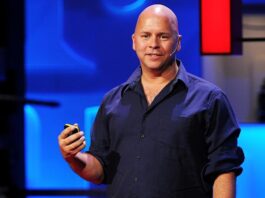
Max Levchin is one of the central figures of modern fintech and a core member of the so‑called “PayPal Mafia” — the group of PayPal founders and early employees who went on to build and fund many of Silicon Valley’s defining companies. As PayPal’s co-founder and chief technologist and later the founder and CEO of Affirm, Levchin helped shape how money moves online and how consumers access credit.
For startup founders and investors, Levchin’s story is not just about building valuable companies; it is about building systems — for security, payments, and credit — that can survive at massive scale in adversarial environments. His career is a masterclass in technical excellence, disciplined experimentation, and long-term thinking in highly regulated markets.
Early Life and Education
Max Levchin was born in 1975 in Kyiv, then part of the Soviet Union, into a Jewish family of academics. Growing up in a politically unstable and economically constrained environment shaped his resilience and his pragmatic view of risk. In 1991, his family emigrated to the United States, settling in Chicago with limited resources and virtually no safety net.
Levchin has spoken about learning English by watching television and spending hours in the school computer lab. He quickly gravitated to programming and computer security, partly out of curiosity and partly because it was a domain where merit mattered more than accent or background.
He went on to study Computer Science at the University of Illinois at Urbana–Champaign (UIUC), a campus with a rich lineage in systems engineering and early internet companies. UIUC exposed him to:
- Low-level systems programming and optimization.
- Cryptography and security — themes that would become central at PayPal.
- An entrepreneurial culture that had already produced companies like Netscape.
During college, Levchin started several small ventures, including software projects and an early attempt at an online content business. Few of these were commercially successful, but they gave him hands-on experience with building and shipping product quickly, working with small teams, and iterating under severe constraints.
Startup Journey
From UIUC to Silicon Valley
After graduating, Levchin moved to Silicon Valley in the late 1990s, during the dot‑com boom. He launched a company focused on data security for handheld devices, initially called FieldLink. The idea: leverage cryptography to secure payments and identity on early mobile devices such as Palm Pilots.
FieldLink eventually evolved into Confinity, which Levchin co-founded with Peter Thiel in 1998. Confinity’s initial vision was to enable secure money transfers between handheld devices. It soon pivoted to a more general and much more scalable concept: sending money via email.
The Birth of PayPal
The email payments feature — initially almost a side experiment — started to gain real traction among users of eBay, where buyers and sellers needed a simple, trustable way to pay each other. Confinity’s product became known as PayPal, and rapid adoption followed.
In 2000, Confinity merged with Elon Musk’s online banking startup X.com. The combined company kept the X.com name for a while, then ultimately adopted PayPal as the brand, reflecting where the real user demand was. Levchin became the company’s Chief Technology Officer, responsible for building the core payments and security infrastructure.
As CTO, he led efforts to combat rampant fraud, scale the system to millions of transactions, and maintain uptime in an era when online payments were still considered risky and experimental.
Beyond PayPal: Slide, HVF, and Affirm
In 2002, PayPal went public and was acquired by eBay shortly thereafter. Levchin, still in his twenties, now had capital, reputation, and a network — the classic “PayPal Mafia” effect. He went on to:
- Found Slide, a social media app and widget company, acquired by Google in 2010.
- Become the first major investor and long-time chairman at Yelp, helping it grow into a public company.
- Create HVF (Hard, Valuable, Fun), a studio focused on data-intensive projects.
From HVF came Levchin’s next defining fintech company: Affirm, founded in 2012. Affirm set out to build a transparent, consumer-friendly alternative to revolving credit cards, starting with “buy now, pay later” (BNPL) loans at the point of sale.
In many ways, Affirm was Levchin’s second act in fintech: if PayPal made it easy to move money online, Affirm was his attempt to rebuild consumer credit from first principles.
Key Decisions
At PayPal
Several early strategic decisions at PayPal were critical to its survival and success:
- Focusing on eBay power sellers: Rather than chasing every possible use case, PayPal doubled down on eBay merchants, who had frequent transactions, acute pain around payments, and viral influence within the marketplace.
- Making anti-fraud a core competency: Levchin built sophisticated, data-driven fraud detection systems when online fraud was exploding. Instead of treating fraud as a cost center, PayPal treated it as a core product capability — a competitive moat that legacy institutions could not easily match.
- Operating at the edge of regulation, but not beyond it: The company pushed aggressively into new territory in online payments, but it also invested heavily in compliance and licensing, laying the groundwork for long-term legitimacy.
- Shipping fast, iterating faster: The team released features quickly, observed real-world behavior (including adversarial behavior from fraudsters), and then rapidly adjusted. This tight loop made PayPal unusually adaptive for a financial institution.
At Affirm
At Affirm, Levchin made a distinct set of decisions that differentiated the company from both traditional lenders and later BNPL competitors:
- Radical transparency: Affirm marketed itself on simple, upfront pricing — no hidden fees, and for a long time, no late fees. This was not just brand positioning; it forced a product and underwriting discipline uncommon in consumer lending.
- Data-rich underwriting: Instead of relying solely on FICO scores, Affirm used a broad set of data signals to assess risk in real-time at checkout. This allowed the company to approve more customers responsibly and price risk more accurately.
- Merchant-first partnerships: Affirm deeply integrated with merchants’ checkout flows, helping them increase conversion and basket size. This aligned incentives: merchants gained incremental sales, consumers gained flexibility, and Affirm earned a share of the value created.
- Long-term trust over short-term volume: Levchin consistently emphasized long-term consumer trust, sometimes at the expense of growth. That meant conservative underwriting in uncertain markets and a reluctance to chase “growth at any cost.”
Growth of the Company
Scaling PayPal
PayPal’s growth was explosive. The company benefited from:
- The network effects of eBay, where more buyers using PayPal attracted more sellers and vice versa.
- Viral referral programs that paid users to invite their friends.
- A reliable, user-friendly product that made online payments feel less risky.
PayPal raised venture capital from firms like Sequoia Capital and achieved profitability relatively quickly due to transaction fees and strong volume. The company went public in 2002, then was acquired by eBay for $1.5 billion — a landmark transaction for internet payments at the time.
Building Affirm into a Public Fintech
Affirm’s growth story followed a different path, shaped by the post-2008 regulatory environment and competition in consumer credit. Key milestones included:
- Securing early funding from top-tier investors such as Khosla Ventures, Founders Fund, and others who believed in the reinvention of consumer credit.
- Winning flagship merchant partnerships with e-commerce and retail brands, integrating deeply into their checkout experiences.
- Expanding from short-term BNPL loans to a broader product suite, including longer-term financing and a consumer app that allowed shopping with Affirm at many merchants.
In January 2021, Affirm went public on the NASDAQ, validating Levchin’s long-term bet that transparent, technology-driven consumer finance could be both high-growth and durable. The company’s journey through cycles — including macroeconomic downturns, changing interest rates, and regulatory scrutiny — highlighted the importance of disciplined risk management in fintech.
Timeline Snapshot
| Year | Milestone |
|---|---|
| 1998 | Co-founds Confinity (later PayPal) |
| 2000 | Confinity merges with X.com |
| 2002 | PayPal IPO and acquisition by eBay |
| 2004–2010 | Founds Slide; becomes early investor and chairman at Yelp |
| 2011 | Launches HVF (Hard, Valuable, Fun) |
| 2012 | Founds Affirm through HVF |
| 2021 | Affirm IPO |
Leadership Style
Levchin’s leadership style combines deep technical rigor with a long-term, systems-level view of problems. Several characteristics stand out:
- Engineer-first mindset: He remains extremely involved in product architecture, risk models, and core infrastructure. This sends a strong signal about the importance of technical excellence in fintech.
- Obsession with measurement: At both PayPal and Affirm, he pushed for data-driven decisions. Fraud, credit risk, funnel conversion, and lifetime value were all treated as measurable, optimizable systems.
- High standards, low ego around ideas: By all accounts, Levchin expects a lot from his teams but is willing to abandon his own ideas when data or better arguments emerge. This combination encourages strong, analytical teams.
- Embracing hard problems: His studio’s name — Hard, Valuable, Fun — is essentially a description of his leadership philosophy. He prefers complex, regulated, and technically challenging problems where strong execution can create durable moats.
- Regulatory pragmatism: Rather than treating regulation as a constraint to hack around, he treats it as a design input, building compliant systems that can scale within the rules of finance.
Lessons for Founders
Levchin’s journey offers practical, repeatable lessons for founders building in any sector, but especially in fintech.
- Find a wedge, then build a system: PayPal started with eBay sellers; Affirm started with BNPL at key merchants. The initial wedge was narrow but painful. From there, both companies expanded into broader financial systems.
- Treat risk as a product feature: For PayPal, it was fraud. For Affirm, it was credit risk and default. In both cases, Levchin embedded risk management into the core product instead of treating it as a back-office function.
- Data is your moat in financial services: Differentiation comes not just from UX, but from better decisions powered by proprietary data and models that improve over time.
- Regulation is not the enemy: Successful fintech companies work with regulators and design for compliance, turning what others see as friction into a barrier to entry.
- Long-term trust beats short-term growth: Hidden fees and opaque terms might boost metrics in the short run, but they destroy brand and invite regulatory backlash. Levchin’s insistence on transparency at Affirm is a blueprint for sustainable finance.
- Technical founders can and should lead: Levchin shows that deeply technical founders can remain hands-on while still evolving into effective CEOs of large public companies.
Quotes or Philosophy
Across interviews and talks, several recurring themes define Levchin’s philosophy:
- On choosing problems: He gravitates toward problems that are “hard, valuable, and fun” — difficult enough to deter competitors, economically meaningful, and intellectually engaging.
- On persistence: He has emphasized that many of his early efforts failed or fizzled, but each one built the skills, network, and conviction needed for PayPal and Affirm.
- On trust in fintech: He repeatedly returns to the idea that financial products must be designed around consumer trust, with clarity and fairness as first-class requirements, not afterthoughts.
- On iteration: Levchin treats building companies as continuous experimentation: launch, measure, adapt. This is as true for fraud models and credit scoring as it is for UI changes.
At the core of his philosophy is a systems mindset: finance is a set of incentives, feedback loops, and adversarial behaviors. Winning means designing systems that remain robust under stress and at scale.
Key Takeaways
- Max Levchin is a foundational figure in fintech, first as PayPal’s co-founder and CTO, and later as the founder and CEO of Affirm.
- His immigrant background and technical education at UIUC shaped a resilient, engineer-first approach to company building.
- At PayPal, he proved that fighting fraud and managing risk can be a core product advantage, not just a cost.
- At Affirm, he applied the same disciplined, data-driven approach to rethinking consumer credit with transparency and trust at the center.
- Levchin’s leadership style blends deep technical involvement with high standards, rigorous measurement, and regulatory pragmatism.
- For founders, his journey underscores the power of starting with a sharp wedge, embracing hard and regulated problems, and building enduring moats through data, trust, and execution.