Introduction
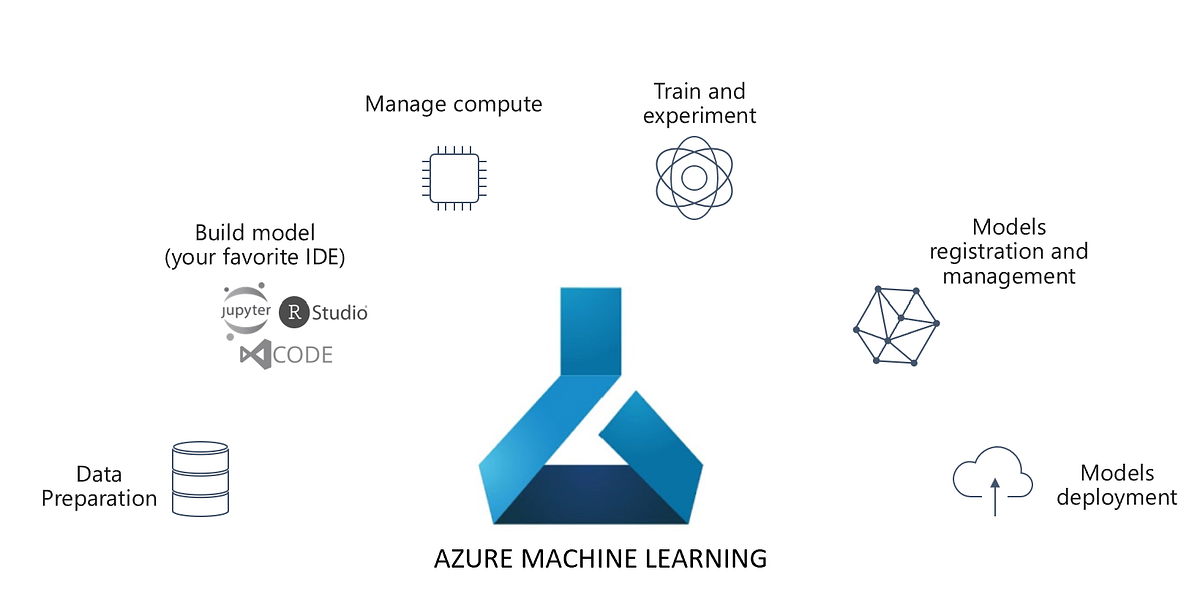
Startups use Azure Machine Learning (Azure ML) to move faster from idea to production without building a full MLOps stack from scratch. The platform combines data preparation, model training, experiment tracking, deployment, monitoring, and governance inside the Microsoft Azure ecosystem.
The real appeal in 2026 is not just model training. It is the ability to help small teams ship models with tighter control over cost, security, compliance, and deployment workflows. For early-stage companies, that matters more than having the most advanced model notebook setup.
This is primarily a use case topic. The core intent is informational with a strong practical angle: how startups actually use Azure ML for model development and deployment, where it fits, and when it does not.
Quick Answer
- Startups use Azure ML to build, train, register, deploy, and monitor machine learning models in one managed environment.
- Azure ML works well for teams already using Azure services like Blob Storage, Azure Kubernetes Service, Azure OpenAI, Microsoft Entra ID, and Synapse.
- Common startup use cases include churn prediction, fraud detection, demand forecasting, document processing, and recommendation systems.
- Deployment options include managed online endpoints, batch endpoints, and Kubernetes-based inference for more control.
- The biggest advantage is faster operationalization of ML with built-in MLOps, governance, and CI/CD support.
- The main trade-off is platform complexity and cloud spend if the team over-engineers before finding product-market fit.
How Startups Use Azure ML in Practice
Most startups do not adopt Azure ML because they need “enterprise AI.” They adopt it because they need a repeatable path from experiments to production.
That usually means one of four things:
- Centralizing model development across data scientists and engineers
- Reducing deployment friction for APIs and batch inference jobs
- Adding governance for regulated data or customer-facing AI features
- Integrating with the rest of Azure for storage, security, monitoring, and identity
Typical startup scenarios
- SaaS startup: predicts churn, upsell likelihood, or support ticket priority
- Fintech startup: scores fraud risk and detects transaction anomalies
- Healthtech startup: processes documents, classifies records, and manages compliant model workflows
- Retail or logistics startup: forecasts demand, inventory needs, or delivery delays
- Web3 startup: detects wallet behavior patterns, flags suspicious on-chain activity, or powers recommendation engines around token, NFT, or protocol usage data
Why Azure ML Matters for Startups Right Now
Recently, startup teams have had to support more than classic machine learning. They now manage LLM workflows, embeddings, prompt orchestration, vector search, and traditional predictive models in the same product stack.
Azure ML matters now because it helps unify those workloads with:
- Managed compute for training and experimentation
- Model registry for versioning and lineage
- Pipelines for repeatable workflows
- Managed endpoints for real-time and batch inference
- Responsible AI and governance features for auditability
- Integration with Azure OpenAI for hybrid AI products
For founders, this reduces the hidden tax of stitching together five different tools too early.
Real Use Cases: How Startups Apply Azure ML
1. Customer churn and revenue prediction
B2B SaaS startups often train classification models using CRM data, product usage events, support activity, and billing signals. Azure ML helps them build pipelines that retrain weekly or monthly.
Why it works: the model can connect directly to Azure Data Lake, Blob Storage, Synapse, or event pipelines. Scoring can be pushed into dashboards, sales workflows, or customer success tools.
When it fails: if the startup has weak event tracking or too little historical data. Azure ML does not solve poor data quality.
2. Fraud detection and anomaly scoring
Fintech, payments, and marketplace startups use Azure ML for supervised and unsupervised fraud detection. Features may include device patterns, transaction timing, geolocation mismatches, and behavioral sequences.
Why it works: Azure ML supports experiment tracking, model comparison, and scalable deployment for low-latency scoring APIs.
Trade-off: fraud models decay quickly. If the team does not monitor drift and false positives, deployment quality drops fast.
3. Demand forecasting
E-commerce and supply chain startups use Azure ML to train forecasting models on seasonal demand, promotions, inventory changes, and regional order patterns.
Why it works: batch endpoints are useful when predictions run on schedules rather than in real time.
When it breaks: if the startup’s business changes faster than the training data window. Early-stage startups often pivot before a forecasting model stabilizes.
4. Document intelligence workflows
Healthtech, legaltech, insurance, and compliance startups often combine Azure AI Document Intelligence with Azure ML to extract, classify, and validate structured data from PDFs and forms.
Why it works: it shortens the path from raw documents to a production model pipeline.
Who should use it: teams dealing with repeatable document formats and regulated workflows.
5. Web3 analytics and risk systems
Crypto-native startups can use Azure ML to classify wallets, detect sybil behavior, score NFT or token user segments, and identify unusual on-chain patterns from indexed blockchain data.
Data may come from subgraphs, custom indexers, data warehouses, or APIs. Azure ML becomes the training and deployment layer.
Why this works: many Web3 teams need off-chain intelligence for on-chain products. For example, a protocol may score addresses before showing governance prompts, a wallet app may flag risky counterparties, or a marketplace may rank collections based on user behavior.
When it fails: if the startup expects blockchain data alone to produce robust predictions. On-chain data is noisy and often needs off-chain enrichment.
Common Azure ML Workflow for Startups
1. Ingest and prepare data
- Pull data from Azure Blob Storage, Data Lake, Synapse, SQL databases, event streams, or external APIs
- Clean and transform data with notebooks, pipelines, or external preprocessing jobs
- Version datasets for reproducibility
2. Train and compare models
- Use Jupyter notebooks, AutoML, or custom training scripts
- Run experiments on managed compute clusters
- Track metrics, parameters, and artifacts
3. Register the best model
- Store model versions in the Azure ML Model Registry
- Keep metadata, lineage, and deployment history
4. Deploy for inference
- Managed online endpoints for real-time APIs
- Batch endpoints for scheduled scoring
- AKS when the team needs more scaling or networking control
5. Monitor and retrain
- Track latency, failures, drift, and prediction quality
- Retrain with pipelines or scheduled jobs
- Push updates through CI/CD with GitHub Actions or Azure DevOps
Example Startup Workflow
A Series A fintech startup wants to detect payment fraud.
- Transaction data lands in Azure Data Lake
- Feature engineering runs in scheduled jobs
- Models are trained in Azure ML using Python and scikit-learn or XGBoost
- The best model is registered automatically
- A managed online endpoint serves fraud scores to the transaction API
- Monitoring captures drift and false-positive spikes
- Retraining runs weekly based on new labeled events
This works because the startup needs repeatability, auditability, and low deployment overhead.
It fails if the team has only a few thousand transactions and no labeling process. In that case, simple rules may outperform ML early on.
Azure ML Features Startups Actually Use
| Feature | How startups use it | Best fit |
|---|---|---|
| Managed Compute | Spin up training environments without owning infrastructure | Lean teams with limited DevOps capacity |
| AutoML | Benchmark baseline models quickly | Early experimentation and smaller teams |
| Pipelines | Automate training, evaluation, and deployment | Recurring ML workflows |
| Model Registry | Track versions and approval states | Teams shipping models to production |
| Managed Online Endpoints | Serve models through scalable APIs | Real-time scoring products |
| Batch Endpoints | Run scheduled predictions on large datasets | Forecasting and reporting use cases |
| Responsible AI Tools | Review fairness, explainability, and compliance signals | Regulated or customer-sensitive products |
Benefits for Startups
- Faster path to production than assembling separate notebooks, registries, deployment scripts, and monitoring stacks
- Better control over security, identity, and role-based access with Microsoft Entra ID
- Cleaner MLOps workflows through CI/CD and model versioning
- Useful for hybrid AI products that mix classic ML with generative AI and Azure OpenAI services
- Enterprise-readiness for startups selling into banks, healthcare, public sector, or large B2B accounts
The last point matters more than many founders expect. Sometimes Azure ML is chosen not because it is the simplest tool, but because enterprise customers trust the surrounding cloud controls.
Limitations and Trade-Offs
- Not ideal for every early-stage startup. If you are pre-product-market fit, a lightweight notebook plus a simple API may be enough.
- Costs can grow quietly. Idle compute, repeated experiments, and unnecessary managed services can inflate spend.
- There is a learning curve. Azure ML has many abstractions, and small teams can get slowed down by configuration overhead.
- Vendor concentration is real. The deeper you integrate with Azure storage, identity, monitoring, and deployment, the harder migration becomes.
- MLOps discipline is still required. The platform helps, but it does not replace data governance, labeling quality, or business logic.
When Azure ML Works Best vs When It Does Not
When it works best
- You already use Microsoft Azure heavily
- You need secure deployment and governance
- You plan to serve production models, not just run experiments
- You sell into regulated or enterprise environments
- You need both classic ML and modern AI workflows
When it may not be the right choice
- Your startup only needs a prototype and has no real inference workload yet
- Your team prefers a more minimal stack like notebooks plus Docker and a simple cloud app service
- You are highly cost-sensitive and can tolerate more manual infrastructure work
- You are multi-cloud by design and want to avoid deeper platform lock-in
Expert Insight: Ali Hajimohamadi
Most founders think they adopt Azure ML because they need better models. In reality, the winning reason is usually sales, not science.
If your buyers are banks, insurers, healthcare networks, or large enterprises, the model quality gap matters less than your ability to prove deployment control, auditability, and security posture.
A contrarian rule I use: do not choose your ML platform based on experimentation speed alone. Choose it based on the moment a customer asks, “How do you version, monitor, and govern this in production?”
That question shows up earlier than most startups expect, and teams that ignore it often rebuild their stack under pressure.
Architecture Pattern Startups Commonly Choose
A practical Azure ML architecture in 2026 often looks like this:
- Data layer: Azure Blob Storage, Data Lake, Synapse, SQL, or streaming sources
- Feature preparation: notebooks, Spark jobs, or pipeline steps
- Training layer: Azure ML compute clusters with PyTorch, TensorFlow, XGBoost, LightGBM, or scikit-learn
- Registry and lineage: model registry plus experiment tracking
- Serving layer: managed online endpoints, batch endpoints, or AKS
- Monitoring: Azure Monitor, Application Insights, custom drift checks
- Security: Entra ID, RBAC, private networking, Key Vault
Web3 startups can plug indexed blockchain datasets, wallet intelligence pipelines, and fraud analytics into this same pattern. The decentralized app may live on-chain, but the intelligence layer often remains off-chain and cloud-based.
How Startups Should Evaluate Azure ML Before Adopting It
- Count your production use cases, not just your experiments
- Estimate monthly inference volume and training frequency
- Map data sensitivity and compliance requirements
- Check internal skill depth across ML, cloud, and DevOps
- Run one end-to-end pilot before standardizing the platform
A good pilot is not “can we train a model?” It is “can we retrain, deploy, monitor, and explain this model with our current team?”
FAQ
Is Azure ML good for early-stage startups?
Yes, but mostly when the startup already has a real ML use case and expects to deploy models in production. For very early experimentation, it can be heavier than necessary.
What do startups use Azure ML for most often?
Common uses include churn prediction, fraud detection, forecasting, recommendation systems, document classification, and intelligent scoring APIs.
Can Azure ML be used with Python frameworks like PyTorch and scikit-learn?
Yes. Azure ML supports popular frameworks including PyTorch, TensorFlow, scikit-learn, XGBoost, and LightGBM through custom environments and training jobs.
What is the difference between Azure ML and Azure OpenAI?
Azure ML is a platform for building, training, deploying, and managing machine learning workflows. Azure OpenAI provides access to foundation models and generative AI capabilities. Many startups use both together.
Do startups need MLOps skills to use Azure ML?
Yes. Azure ML reduces MLOps burden, but teams still need discipline around data quality, model validation, deployment, monitoring, and retraining.
Is Azure ML expensive for startups?
It can be cost-effective if used with clear workloads and tight compute controls. It becomes expensive when teams leave compute running, overtrain models, or adopt enterprise-grade architecture too early.
Can Web3 startups use Azure ML?
Yes. Web3 startups use it for wallet analytics, sybil detection, user segmentation, fraud scoring, and off-chain intelligence systems that support blockchain-based applications.
Final Summary
Azure ML helps startups operationalize machine learning faster, especially when they need more than notebooks and ad hoc deployment scripts. Its real value is not just model training. It is the combination of training, registry, deployment, monitoring, security, and governance in one cloud environment.
It works best for startups with production ML needs, Azure-heavy infrastructure, enterprise customers, or compliance pressure. It works less well for teams that are still validating whether they even need ML.
The practical decision is simple: if your startup needs repeatable ML delivery, not just experimentation, Azure ML is worth serious consideration. If you only need a prototype, start smaller.