Introduction
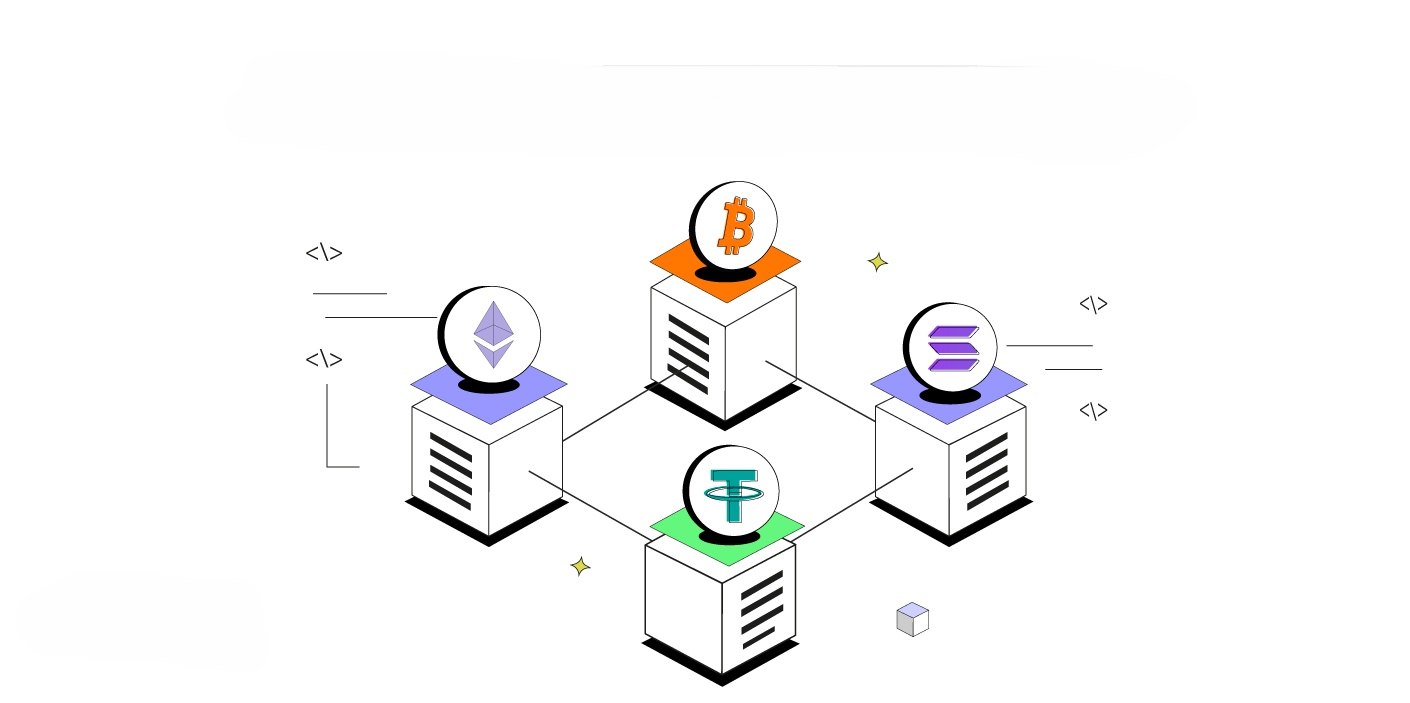
The cross-chain infrastructure ecosystem includes the protocols, messaging layers, bridges, interoperability networks, liquidity systems, and developer tooling that let blockchains exchange value and data. It sits at the center of modern Web3 because users, assets, and applications are no longer concentrated on one chain.
This ecosystem matters because crypto is now structurally multi-chain. Liquidity is fragmented across Layer 1s, Layer 2s, appchains, rollups, and sidechains. Without strong cross-chain infrastructure, users face poor UX, developers rebuild the same integrations repeatedly, and capital remains siloed.
This guide is for founders, investors, operators, developers, and ecosystem teams who want a clear strategic map of how cross-chain infrastructure is structured, who the key players are, how value flows across the stack, and where new startup opportunities still exist.
Ecosystem Overview (Quick Summary)
- Cross-chain infrastructure enables assets, messages, identities, and application logic to move between blockchains.
- The ecosystem includes bridges, interoperability protocols, messaging layers, liquidity networks, security providers, wallets, and developer SDKs.
- Its main job is to reduce fragmentation across chains and improve UX for users and developers.
- Core design models include lock-and-mint bridges, burn-and-mint systems, liquidity networks, light-client verification, and validator-based messaging.
- Key demand comes from DeFi, stablecoins, gaming, wallets, DAO operations, and cross-chain consumer apps.
- The biggest risks are security failures, fragmented standards, poor UX, and unsustainable token incentives.
- The strongest startup opportunities are in chain abstraction, intent systems, security layers, enterprise-grade interoperability, and developer tooling.
How the Ecosystem Is Structured
Infrastructure Layer
This is the foundation of the ecosystem. It handles the actual transport of messages and value between chains.
- Bridges: Move tokens from one chain to another through wrapped assets, liquidity pools, or native token issuance models.
- General messaging protocols: Send arbitrary data, not just tokens. This enables cross-chain governance, app coordination, and composability.
- Interoperability networks: Create standardized communication between chains, often using relayers, validators, or light clients.
- Settlement and verification systems: Ensure cross-chain messages are valid. This is often the most sensitive part of the stack.
- Liquidity routing infrastructure: Finds the most efficient path to move assets across networks.
This layer is where trust assumptions matter most. Security architecture determines whether a protocol can scale safely.
Application Layer
This layer includes products that use cross-chain infrastructure to deliver direct user value.
- Cross-chain DeFi: Swaps, lending, collateral management, yield routing, and rebalancing across multiple chains.
- Wallets and consumer apps: Offer one interface for users operating across ecosystems.
- Gaming and NFT platforms: Use cross-chain systems for asset portability and user onboarding.
- DAO and governance tools: Coordinate treasury, voting, and execution across chains.
- Payments and stablecoin applications: Route funds efficiently across low-cost settlement rails.
The application layer turns interoperability from a protocol feature into a user experience.
Developer Tools
These tools make it easier for teams to build on top of multi-chain systems.
- SDKs and APIs: Abstract bridge and messaging complexity.
- Indexers and analytics: Track cross-chain transactions, balances, and message states.
- Monitoring and alerting tools: Detect failures, latency, and exploit patterns.
- Testing and simulation frameworks: Help teams validate logic across multiple environments.
- Identity and account abstraction tooling: Create smoother user interactions across chains.
This layer is still underbuilt relative to the complexity of cross-chain systems.
Users / Demand Side
Demand comes from several distinct user groups.
- Retail users: Want cheaper transactions, better yields, and less switching friction.
- Power users and traders: Need fast liquidity movement and efficient execution.
- Protocols: Need interoperable liquidity, governance, and shared user access.
- Enterprises and fintechs: Need predictable settlement and compliance-friendly interoperability.
- Developers: Want to build one product that reaches users across many chains.
The demand side increasingly values simplicity over chain loyalty.
Capital / Funding Layer
The ecosystem is funded through a mix of venture capital, ecosystem funds, protocol treasuries, token incentives, and grants.
- Venture capital: Backs foundational protocols and infrastructure middleware.
- Chain ecosystem funds: Support integrations that bring liquidity and users to their networks.
- Protocol treasuries: Fund relayers, liquidity incentives, and ecosystem expansion.
- Developer grants: Help bootstrap tooling, SDKs, and early applications.
- Market makers and liquidity providers: Support routing depth and bridge efficiency.
In this category, capital often follows network effects. Infrastructure that becomes the default integration layer gains strategic leverage.
Key Players in the Ecosystem
1. Core Protocols
| Name | What they do | Why they matter |
|---|---|---|
| LayerZero | Omnichain messaging protocol that lets applications send messages across chains. | Important because it pushed app-level interoperability and became widely integrated in DeFi and consumer apps. |
| Wormhole | Cross-chain messaging and asset transfer network connecting many major chains. | Matters because it built broad chain coverage and supports a large ecosystem of applications. |
| Axelar | Interoperability network focused on secure cross-chain communication and developer-friendly APIs. | Strong positioning around generalized messaging and institutional-grade integrations. |
| Hyperlane | Permissionless interoperability framework that allows developers to deploy custom cross-chain communication. | Relevant because modular deployment appeals to appchains and teams needing flexible trust models. |
| Chainlink CCIP | Cross-Chain Interoperability Protocol for secure messaging and token transfers. | Important because Chainlink already has strong distribution across on-chain finance and enterprise-facing use cases. |
| IBC | Inter-Blockchain Communication standard used heavily in the Cosmos ecosystem. | Matters because it shows what native interoperability can look like when designed into the architecture. |
| Polkadot XCM | Cross-consensus messaging framework for communication between parachains and connected systems. | Important because it enables composability inside a structured multi-chain environment. |
2. Tools and Infrastructure
| Name | What they do | Why they matter |
|---|---|---|
| LI.FI | Aggregation layer for bridges and DEX routes across chains. | Helps reduce routing fragmentation and improves user execution. |
| Socket | Interoperability and chain abstraction infrastructure for applications and wallets. | Important because it sits between protocols and user-facing products. |
| deBridge | Cross-chain messaging and liquidity transfer infrastructure. | Strong in low-latency use cases and protocol integrations. |
| Across | Bridge optimized for fast and low-cost asset transfers using relayer-based architecture. | Relevant because speed and UX are core to mainstream bridge adoption. |
| Connext | Cross-chain protocol focused on secure message passing and liquidity movement. | Important in modular interoperability design and ecosystem integrations. |
| Skip | Infrastructure focused on cross-chain transaction execution, routing, and user flow optimization. | Matters because execution quality is becoming a competitive edge in interoperability. |
| Squid | Cross-chain routing and transaction abstraction built on top of interoperability rails. | Shows the shift from pure bridging to cross-chain action execution. |
3. Applications / Startups
| Name | What they do | Why they matter |
|---|---|---|
| THORChain | Cross-chain liquidity network for native asset swaps. | Important because it offers an alternative design that reduces dependence on wrapped assets. |
| Rango Exchange | Cross-chain DEX and bridge aggregator. | Useful example of an application that abstracts complex backend routing for users. |
| Jumper | User-facing cross-chain bridge and swap interface powered by aggregated routes. | Shows how consumer distribution is being built on top of interoperability middleware. |
| Orbiter Finance | Bridge optimized for Ethereum Layer 2 transfers. | Relevant because L2-to-L2 movement is now a large and growing market segment. |
| Rhino.fi | Cross-chain DeFi access layer with bridging and trading. | Matters because users increasingly want all-in-one multi-chain access, not standalone bridge tools. |
4. Supporting Services
| Name | What they do | Why they matter |
|---|---|---|
| Chainlink | Oracle and infrastructure provider with cross-chain capabilities. | Security and data layers are essential for trusted cross-chain execution. |
| Fireblocks | Institutional digital asset infrastructure and custody provider. | Supports enterprise and treasury participation in multi-chain asset movement. |
| Block explorers and analytics platforms | Track transactions, bridge flows, and network activity. | Critical for transparency, debugging, and risk management. |
| Auditors and security firms | Review bridge logic, validator systems, and messaging code. | Cross-chain exploits have made security a first-order market differentiator. |
| Wallet providers | Provide signing, routing visibility, and chain interaction interfaces. | Wallet UX increasingly determines whether cross-chain complexity becomes usable. |
How It All Connects
The cross-chain infrastructure ecosystem works as a stack of interdependent layers.
- Core protocols provide messaging, verification, and transfer rails.
- Infrastructure tools aggregate, simplify, or optimize those rails for developers and products.
- Applications package cross-chain actions into user-facing experiences such as swaps, payments, governance, and gaming.
- Supporting services add security, analytics, custody, compliance, and operational reliability.
- Users and liquidity providers generate demand and determine where routes become economically viable.
The value flow usually follows this path:
- A user or protocol needs to move assets or trigger an action across chains.
- An application interface sends the request through an aggregator or SDK.
- The request is routed to one or more messaging or bridge protocols.
- Relayers, validators, or light clients verify and execute the transfer or message.
- Liquidity providers, solvers, or market makers help complete the action efficiently.
- Analytics, wallets, and security services monitor the process and expose status to users.
As the market evolves, the visible product is shifting from bridge-first UX to intent-first UX. Users no longer want to think in terms of chains. They want outcomes such as swap, pay, stake, mint, or play. That shift is changing where value accrues.
Opportunities for Founders
Despite the number of protocols in the market, the ecosystem still has major gaps.
1. Chain Abstraction for Mainstream UX
- Most users still need to know which chain they are on, which token they need, and how to fund gas.
- Founders can build products where users submit one action and the system handles routing, gas, and settlement.
- This is especially relevant for wallets, consumer apps, and embedded finance products.
2. Intent-Based Execution Networks
- The market is moving from simple bridging to intent resolution.
- There is room for startups that coordinate solvers, optimize cross-chain execution, and reduce failed transactions.
- Strong execution quality can become a defensible moat.
3. Security and Verification Infrastructure
- Cross-chain systems remain one of the highest-risk areas in crypto.
- Startups can build monitoring, fraud detection, formal verification, relayer reputation systems, and insurance infrastructure.
- Security products can sell to both protocols and institutions.
4. Verticalized Cross-Chain Products
- Many tools are horizontal. Fewer are optimized for one category.
- Examples include cross-chain gaming backends, DAO treasury movement tools, stablecoin treasury routing, and omnichain loyalty systems.
- Vertical specialization often creates clearer product-market fit.
5. Institutional and Enterprise Interoperability
- Institutions care about reliability, permissions, reporting, and compliance more than maximal decentralization alone.
- There is opportunity in controlled interoperability environments for tokenized assets, settlement, and treasury operations.
- The winner here may look more like financial infrastructure than crypto-native middleware.
6. Developer Experience and Observability
- Cross-chain debugging remains painful.
- Startups can build cross-chain logs, simulation tools, transaction lifecycle visibility, and unified APIs.
- As more apps go multi-chain, infrastructure for developers becomes more valuable.
7. Liquidity Efficiency Products
- Fragmented liquidity is still a structural problem.
- There is room for systems that improve capital efficiency, automate rebalancing, and reduce idle inventory across chains.
- This is especially attractive for stablecoin issuers, market makers, and DeFi treasuries.
Challenges in This Ecosystem
Security Risk
Bridges and messaging systems have historically been major attack surfaces. Poor validator design, weak multisigs, message spoofing, and smart contract flaws can cause large losses quickly.
Fragmented Standards
There is no single universal interoperability standard across all ecosystems. Developers often integrate multiple protocols, increasing complexity and maintenance cost.
Trust Assumption Confusion
Users rarely understand how secure a cross-chain protocol actually is. Two products may look similar on the surface but rely on very different verification models.
Liquidity Fragmentation
Even when communication works, liquidity may still be thin, expensive, or path-dependent. Efficient movement of value is harder than simple message delivery.
Poor User Experience
Users still face network switching, gas token issues, bridging delays, and failure uncertainty. Better UX remains one of the biggest commercial opportunities and one of the biggest weaknesses.
Competitive Compression
Many protocols compete on similar claims: security, speed, chain coverage, and developer friendliness. This can compress margins and make distribution more important than technology alone.
Token Incentive Fragility
Some networks bootstrap activity with incentives that do not create durable usage. Once rewards fall, volume and liquidity can drop sharply.
How This Ecosystem Compares
Compared with other Web3 infrastructure ecosystems, cross-chain infrastructure is more systemically important but also more security-sensitive.
- Versus Layer 2 infrastructure: Cross-chain focuses on coordination across environments, not just scaling one environment.
- Versus oracle ecosystems: Both secure external state, but cross-chain systems often carry direct asset movement risk.
- Versus wallet ecosystems: Wallets own user touchpoints, but cross-chain protocols increasingly determine whether wallet UX can become seamless.
- Versus data infrastructure: Data platforms explain activity; cross-chain infrastructure executes it.
This makes interoperability a leverage layer. It influences where users, liquidity, and developers can move next.
Future of the Ecosystem
The next phase of the cross-chain market will likely be shaped by abstraction, consolidation, and specialization.
- Chain abstraction will grow: Users will interact with apps, not chains.
- Intent-based architectures will expand: Systems will compete on execution quality, not just message delivery.
- Security differentiation will become sharper: Auditable trust models and transparent verification will matter more.
- Institutional interoperability will mature: Tokenized assets and on-chain finance need dependable multi-network coordination.
- Application-specific interoperability will increase: Different sectors will need different cross-chain designs.
- Middleware consolidation is likely: A smaller number of integration layers may control most developer distribution.
In the long run, the biggest winners may not be the protocols that simply move tokens. They may be the platforms that make multi-chain complexity invisible while preserving security and liquidity efficiency.
Frequently Asked Questions
What is cross-chain infrastructure?
Cross-chain infrastructure is the set of protocols and tools that enable blockchains to exchange tokens, data, and instructions. It includes bridges, messaging networks, liquidity routers, and developer SDKs.
Why is cross-chain infrastructure important in Web3?
Because Web3 is now multi-chain. Users and assets exist across many networks. Cross-chain infrastructure reduces fragmentation and makes applications more usable and scalable.
What is the difference between a bridge and a messaging protocol?
A bridge usually focuses on transferring assets between chains. A messaging protocol can transfer data or instructions as well, allowing applications to coordinate logic across networks.
What are the biggest risks in this ecosystem?
The main risks are security exploits, weak trust assumptions, fragmented liquidity, poor user experience, and heavy dependence on unsustainable incentives.
Who uses cross-chain infrastructure?
Retail users, DeFi traders, wallets, app developers, DAOs, market makers, stablecoin issuers, and increasingly institutions all rely on cross-chain systems.
Where are the best startup opportunities today?
Promising areas include chain abstraction, intent-based execution, security tooling, observability, enterprise interoperability, and vertical-specific cross-chain products.
Will users care less about chains in the future?
Yes. The market is moving toward experiences where users define the desired outcome and the infrastructure handles chain selection, routing, liquidity, and gas automatically.
Expert Insight: Ali Hajimohamadi
The cross-chain infrastructure market is no longer just a transport problem. It is becoming a distribution and control point for the next generation of Web3 applications. Early winners were often judged by chain count and bridge volume. The next winners will be judged by where they sit in the decision flow: who controls routing, who owns the developer relationship, and who becomes the default execution layer for intents.
For founders, the strategic mistake is building another generic bridge in an already crowded category. The stronger position is to build where coordination complexity is rising faster than tooling quality. That includes solver networks, cross-chain observability, application-specific abstractions, and enterprise-grade interoperability where compliance and reliability matter more than crypto-native branding.
There is also a timing advantage right now. As ecosystems multiply, most teams still think in chain-specific go-to-market terms. Founders who position around multi-chain user outcomes rather than protocol features can capture a much broader market. In practical terms, that means selling a reduction in friction, a gain in execution quality, or a measurable improvement in capital efficiency. The next wave of value will likely accrue to the companies that make interoperability disappear into the product.
Final Thoughts
- Cross-chain infrastructure is now core Web3 infrastructure, not a niche category.
- The ecosystem spans messaging, bridging, liquidity routing, developer tools, applications, and security services.
- The market is shifting from token transfer tools to intent execution and chain abstraction.
- Security and trust design remain the most important strategic filters when evaluating protocols.
- Founders should focus on friction reduction, execution quality, and vertical-specific use cases.
- Developer tooling and observability are still underbuilt and commercially attractive.
- The long-term winners will likely be the platforms that make the multi-chain world feel like one coherent system.