Introduction
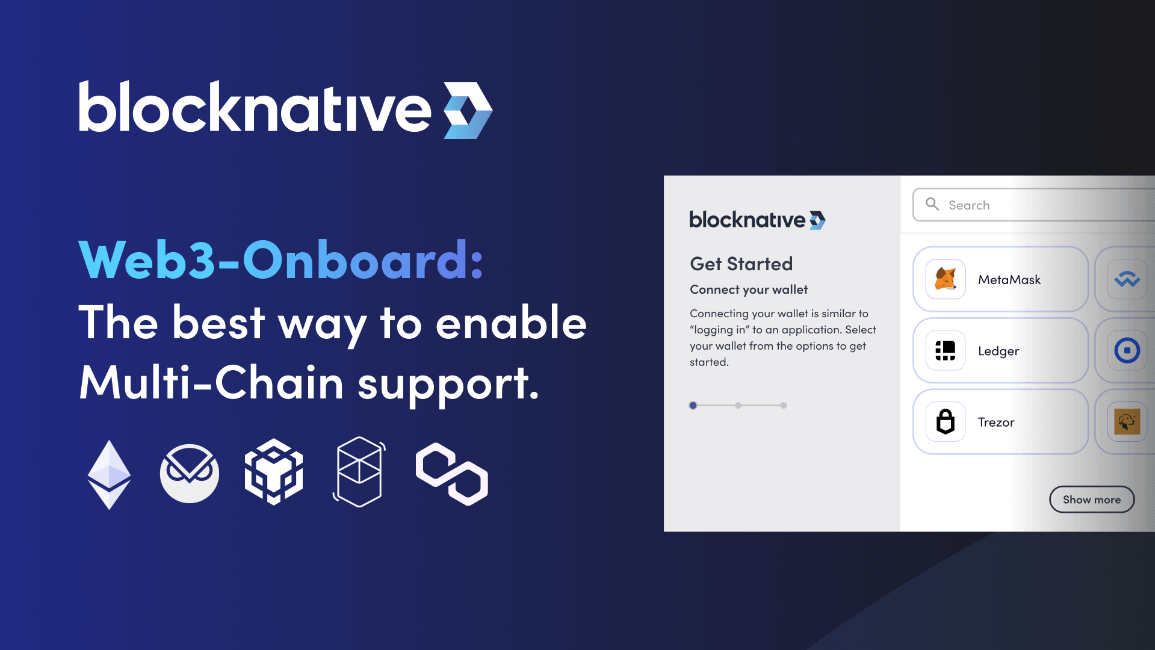
Blocknative Onboard is a wallet onboarding library for Web3 apps. It helps users connect wallets such as MetaMask, Coinbase Wallet, WalletConnect-compatible wallets, and other providers through a cleaner login flow. For product teams, it reduces the amount of custom wallet connection logic they need to maintain.
The intent behind this topic is explanatory. Founders, product managers, and developers usually want to know what Onboard does, how it works, where it fits in a dApp stack, and whether it is still the right choice compared with newer wallet connection frameworks.
If you are building a decentralized app and need a reliable way to connect wallets across desktop and mobile, Blocknative Onboard can solve a real UX problem. It is not a full authentication stack, and it is not a magic fix for retention. Its value is in reducing wallet connection friction at the first critical step.
Quick Answer
- Blocknative Onboard is a JavaScript wallet onboarding library for connecting Web3 wallets in decentralized applications.
- It supports wallet providers such as MetaMask, Coinbase Wallet, and WalletConnect-based mobile wallets.
- Its main benefit is a faster, more consistent wallet connection UX across devices and providers.
- It works best for teams that want to avoid building wallet detection, provider switching, and chain handling from scratch.
- It does not replace backend auth, user session logic, or smart contract security.
- It can fail when teams treat wallet connection as the whole onboarding strategy instead of one small part of product activation.
What Is Blocknative Onboard?
Blocknative Onboard is a front-end wallet integration toolkit designed to simplify how users connect blockchain wallets to a Web3 application. It gives developers a standardized way to present wallet options, establish provider connections, handle network switching, and react to wallet state changes.
In practice, it sits between your app UI and the wallet provider layer. Instead of writing separate logic for injected wallets, QR-based wallets, and mobile connection flows, the app calls Onboard and receives a connected provider that can be used with libraries such as ethers.js or web3.js.
How Blocknative Onboard Works
1. Wallet selection
The user clicks a connect button. Onboard opens a wallet selection UI that lists supported options like MetaMask or WalletConnect. This removes the need for custom wallet modals in the earliest product version.
2. Provider initialization
After selection, Onboard initializes the selected wallet provider. If the wallet is browser-injected, it uses that provider. If the wallet uses a bridge like WalletConnect, it handles the session negotiation flow.
3. Account and chain detection
Once connected, Onboard detects the active wallet address and the current blockchain network. It can also prompt users to switch chains if the app requires Ethereum mainnet, Polygon, Arbitrum, Base, or another supported network.
4. Event handling
Wallet state changes matter in production. Users switch accounts, disconnect sessions, or move to the wrong chain. Onboard listens for those events and helps the app update the UI and internal state accordingly.
5. App-level usage
After connection, the provider is passed into the rest of the dApp stack. At that point, your app can read balances, request signatures, send transactions, or initialize contract calls with ethers, wagmi, or similar tools.
Why Wallet Integration Matters in Web3 Apps
Wallet connection is the first real conversion event in most dApps. If users cannot connect easily, they never reach minting, swapping, staking, governance, or checkout. This is why wallet UX has a direct revenue impact in Web3 products.
In early-stage startups, teams often underestimate how fragile this layer is. Browser differences, mobile deep links, unsupported wallets, and chain mismatch errors create drop-off before the core product is even visible. A wallet library helps because it standardizes those edge cases.
This works best when the app has clear chain requirements and a focused wallet list. It fails when teams overload users with too many wallet options, support chains they do not fully test, or assume a connection equals a committed user.
Typical Architecture with Blocknative Onboard
| Layer | Role | Example Tools |
|---|---|---|
| Frontend UI | Connect button, wallet modal, account state display | React, Next.js, Vue |
| Wallet onboarding | Wallet selection, provider connection, chain switching | Blocknative Onboard |
| Blockchain interaction | Read and write contract calls | ethers.js, web3.js |
| RPC access | Network communication | Infura, Alchemy, QuickNode |
| App auth/session | Nonce signing, SIWE, session persistence | Sign-In with Ethereum, custom backend |
| Analytics | Track wallet connection drop-off and chain mismatch | PostHog, Mixpanel, Segment |
Key Features Teams Care About
- Multi-wallet support for common wallet providers
- Chain management for required networks
- State tracking for account and provider changes
- Frontend integration with modern JavaScript frameworks
- Cleaner UX than ad hoc wallet detection code
- Faster launch speed for MVPs and testnet products
Real-World Use Cases
NFT mint platforms
An NFT drop site needs users to connect a wallet, confirm the right chain, and sign a mint transaction. Onboard helps reduce confusion at the connect stage. This matters during timed launches where every failed wallet connection becomes lost revenue.
It works well when the product supports one main chain and a few mainstream wallets. It breaks down when the drop targets multiple chains and expects users to understand bridge steps on their own.
DeFi dashboards
A DeFi app may support read-only browsing, then ask for a wallet connection when a user wants to swap, deposit, or claim rewards. Onboard can standardize provider handling while the app uses ethers.js for contract reads and writes.
The trade-off is that DeFi users are often advanced. They may want more explicit control over wallet sessions and chain visibility than a simplified modal provides.
DAO governance portals
Governance tools need clean account recognition, signature requests, and network checks. Onboard is useful here because the wallet connection flow should feel predictable, especially for non-technical token holders.
This works when the proposal and voting logic is simple. It fails when governance spans multiple chains and delegated signing flows are not clearly explained.
GameFi and Web3 consumer apps
Consumer apps often need the smoothest possible entry point. Onboard can reduce friction for wallet-native users, but it is not enough for mainstream adoption by itself. If your target user has never used MetaMask, a wallet connection modal is still a major barrier.
In those cases, teams often need embedded wallets, social login, or progressive onboarding in addition to a standard wallet connector.
Pros and Cons of Blocknative Onboard
Pros
- Speeds up development by avoiding custom wallet connection code
- Improves consistency across supported wallet types
- Reduces edge-case handling for chain mismatch and provider events
- Useful for MVPs and startups validating product demand quickly
- Works well with common Web3 libraries in front-end stacks
Cons
- Creates dependency risk on a third-party integration layer
- May limit customization compared with a fully custom wallet UX
- Does not solve user onboarding for non-crypto-native audiences
- Requires ongoing testing as wallets and browser behaviors change
- Can become legacy architecture if your stack moves toward newer connector ecosystems
When Blocknative Onboard Works Best
- You’re launching a Web3 MVP and need wallet support fast.
- Your users already understand wallets like MetaMask and Coinbase Wallet.
- Your dApp has clear chain requirements and limited wallet complexity.
- Your team wants a cleaner front-end integration without building wallet logic from zero.
- You need a practical bridge between product speed and acceptable wallet UX.
When It Fails or Becomes the Wrong Fit
- Your audience is mainstream and does not understand seed phrases, gas, or chain switching.
- You need fully branded onboarding with tight control over every wallet state and fallback.
- Your product depends on complex multi-chain behavior that users must manage manually.
- Your stack is already centered on newer abstractions like wagmi, RainbowKit, or custom embedded wallet flows.
- You expect the wallet connector alone to improve activation or retention metrics.
Integration Considerations for Developers
Chain support strategy
Do not support every chain because your contracts are technically portable. Support the chains your users actually need. Every extra chain increases QA burden, error states, and support load.
Session and authentication
Connecting a wallet is not the same as authenticating a user. If your app needs persistent sessions, account ownership verification, or backend authorization, pair wallet connection with Sign-In with Ethereum or an equivalent signature-based auth flow.
Analytics instrumentation
Track connect click, wallet selection, provider success, chain mismatch, signature rejection, and post-connect conversion. Without this, you cannot tell whether your wallet flow is helping or silently killing onboarding.
Mobile behavior
Many teams test only desktop MetaMask and then discover mobile drop-off after launch. WalletConnect flows, in-app browsers, deep links, and QR behavior need device-level testing before production rollout.
Expert Insight: Ali Hajimohamadi
The mistake I see most often is founders optimizing for number of supported wallets instead of successful first transaction rate. More wallet logos look impressive in pitch decks, but they usually add QA complexity and user hesitation. My rule is simple: support the minimum wallet set that covers 80% of your target liquidity or user base, then measure completion by chain and device. In Web3, connection breadth rarely wins early. Reliable transaction completion does.
Blocknative Onboard vs Building Wallet Integration Yourself
| Approach | Best For | Main Benefit | Main Trade-off |
|---|---|---|---|
| Blocknative Onboard | Startups shipping fast | Faster wallet UX implementation | Less control than a custom-built flow |
| Custom wallet integration | Large teams with specific product needs | Maximum control over UX and state handling | Higher development and maintenance cost |
| Modern wallet connector stack | Apps using newer React-first ecosystems | Strong composability with current tooling | Migration effort and stack complexity |
Should Startups Still Consider Blocknative Onboard?
Yes, but with context. If your team needs a pragmatic wallet integration layer and your users are already wallet-native, Onboard can still be a rational choice. It reduces front-end effort and helps standardize connection flows.
But the decision should be tied to your stack and roadmap. If you are already building around newer wallet abstraction layers or planning embedded wallet onboarding, you should compare Onboard against more current developer ecosystems before committing.
The real question is not whether Onboard is good in the abstract. It is whether it matches your user type, chain strategy, and engineering direction over the next 12 months.
FAQ
What does Blocknative Onboard do?
It helps Web3 apps connect users to wallets through a standardized front-end flow. It manages wallet selection, provider initialization, account detection, and network handling.
Is Blocknative Onboard only for Ethereum?
It is mainly used in EVM-based environments. Its usefulness depends on the chains and wallet providers your app needs to support.
Does Blocknative Onboard replace user authentication?
No. Wallet connection proves access to a wallet in that session, but it does not replace a full authentication or session system. Apps that need secure login should add signature-based auth such as SIWE.
Is Blocknative Onboard good for mobile users?
It can help, especially with WalletConnect-style flows, but mobile behavior must be tested carefully. Deep links, QR flows, and in-app browsers often create edge cases that desktop testing misses.
Who should not use Blocknative Onboard?
Teams building for mainstream users who do not already have wallets may need embedded wallets, social login, or account abstraction approaches instead. Apps with highly custom wallet UX needs may also outgrow it.
What is the biggest implementation mistake?
Treating wallet connection as the onboarding strategy. A user connecting MetaMask is not the same as a user understanding your product, trusting the transaction, or reaching activation.
Final Summary
Blocknative Onboard is a practical wallet integration library for Web3 apps that need a cleaner way to connect wallets without building every provider flow from scratch. Its main strength is reducing front-end complexity around wallet selection, network handling, and provider state.
It works best for startups shipping fast to crypto-native users. It is less effective when the audience is mainstream, the chain setup is complex, or the product requires deep control over onboarding UX. The trade-off is straightforward: faster implementation versus less flexibility.
If you are evaluating wallet infrastructure, judge Onboard by one thing: whether it improves real user progression from connect to signed action. In Web3, that is the metric that matters.