Introduction
Blockchain rollups are scaling systems that process transactions off the main blockchain and then post compressed data or proofs back to the base chain. In 2026, they matter because Ethereum, Layer 2 ecosystems, and app-specific chains are pushing hard for lower fees, faster throughput, and better user experience without giving up too much security.
If you are a founder, developer, or crypto product team, the main question is not just what rollups are. It is which type of rollup fits your product, trust model, and go-to-market strategy.
Quick Answer
- Rollups execute transactions off-chain and settle results on a base blockchain such as Ethereum.
- Optimistic rollups assume transactions are valid unless challenged during a fraud-proof window.
- ZK rollups use validity proofs, such as zero-knowledge proofs, to prove state changes are correct.
- Rollups usually offer lower fees and higher throughput than Layer 1 chains, but they add infrastructure and UX complexity.
- Common rollup ecosystems right now include Arbitrum, Optimism, Base, zkSync, Starknet, and Polygon zkEVM.
- Rollups work best for apps that need scale, but they can fail if liquidity, bridges, wallets, and users stay fragmented.
What Blockchain Rollups Actually Are
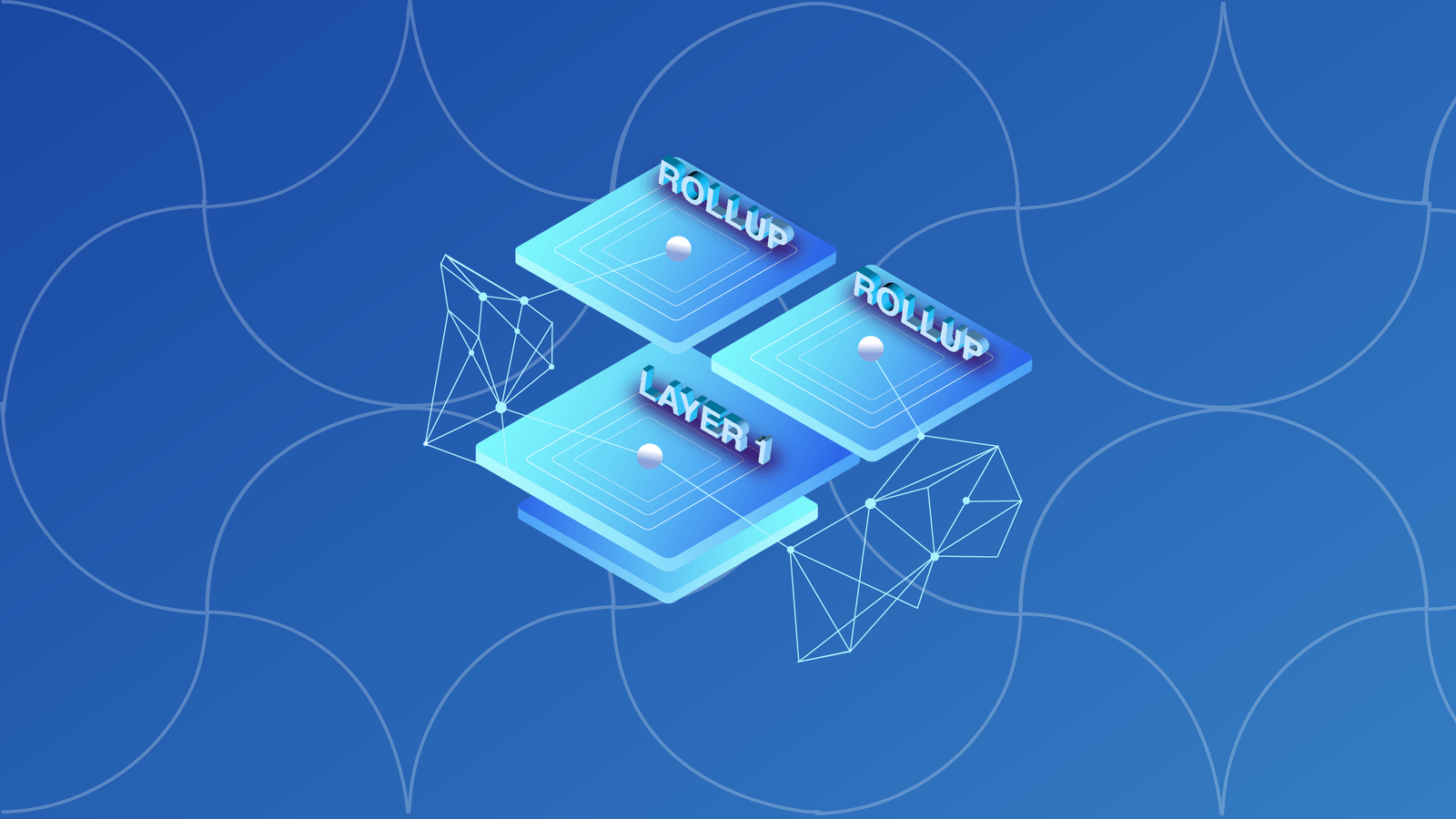
A rollup is a Layer 2 scaling solution. It handles transaction execution outside the main chain, then sends a compressed version of that activity back to the Layer 1 for settlement.
The base chain, usually Ethereum, remains the source of truth for security, data availability, and final settlement. The rollup acts like a high-speed execution layer on top.
Simple way to think about it
- Layer 1 = settlement and security layer
- Rollup = execution and batching layer
- Bridge = movement of assets and messages between chains
This is why people often say rollups “inherit Ethereum security.” That is partly true, but only if the rollup’s design, sequencer setup, proof system, and data availability model support that claim.
How Rollups Work
Most rollups follow the same basic flow.
- Users submit transactions to the rollup.
- A sequencer orders and batches those transactions.
- The rollup executes them off-chain.
- Compressed transaction data or state commitments are posted to Layer 1.
- The base chain verifies or accepts the result, depending on the rollup model.
Core components
- Sequencer: orders transactions and creates batches
- Prover: generates cryptographic proofs in ZK systems
- Verifier contract: checks proofs or enforces challenge logic on Layer 1
- Bridge contracts: lock, mint, release, and message assets across layers
- Data availability layer: stores transaction data needed for reconstruction or verification
In practice, user experience often depends more on the sequencer, bridge, and wallet support than on the proof system alone.
Types of Rollups
Optimistic Rollups
Optimistic rollups assume submitted state updates are valid by default. If someone detects fraud, they can challenge the batch during a dispute period.
Examples include Arbitrum, OP Mainnet, and many chains in the Optimism Superchain.
How they work
- Transactions are posted and accepted optimistically
- Fraud proofs allow invalid state transitions to be challenged
- Withdrawals to Layer 1 may take days if the system uses a challenge window
When optimistic rollups work well
- EVM-compatible apps that want fast deployment
- Teams that need mature tooling
- DeFi protocols that value ecosystem liquidity and composability
When they fail or create friction
- Consumer apps that need instant Layer 1 exits
- Use cases where long withdrawal periods hurt trust
- Products that depend on very low latency finality guarantees
ZK Rollups
ZK rollups, or zero-knowledge rollups, generate validity proofs that mathematically prove a batch of transactions is correct. This removes the need for a long challenge period.
Examples include zkSync, Starknet, Scroll, and Polygon zkEVM.
How they work
- Transactions execute off-chain
- A proof such as a SNARK or STARK is generated
- The Layer 1 verifier contract checks the proof
- If valid, the new state is accepted
When ZK rollups work well
- Payments and trading apps that need faster finality
- Apps with high transaction volume
- Teams building privacy-adjacent or proof-heavy systems
When they fail or create friction
- Teams without cryptography or infrastructure depth
- Apps where prover cost and complexity outweigh fee savings
- EVM apps that need perfect compatibility but run into edge-case tooling issues
Optimistic vs ZK Rollups
| Factor | Optimistic Rollups | ZK Rollups |
|---|---|---|
| Validation model | Fraud proofs | Validity proofs |
| Withdrawal speed to Layer 1 | Often slower | Usually faster |
| Technical complexity | Lower | Higher |
| EVM compatibility | Often stronger today | Improving rapidly |
| Proof generation cost | Lower proving overhead | Can be expensive |
| Best fit | General-purpose dApps, DeFi, fast shipping | Payments, scaling-heavy apps, proof-centric systems |
Why Rollups Matter Right Now in 2026
Rollups matter now because blockchain adoption is shifting from experimentation to production infrastructure. Teams are no longer asking whether they need scaling. They are asking which rollup stack gives them enough users, liquidity, tooling, and trust.
Several trends are driving this:
- Ethereum gas costs still make many direct Layer 1 interactions too expensive for mass-market apps
- Coinbase Base and the Optimism Superchain have pushed mainstream attention toward Layer 2 distribution
- zkEVMs and modular infrastructure have improved developer options
- Account abstraction, smart wallets, and chain abstraction are reducing UX friction
- Appchains and custom rollups are becoming realistic for serious products
The big shift is this: rollups are no longer just scaling tools. They are becoming distribution channels, ecosystem choices, and business model decisions.
Why Rollups Matter for Startups and Product Teams
Lower fees improve product viability
If your app needs frequent on-chain actions, Layer 1 fees can kill retention. Micro-transactions, in-game actions, social transactions, and on-chain rewards are far more practical on rollups.
Faster UX helps user adoption
Users do not care about decentralization theory if swaps fail, wallets lag, or bridging is confusing. Rollups can make apps feel closer to Web2 speed, especially when paired with smart accounts and gas sponsorship.
They let founders design new business models
Subscription-like on-chain interactions, high-frequency trading tools, NFT gaming economies, and embedded finance flows are more feasible when transaction costs are low and throughput is higher.
But they also create fragmentation
More chains means more wallets, more liquidity silos, more support tickets, and more bridge risk. A startup can save on gas but lose on growth if users cannot figure out where their assets are.
Real-World Rollup Use Cases
DeFi protocols
Decentralized exchanges, lending markets, perpetuals, and yield products use rollups to reduce cost and improve trade frequency.
- Works well when: liquidity is strong and bridges are trusted
- Breaks when: users need to move capital across too many chains
Consumer crypto apps
Social apps, creator tools, loyalty systems, and on-chain memberships use rollups to hide gas cost and make usage feel lightweight.
- Works well when: wallet onboarding is abstracted
- Breaks when: users must manually bridge before first action
Gaming and in-app economies
Games use rollups for asset transfers, item minting, marketplace actions, and reward systems.
- Works well when: the game controls wallet UX and transaction flow
- Breaks when: finality delays or congestion affect gameplay loops
Payments and remittances
Stablecoin transfers on rollups can cut costs dramatically compared with Layer 1. This is relevant for global payroll, treasury movement, and cross-border settlements.
- Works well when: on/off-ramp partners support the chain
- Breaks when: local compliance and fiat conversion are weak
Enterprise and B2B infrastructure
Some companies use custom or app-specific rollups for tokenization, internal settlement, audit trails, or loyalty programs.
- Works well when: throughput and policy control matter more than broad retail composability
- Breaks when: the company overestimates demand for a standalone chain
Pros and Cons of Blockchain Rollups
Pros
- Lower transaction fees than Layer 1 in many cases
- Higher throughput for apps with heavy usage
- Access to Ethereum security in many rollup models
- Better developer flexibility with EVM-based environments
- More practical consumer UX when combined with wallet abstraction
Cons
- Bridge risk remains a real operational and security issue
- Liquidity fragmentation hurts user experience and capital efficiency
- Centralized sequencers are still common right now
- Tooling inconsistency can slow down product teams
- Not all rollups are equally decentralized, despite similar marketing claims
Common Trade-Offs Founders Should Understand
Security vs speed
Faster systems often rely on more centralized sequencer or bridge assumptions. If your users hold significant assets, those assumptions matter.
Distribution vs sovereignty
Launching on Base, Arbitrum, or OP Mainnet can give you ecosystem distribution. Launching your own rollup gives you more control, but far less built-in demand.
Compatibility vs optimization
A highly EVM-compatible stack helps your team ship fast. A more specialized rollup may give better performance, but can increase engineering and maintenance cost.
Cheap transactions vs expensive operations
Per-transaction fees may drop, but running provers, indexers, bridge support, monitoring, and custom infrastructure can raise total cost.
Expert Insight: Ali Hajimohamadi
Most founders choose a rollup like they are choosing infrastructure, but the smarter move is to choose it like you are choosing a market. The common mistake is optimizing for lower gas while ignoring where users, wallets, liquidity, and ecosystem incentives already exist. A technically superior rollup often loses if it has weak distribution. My rule: if your app does not need chain-level control in year one, do not launch your own rollup. First win user density on an existing ecosystem, then earn the right to own infrastructure later.
When You Should Use a Rollup
- You expect high transaction volume
- Your app needs lower fees than Ethereum mainnet can offer
- You want to stay close to Ethereum tooling and liquidity
- You are building DeFi, payments, gaming, social, or loyalty flows
- You have a plan for wallet UX, bridging, and support
When a Rollup Is the Wrong Choice
- Your product does not actually require on-chain transactions
- Your team cannot manage cross-chain complexity
- You need users to understand the product instantly, but the onboarding still depends on bridges and gas tokens
- You are launching an app-specific rollup with no clear ecosystem or distribution edge
- You are using blockchain mainly for fundraising optics rather than product necessity
Rollups vs Other Scaling Approaches
| Approach | What It Does | Main Trade-Off |
|---|---|---|
| Rollups | Executes off-chain, settles on Layer 1 | Bridge and fragmentation complexity |
| Sidechains | Independent chains with separate security | Weaker security inheritance |
| Validiums | Uses validity proofs with off-chain data availability | More trust in data availability setup |
| Appchains | Dedicated chain for one application or ecosystem | Harder bootstrapping and maintenance |
| State channels | Off-chain interactions among limited parties | Narrow use case fit |
Key Risks to Watch
Bridge exploits
Bridges remain one of the biggest attack surfaces in crypto infrastructure. If your product relies heavily on deposits from multiple chains, your risk surface grows fast.
Sequencer centralization
Many rollups still depend on centralized sequencers right now. That can affect censorship resistance, uptime, and trust assumptions.
Data availability assumptions
Not every scaling system publishes the same level of data on Ethereum. The details matter if you care about independent verification and recovery.
Liquidity fragmentation
If users and assets are spread across Base, Arbitrum, zkSync, Starknet, and Solana-adjacent systems, your growth can stall even if your product is solid.
FAQ
Are rollups the same as Layer 2s?
Rollups are a major type of Layer 2, but not every Layer 2 uses the exact same architecture. Some systems use sidechain, validium, or hybrid models.
Are rollups more secure than sidechains?
Usually, yes. Rollups generally rely more directly on a base chain like Ethereum for settlement and verification. Sidechains often have their own validator security model.
What is the difference between optimistic and ZK rollups?
Optimistic rollups rely on fraud proofs and challenge windows. ZK rollups use cryptographic validity proofs to confirm correctness more directly.
Do rollups eliminate gas fees?
No. They reduce fees, but they do not remove them. Users still pay for execution, data posting, and sometimes bridging.
Can startups launch their own rollup?
Yes. Frameworks such as the OP Stack, Arbitrum Orbit, Polygon CDK, and zkStack make this more realistic. But it only works if you have a strong reason to own infrastructure and a plan for distribution.
Which rollup is best for EVM apps?
It depends on your priority. Arbitrum and Optimism ecosystems are strong for mature EVM deployment. Base is attractive for distribution. ZK systems are improving fast for teams that want faster proof-based settlement.
Will rollups replace Ethereum mainnet?
No. The current direction is that Ethereum mainnet remains the settlement and security layer, while rollups handle more execution. They are complementary, not simple replacements.
Final Summary
Blockchain rollups explained simply: they move execution off the base chain, batch transactions, and settle results back to Layer 1. That helps reduce fees and increase throughput while keeping some connection to the security of chains like Ethereum.
For builders in 2026, the real decision is strategic. Use a rollup when scale, cheaper transactions, and Ethereum alignment matter. Avoid it when cross-chain friction, weak distribution, or unnecessary infrastructure complexity will hurt adoption more than gas fees do.
The best teams do not ask only, “Is this rollup technically better?” They ask, “Will this rollup help us ship faster, reach users faster, and reduce trust risk enough to matter?”