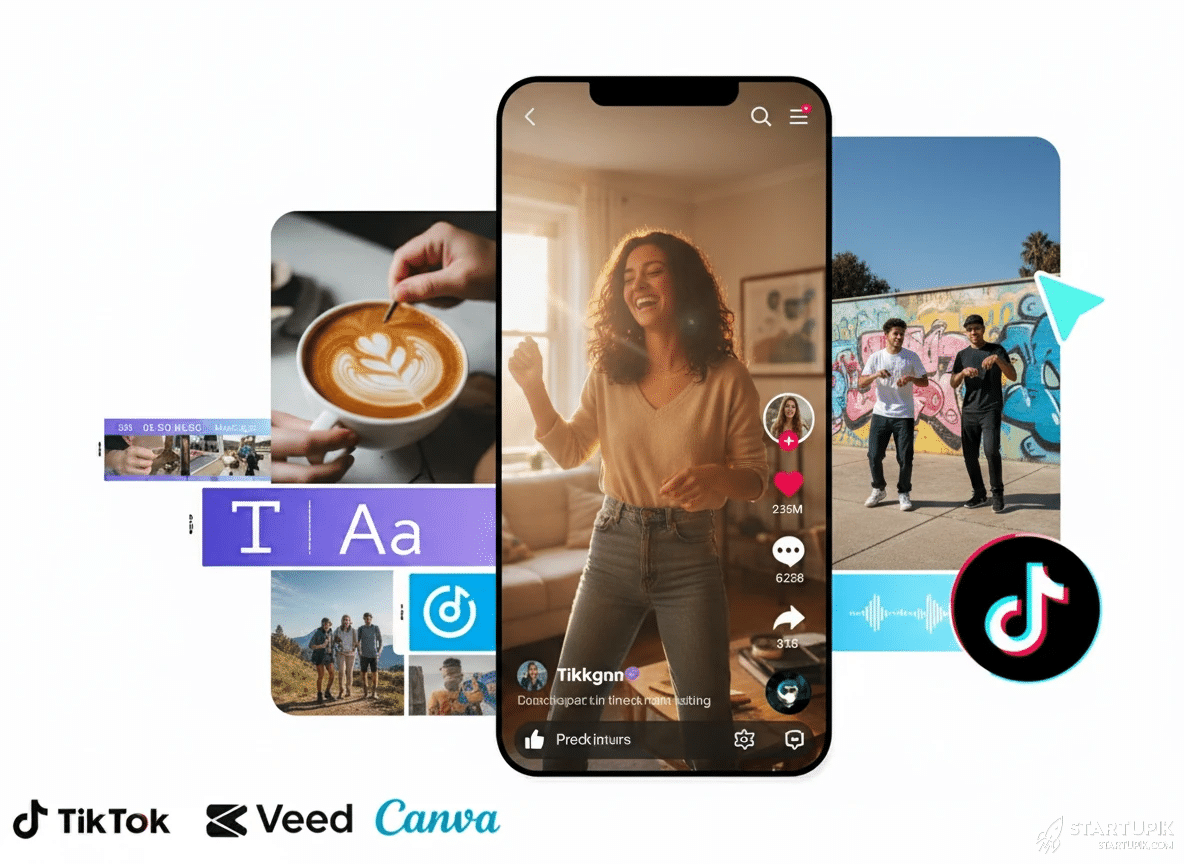
AI video tools can help TikTok creators move faster, test more formats, and publish at a higher volume in 2026. The best choice depends on what part of the workflow you want to automate: scriptwriting, avatar videos, editing, captions, repurposing, or batch production.
Quick Answer
- CapCut is the best all-around AI video tool for TikTok creators because it combines editing, auto-captions, templates, effects, and TikTok-native workflow.
- Descript is best for creators who record talking-head videos and want text-based editing, filler-word removal, and fast clipping.
- OpusClip is best for turning long videos, podcasts, and webinars into multiple short TikTok clips at scale.
- Synthesia is best for faceless explainer content, training-style videos, and multilingual avatar-based production.
- Runway is best for creators who need AI-generated visuals, cinematic B-roll, motion effects, and creative experimentation.
- Canva works well for simple TikTok slide videos, animated explainers, and fast team-based content production.
How We Evaluated the Best AI Video Tools for TikTok
For this article, the primary user intent is decision-making. Most creators are not asking what AI video tools are. They want to know which tool fits their workflow, budget, and content style.
So the ranking focuses on what matters in real TikTok production right now:
- Output quality
- Speed of editing and publishing
- Commercial usage practicality
- Caption and short-form optimization
- Batch content scaling
- Pricing for solo creators and small teams
- Workflow fit with TikTok, Reels, and Shorts
Best AI Video Tools for TikTok Creators in 2026
| Tool | Best For | Main Strength | Main Limitation |
|---|---|---|---|
| CapCut | Most TikTok creators | TikTok-native editing, captions, templates | Less ideal for advanced collaborative workflows |
| Descript | Talking-head creators | Text-based video editing and transcript workflow | Not built for heavy visual effects |
| OpusClip | Repurposing long-form content | Auto-clipping for viral short-form output | Needs manual review for clip accuracy |
| Synthesia | Faceless explainers and multilingual content | Avatar videos at scale | Can feel generic for creator-led personal brands |
| Runway | Creative AI visuals | Generative video and advanced visual editing | Higher learning curve and cost |
| Canva | Simple social video production | Fast design-to-video workflow | Less powerful for deep editing |
| VEED | Browser-based editing | Subtitles, quick edits, team accessibility | Performance can vary on larger projects |
| Pictory | Script-to-video and article repurposing | Turns text into short videos quickly | Visual output can feel templated |
Detailed Tool Breakdown
1. CapCut
Best for: creators who want the most practical TikTok editing stack.
CapCut remains the default choice for many TikTok creators because it is tightly aligned with short-form content behavior. In 2026, it still leads on speed, mobile editing, caption generation, beat sync, templates, and viral-friendly effects.
Why it works: it reduces friction. You can go from raw footage to publishable short video without moving across five tools.
Best use cases:
- Talking-head TikToks
- Trend-based edits
- Quick hooks and caption-heavy videos
- Product demos for creators and small brands
When this works: solo creators, influencers, affiliate marketers, and TikTok-first operators who optimize for speed.
When it fails: teams needing detailed version control, enterprise approval flows, or cinematic post-production.
Main trade-off: CapCut is efficient, but many creators using the same templates can make content feel visually repetitive.
2. Descript
Best for: creators who speak on camera and want editing to feel like editing a document.
Descript is strong for educational creators, coaches, B2B founders, podcasters, and experts turning recorded footage into short TikTok clips. The transcript-first workflow is its advantage.
Key features:
- Text-based video editing
- Auto transcription
- Filler word removal
- Screen recording
- Clip generation
- Voice tools and cleanup
Why it works: if your content is language-driven, not effect-driven, transcript editing is faster than timeline editing.
When this works: educational TikTok, founder content, thought leadership, tutorials, SaaS demos.
When it fails: meme editing, high-motion edits, trend remix formats, and visually dense entertainment content.
Main trade-off: excellent for clarity and speed, weaker for creators whose edge comes from visual style.
3. OpusClip
Best for: turning long videos into multiple TikTok-ready clips.
OpusClip is one of the most relevant tools right now because creators increasingly repurpose podcasts, YouTube videos, webinars, and livestreams into short-form content. That workflow is now standard across creator businesses.
What it does well:
- Finds short clip candidates from long videos
- Auto-reframes for vertical video
- Adds captions
- Highlights speaking moments
- Speeds up content extraction at scale
Why it works: instead of creating every TikTok from scratch, it mines existing content libraries.
When this works: creators with a podcast, YouTube channel, webinar funnel, or interview-based content model.
When it fails: creators who do not already have strong long-form source material. Bad source footage produces weak clips.
Main trade-off: automation saves time, but clip selection still needs human judgment. AI often picks moments that are coherent but not emotionally strong.
4. Synthesia
Best for: faceless TikTok explainers, multilingual educational videos, and scripted content operations.
Synthesia is not the best tool for every TikTok creator. But for some business models, it is extremely efficient. If your content is structured, repeatable, and information-heavy, avatar video can work.
Best use cases:
- Finance explainers
- Crypto education
- SaaS tutorials
- E-learning snippets
- Localized content across markets
Why it works: you can create content without filming, talent scheduling, or studio setup.
When this works: teams prioritizing scale, consistency, and multilingual output over personality.
When it fails: personal brands, lifestyle creators, comedy formats, and high-trust niches where audience connection matters more than efficiency.
Main trade-off: high production speed, lower creator authenticity.
5. Runway
Best for: creators who want AI-generated visuals and more creative control.
Runway sits closer to the creative production layer than the social editing layer. It is useful for TikTok creators making cinematic explainers, AI art videos, concept-driven content, experimental ads, and stylized brand campaigns.
Key strengths:
- Generative video tools
- Background editing
- Motion effects
- Visual experimentation
- Fast concept prototyping
Why it works: it helps creators produce visuals that would otherwise require a designer, motion artist, or expensive shoot.
When this works: agencies, creative studios, design-led creators, AI art channels, and startup teams making high-concept campaigns.
When it fails: creators who just need to edit daily videos fast. Runway can be overkill for routine posting.
Main trade-off: stronger creative upside, but more complexity and usually more manual direction.
6. Canva
Best for: simple TikTok videos built from templates, slides, text, and brand assets.
Canva keeps getting better for lightweight video production. It is especially useful for startup teams, creators with assistants, and educational brands that already use Canva for thumbnails, decks, social posts, and lead magnets.
Best use cases:
- Text-led TikToks
- Animated infographic videos
- Product announcement clips
- Simple listicle content
- Team-based social workflows
Why it works: it combines design and video in one system, which helps smaller teams ship quickly.
When this works: educational pages, startups, internal content teams, solopreneurs with repeatable content templates.
When it fails: creators needing advanced editing, nuanced pacing, or heavy visual storytelling.
Main trade-off: easy and collaborative, but not built for high-end editing precision.
7. VEED
Best for: browser-based social video editing with quick subtitle workflows.
VEED is popular because it is accessible. You do not need a complicated setup, and many creators can jump in quickly. It works well for lightweight social production, especially if captions are central to your TikTok format.
Why it works: browser-native editing lowers onboarding friction for non-technical users and small teams.
When this works: remote teams, agencies, coaches, and creators outsourcing first-pass edits.
When it fails: larger projects, more demanding visual edits, or creators sensitive to browser performance issues.
Main trade-off: accessible and fast, but less robust than deeper editing platforms.
8. Pictory
Best for: turning scripts, blog posts, or summaries into simple TikTok videos.
Pictory is useful when your content engine starts from text. That makes it relevant for SEO-led creators, newsletter operators, educational brands, and media workflows.
Why it works: it shortens the path from written content to video content.
When this works: list-based educational videos, summary videos, repurposed blog or newsletter content.
When it fails: highly personal creator brands, humor content, and formats needing strong live delivery.
Main trade-off: efficient for scaling informational content, but often weaker on originality and personality.
Best AI Video Tools by Use Case
Best for Most TikTok Creators
CapCut
Best balance of editing speed, trend compatibility, captions, templates, and TikTok-native usability.
Best for Talking-Head and Educational Content
Descript
Best for creators who speak on camera and need transcript-driven editing.
Best for Repurposing Long-Form Content
OpusClip
Best for turning existing content libraries into short-form video output.
Best for Faceless TikTok Channels
Synthesia
Strong fit for multilingual, repeatable, scripted content production.
Best for Creative AI Visuals
Runway
Best choice for experimental or visually differentiated content.
Best for Simple Team Workflows
Canva
Useful for startup marketing teams and assistant-led content systems.
Pricing and Practical Limitations
Pricing changes often, especially in AI tools, so creators should always verify current plans before committing. In general, the market splits into three cost patterns right now:
- Low-cost creator tools: CapCut, Canva, VEED entry tiers
- Mid-tier specialist tools: Descript, OpusClip, Pictory
- Higher-cost production tools: Runway, Synthesia at scale
What founders and creators often miss: the listed subscription is not the full cost. Real cost includes:
- Time spent fixing AI mistakes
- Extra exports or credit usage
- Need for manual editing after automation
- Team seats for editors or assistants
- Commercial rights and brand risk review
A cheap tool that produces weak hooks can be more expensive than a premium tool that improves watch time.
Commercial Use, Copyright, and Safety Considerations
This matters more in 2026 than it did two years ago. Many creators now monetize through brand deals, affiliate content, digital products, creator-led startups, and paid communities. That means tool choice is not only about speed. It is also about commercial reliability.
What to check before you scale
- Commercial usage rights for generated video, avatars, music, and voice
- Stock media licensing inside the platform
- Watermark restrictions on lower plans
- Voice cloning policies and consent rules
- Platform policy compliance for synthetic media
When this matters most: agencies, branded creators, e-commerce operators, fintech educators, crypto media brands, and startup marketing teams.
When creators get burned: they scale a format using generated assets, then discover usage restrictions only after a paid campaign or account review.
Workflow Recommendation: What Stack Should You Actually Use?
For solo TikTok creators
- CapCut for editing
- ChatGPT or similar writing tool for hook ideation
- Canva for visual assets and covers
This works because the workflow stays lightweight. It fails if you start creating large content volumes from podcasts or YouTube episodes.
For educators, coaches, and founders
- Descript for transcript editing
- OpusClip for short-form extraction
- CapCut for final polish
This stack works when your edge is ideas and clarity. It fails when your content model depends on strong visual storytelling.
For faceless content operations
- Synthesia for avatar output
- Canva for supporting visuals
- CapCut or VEED for final formatting
This works when you need multilingual or repeatable scripted output. It fails when trust depends on a real human face.
For creative agencies and AI-native brands
- Runway for visual generation
- Descript for dialogue editing
- CapCut for social-native final cut
This works when differentiation matters. It fails if your team lacks creative direction and ends up generating novelty instead of performance.
Expert Insight: Ali Hajimohamadi
Most creators choose AI video tools based on features. That is usually the wrong decision rule.
The smarter rule is: pick the tool that preserves your content advantage. If your edge is personality, avoid over-automating with avatars. If your edge is volume, stop editing manually. If your edge is education, optimize transcript workflow before visual polish.
A pattern founders miss is that AI often improves production speed while quietly flattening brand distinctiveness. The winner is not the creator with the most automation. It is the one who automates the repeatable layer without automating away trust.
Common Mistakes When Choosing an AI Video Tool
- Buying for hype instead of workflow
Generative video sounds exciting, but many TikTok creators mainly need faster editing and stronger captions. - Ignoring output style fit
Some tools are better for explainers, others for trend edits, others for repurposing. They are not interchangeable. - Assuming automation means less editing
Many AI clips still need human correction for pacing, emotional hooks, and context. - Overlooking licensing and commercial rights
This becomes expensive when branded content enters the picture. - Using templated output too heavily
If every video looks like everyone else’s, your account loses creative identity.
How to Choose the Right Tool
Use this decision framework:
- If you post daily and edit yourself: choose CapCut
- If you record educational or founder videos: choose Descript
- If you already create long-form content: choose OpusClip
- If you run a faceless channel: choose Synthesia
- If your content depends on visual experimentation: choose Runway
- If your team needs simple repeatable workflows: choose Canva or VEED
If you are unsure, start with one editing tool and one repurposing tool. Most creators do not need a large stack at the beginning.
FAQ
What is the best AI video tool for TikTok creators overall?
CapCut is the best overall choice for most TikTok creators because it aligns closely with short-form editing needs, caption workflows, templates, and mobile-first publishing.
Which AI video tool is best for faceless TikTok channels?
Synthesia is one of the best options for faceless scripted videos, especially for educational, multilingual, or repeatable content formats.
Can AI video tools fully automate TikTok content creation?
No. They can automate parts of the workflow, such as clipping, captioning, scripting, and formatting. But human input is still needed for hooks, tone, context, and brand differentiation.
Are AI-generated TikTok videos safe for commercial use?
Sometimes, but it depends on the platform’s licensing, stock asset terms, voice usage policies, and synthetic media rules. Creators monetizing content should review commercial rights carefully.
What is the best AI tool for turning YouTube videos into TikToks?
OpusClip is one of the best tools for repurposing long-form video into short vertical clips. It is especially useful for podcasts, interviews, webinars, and educational channels.
Is Runway good for everyday TikTok editing?
Not usually. Runway is stronger for creative visual generation and concept-driven content. For daily social editing, CapCut or Descript is usually more practical.
Should beginners pay for multiple AI video tools?
Usually no. Start with one core editor and add another tool only when your workflow clearly needs it. Over-stacking tools too early creates cost and complexity without improving output.
Final Recommendation
If you want the best all-around AI video tool for TikTok, start with CapCut. It is the most practical option for most creators.
If your content is speech-driven, choose Descript. If your strategy depends on repurposing long-form content, choose OpusClip. If you run a faceless educational channel, consider Synthesia. If your edge is creative visuals, use Runway.
The real question is not which AI video tool has the most features. It is which tool helps you publish faster without making your content feel generic. That is the decision that matters for TikTok growth right now.